Sunday, May 22, 2011

Saturn Returns! (And Brings the Pain You Crave)


I sent a link to this blog to a friend recently, and his response was this: "damn boy, don't you know the attention span of this generation is about a 30 second clip on you tube?"  I've never intended to go the route of mass appeal here--wouldn't know how to begin--but perhaps 1,800 words on the esoteric aspects of a metaphorical and/or metaphysical Chinese 'organ' was a bit much.  I plan on continuing with the organ posts, if only to satisfy my own obsessive-compulsive tendencies, but I'm gonna try to balance out each of those with something more personal, funny, or spontaneous.  Starting...now.  Right.  Um.  Seems I'm out of practice.  But seeing as how this blog started out as an open journal of sorts, I s'pose I'll talk about, well, me.  Or, rather, myself and most every other late twenty something I know.  Yes, here are the inklings of a topic coalescing out of the stew of thoughts--the Predicament of Generation Something.  Or is it the Predicament of Ze Modern Age (supply French accent here). 


Today I was talking with Alex--old friend and current room-mate and chief co-conspirator--and we realized that our culture tells us that we should have the best of everything.  Not just cars and gadgets but less tangible and mass-producible things (like relationships) ought to be new and shiny, the latest model.  With my gourmet tendencies, I'm pretty well embroiled in this paradigm: I am impelled to sample everything, it seems, and pick out the rarest, the tastiest, the most refined.  Our (the 'we' being privileged white folks, mostly) precious liberal arts colleges present smorgasbords: a little econ, a little bio, a bit of ethnomusicology.  Sample it all!  I don't entirely miss the point of a Well-Rounded Education, but it's a problem when it's so round as to be hollow.  When there's nothing at the heart of it to make it all cohere and mean something, dammit.  So that it's not considered abnormal to reach the age of twenty-two with little idea of one's place in the world, one's role.  I mean, I know 15 year olds in Nepal who are much more mature in many ways than a lot of the 25 year olds I've met, myself included.  And these kids may not have so much as a tenth grade education.  Education is an incredible privilege, I realize, and it's given me the time and space to stumble upon what I see as my own path.  I can't complain too much.  But it seems very much that my stumbling onto whatever it is I stumbled onto here happened between the cracks of my education.  I mean, looking back on my college years, with the notable exception of a few specific classes and the pivotal semester in Darjeeling, it was the walks in the woods and the homebrewing and the hours spent cooking in my off-campus apartment that had more to do with setting my feet on the path than the actual studies did.      


Good golly, this is getting out of hand already.  Higher education is not really my intended target.  Contain yourself, Jonny.  Be reasonable.  Be nice.  At least be concise.  I was getting around, somehow, to this predicament of ours, and I hadn't gotten so far as deigning to say just what the predicament might be.  It's an elaborate confection, composed of some combination of aimlessness, jadedness, laziness and malaise.  It comes in a million different permutations and varying degrees, but it's a pretty common factor amongst the youf dese days.  You know.  The youf.  From where I sit, it has a lot to do with the lack of an orienting perspective on the world.  We have too much data coming in and not enough of a framework to make sense of it.  We have too much in general.  Too much knowledge, too many choices.   Confronted with a million different models of how to live life, we're caught like in the "paradox of choice" as if we were standing in aisle twelve, staring down a wall of breakfast cereal choices (Props to psychologist Barry Schwartz, who has researched and named this phenomenon).  Tugged in one direction of another by inclination, accident, passion and necessity, we're each in a different boat, we young whippersnappers.  We all have inklings of how we might want to live when we grow up, probably even convictions about some things.  But we're often duped into thinking we can have it all, and end up with none of it.  The grass is greener on the other side, so we run panting from one yard to another like the Pericardium puppy (remember him?).  And when we sense that this is a lie, that green is good enough, greener a trap, and greenest an illusion, we find we haven't been given and haven't developed the tools we need to start doing the Work, whatever that may be.  In my experience, that's where a lot of 27 year olds are at.  Starting to realize that we can't have it all, so we'd better have a little bit of something rather than a tiny taste of everything, since ultimately that amounts to a big fat nothing.  To dip into English's rich cache of cliches, this is the time when we recognize we have to fish or cut bait, shit or get off the pot, go aboard who's going aboard.  All this requires some difficult to come by traits, though, such as commitment and faith.   Sound old-fashioned, don't they?  I am not aware of any new and improved substitute for them, however.  


Those who resonate with astrology's particular symbolic language like to talk about the years from roughly 27-30 as the "Saturn return."  It's when Saturn, the slowest moving of the planets, returns to his natal position and closes off a major life cycle.  Masses of anecdotal evidence suggest that ask someone in their thirties about what it was like to be 29 and you'll usually get a big exhalation or a shake of the head and a "well, let me tell you..." Now in general Saturn is not the most well-loved of the planets, being associated with the drying up of all that is juicy.  He's harsh, it is true, and seems to like to punish.   But Saturn is badly misunderstood.  He's the responsible older brother, or OK, the responsible but weird, reclusive foreign uncle, but either way he just wants what's best for you.  Really.  He wants you to stop messing around and do the hard work to fulfill your potential, and he'll pull out all the stops to jumpstart this process--usually at around age 27, if one hasn't gotten with the Saturnian program already.  In Southasia, where astrology is generally much better studied and better integrated into the culture than here, Saturn (known as Shani, the slow mover) is greatly and widely feared and respected.  He is understood as the force that ripens one's stock of old karma, generally difficult old karma, thus bringing the challenges and hardships out of which strength and direction--and maybe even faith and commitment--are born.  He's recognized as great, the greatest of the planetary archetypes.  There's an excellent little book translated and annotated by Ayurvedic luminary Robert Svoboda called The Greatness of Saturn which pretty much sums it up.  


My experience of Saturn has been fairly considerable ever since the age of 20 or so and is only intensifying as the Saturn return looms.  Saturn has brought a drying up and a focusing in for which I am deeply thankful, though it hasn't always been fun.  I have him to thank for whatever direction, focus, and commitment I've managed to consolidate thus far; and while it's only a start, at least it's a start.  What I have learned about Saturn in the process can be summed up as follows: do the work, or get worked.  Saturn wants nothing more than for you to get busy with your life's work, and the further you are from there, the more it's going to take to put you on track.  But you can avoid some of the more devastating manifestations of Saturn energy by exercising focus and discipline in your day-to-day.  It starts with letting go of the greener grass and getting real familiar with the hue of your local flora.  It continues with putting most if not all your eggs in the one basket (the one you've been weaving in Underwater Basket Weaving 201).  Making the sacrifice of everything else you could be doing in that time and cultivating something in you every day, whether it's perfecting your basket-weaving or playing the baritone kazoo.  Where it goes from there I don't know.  Hopefully in the eventual direction of mastery, satisfaction, and success.  A leap of faith here.  Well, let's all keep each other posted as we bump along the road.  


Tuesday, May 10, 2011

Chinese Organ Networks: Triple Warmer


While living in Kathmandu, I would get a cold almost every month.  Normally I get a sniffle once or twice a year and figured it was the ever-present smog of Nepal’s fast expanding capital that made the difference.  Of course, the heavy, hazy air didn’t exactly encourage me to get outside much for exercise, so I had that working against me as well.  Eventually I noticed a third factor that seemed to be the decisive one.  I lived near a popular ex-pat restaurant that served some of the city’s more palatable pizza.  When I got tired of the ubiquitous daal-bhaat (rice and soupy lentils with just enough vegetables and chutneys to lend each hand-scooped mouthful some flavor) I would sometimes treat myself at the pizza place (the Roadhouse Cafe in Bhatbhateni).  What struck me after a few months was that my head colds would come on reliably the day after the pizza.  This shouldn’t have come as a huge surprise, given that I was in Nepal to study Ayurvedic medicine, and it is elementary in Ayurveda that cheese is a phlegm-forming, kapha sort of food that will tend to cause colds, cough, and congestion.  This knowledge may have slowed me down, but it didn’t stop me; I ate at the roadhouse quite a few times over the course of my tenure in Nepal, and while I didn’t get sick every time, it happened at least once or twice more.  (I did at least get smarter about it make sure to antidote the yak cheese with plenty of black pepper and other pungent digestives).  
What this little anecdote points to, besides the minor perils of ex-pat living, is the role of the lymph in immunity.  The lymph ducts form a sort of subterranean waterway that parallels the more familiar blood vessels, shadowing them through the streets and avenues of our bodies like a network of sewer tunnels.  Their job is to transport fats and oils (which are absorbed through a different mechanism from protein and carbs) as well as the white blood cells that constitute the various branches of our immune army.  Unlike blood vessels, they don’t have a heart to pump their contents along, but rely on the movement of our bodies to keep them from stagnating.  My little Kathmandu vignette is a perfect example of how to gum up the lymph: not much exercise, immune burden from environmental toxins, and then the kicker, a sudden load of fat.  When my lymph vessels filled with sticky cheese metabolites, the already under-siege immune cells got stuck in the muck.  The resulting colds can be seen not just as viral issue due in part to low immunity but also as the body’s way of clearing out the excess kapha--the dense, damp, phlegmatic humor--by melting it.  The fact that I felt like the dead for a couple days was a small price for my system to pay for clearing out the traffic jam in the immune highway system.  
And now for the ever-so-smooth transition to Chinese Medicine...
Like sewers, the lymphatic ducts work best when they’re empty.  The Daoist tradition is well aware of the value of this kind of emptiness: what else makes a cup useful, or a room?  This kind of strategic emptiness allows for another quality that is closely associated with the Dao: flow.  If we stay unimpeded, keeping our vessels empty, we make room for flow to happen.  Here philosophy and its sister, medicine, are imitating nature; those in pursuit of flow or Dao (“the way”) have long looked to water as a model.  Water is that whose movement is effortless--always flowing by the path of least resistance--and completely efficient; moving water is focused, relentless, and ultimately able to overpower harder substances such as rock.  Water embodies wu wei, the Daoist ideal of non-action.  According to this teaching, the highest form of action comes from a still place of masterful non-effort.  Wu wei is exhibited by the martial artist who turns an opponent’s attack against him and sends him flying with a barely perceptible motion, or an athlete “in the zone” whose every movement becomes fluid, instinctual, and highly effective.  Being “in the zone” means being in the flow of things, in other words, being like water.  
All this watery talk so far, and still no mention of any Chinese organ!  I have, I admit, been putting off introducing the unlikely-sounding Triple Warmer (or Triple Heater, or Three Burners), it being an “organ” that requires some explanation.  Unlike the Spleen, the Bladder, or even the Pericardium, the Triple Warmer has no clear anatomical correlate.  Its name refers to the three” “burning spaces” in the body, the zones of metabolic fire that causes our bodily water to circulate.  This probably isn’t a bad way to sum up the Triple Warmer’s function: the fire in the water.  Some more on the water half of this equation, before we delve into the more firey side.  
Another remarkable quality of water is that it connects things.  We even define geographic areas in terms of their watersheds, a watershed being that area which is drained by a given river system.  In theory, every drop of water that falls in a particular watershed ends up in the associated river.  Seen more organically, the river with its branching tributaries reaches out to every bit of land around it, so that no patch of ground is far from a stream or rivulet.  In the body, we see the arteries branching smaller and smaller in capillaries, until every cell is within spitting distance of life-giving blood supply (lymph works in a similar way).  Water is that which connects things, binds them together; there’s no separating my water from your water, which is why the tribe downstream from the river-crappers goes to war every time.  If the Triple Warmer has everything to do with flow in the system and with connection, we have good reason to look to beyond the lymph to the nervous system and, even more etherically, the endocrine system.  These de-centralized networks govern the communication and the flow of information, through electrochemical impulses and hormones, respectively; they affect everything that impacts our other systems and affects them back in turn.  
Before I lose you or get lost myself in a thicket of anatomical jargon, let me return to the thread.  By way--naturally--of a digression.  Our last organ system was the Pericardium, which corresponded to the autumnal equinox, when the darkness overpowers the light.  With this shift we are now in the dark half of the yearly cycle, the realm of yin.  And although the Triple Warmer’s month (the 10th month of the Chinese lunar calendar, if you’re counting) is not yet at the darkest time of year, it can be said to be the most yin month of all.  It is the time when nature dies back, life returns into the earth to rest.  It is the stillest hour of night, before even the faintest stirrings of dawn.  The next month will be even darker, deeper into the winter and the night, and yet it is that darkest month that contains the seed of light.  On December 22nd, the light is already returning, and on Christmas we unknowing pagans still celebrate this return with candles and feasting.  But here in Triple Warmer time we aren’t yet there.  Accordingly, the Yi Jing (I Ching) ‘tidal’ hexagram for this month consists of all yin lines.  This fits in very well with all our talk of wateriness.  Yin yields, is dark and cool, like water.  Finally, now, we’re ready to bring fire into the fold.  For just as extreme yin contains the seed of yang at winter solstice, we can see stillness as the greatest strength.  It’s wu wei again.  In vigorous movement, energy is active, at the surface.  Usually, too, it’s in the process of being spent: we speak of burning calories, and burning is exactly what we’re doing.  (The other side of this is that we’re burning something, and that ‘something’ may not be as replaceable as we tend to assume).  In stillness, on the other hand, that same energy is latent.  In this view, darkness is simply hiding light, or the potential for light.  A store of concentrated fuel.  If this sounds awfully familiar, it may be because this was the focus of the Kidney article a couple of months ago: the Kidney as battery.  The Triple Warmer overlaps with the Kidney here as an organ responsible for husbanding bodily reserve fuel and parceling it out as appropriate.  
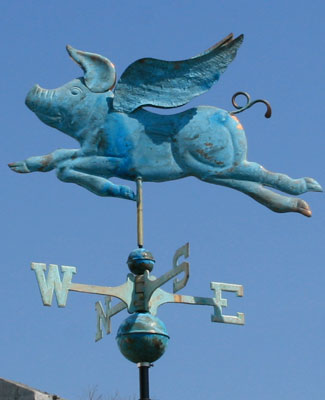
Late to make her entrance, our representative animal this time is the pig.  The humble pig, so intelligent and clean--or is it dumb and dirty?  So...naked.  So oddly human-like; our bodies will often accept pig parts in transplants.  And, above all, so good at doing so little.  The pig is a symbol of wu wei: doing so little, and doing it so well.  Out of this porcine lassitude comes tremendous abundance: litter after litter of chubby little squealers, while the mama sow herself grows hugely fat.  This is perhaps the greatest talent of pig-kind: they make fat from almost anything.  In a world where fat was not so abundant as it is now (at least to the privileged classes, including more and more Chinese, with their prodigious appetite for pork), this ability must have seemed to verge on the miraculous.  It helps explain the pig’s status in China as a symbol of prosperity and plenty.  In this light, the following tidbit from the 16th Century herbal compilation Ben Cao Gang Mu may make more sense: “for skinniness disease...the fat of the pig’s kidneys.”  The fat of the kidneys is nothing other than leaf lard, which until the ill-omened dawn of the Crisco era was the preferred fat for making pastry here in America.  This fat from around the pig’s kidneys surely contains the adrenal gland itself; when we have leaf-lard pie crust, we are feasting on an aspect of the wu wei organ of the wu wei animal.  Provided that the pigs in question are allowed to do nothing in their inimitable way, outdoors, wallowing and rooting and doing that nothing that pigs love to do.  Factory pig fat doesn't have the magic.  So slow down, get in the flow--and get to baking with yon leaf lard.  Your Triple Warmer will thank you.  

Sunday, April 24, 2011

Chinese Organ Networks: Pericardium


The twelve organs of Chinese medicine are a way of dividing the world--the world as seen through human eyes--into twelve sections.  Everything in the world, then, falls into one of these sections, just as every cherry in a pie will end up in one slice or another, unless of course it gets cut in half and ends up straddling two slices.  That happens with the organs, too--in fact many phenomena have multiple organ affinities--but we'll leave aside such complications for now.  The point is that the twelve organs are a convenient and powerful lens through which to view things, and not least medical things.  We already have a two-fold division (yin and yang, night and day, male and female, etc.) and a three-fold one (heavenly, human, and earthly realms), a five-fold one (the 5 "phase elements" of wood, fire, earth, metal, water), and even a six-fold one (the six levels or conformations).  Each of these lenses has its utility; with the leap up to twelve, we have the most specific, fine-grained lens of all.  It encompasses all of the levels before it, for each organ is associated with yin or yang, with one of the three realms, with a phase element (or multiple elements, if we look closer), and with a conformation.  Twelve allow for complexity without going off the deep end.

Yet despite the universal appeal of the number twelve, early Chinese medical texts speak of the "five zang (solid organs) and six fu (hollow organs)."  The focus of this article, the Pericardium, was conspicuously absent from this picture.  And indeed, if you had to choose 11 or 12 organs to represent the entirety of the human universe, the membranous sac around that surrounds the heart would not likely be one of them.  There are so many...more substantial structures to choose.  So it's fair to ask: what's the deal with the Pericardium?

Actually its status as the added-on organ is key to its nature.  The Pericardium was brought into the picture, in a sense, to keep the lonely sixth fu organ company.  This is a clue to what the Pericardium is all about: relationship, intimacy, vulnerability.  Qi Gong teacher Bill Frazier explains the late arrival of the Pericardium in another way: this "heart protector" (a common translation of the PC) only became necessary when humans began living in such dense proximity that we no longer knew all our neighbors. When we lost the deep communal connection synonymous with tribal or small-scale pastoral living, we began to need to guard ourselves in a new way.  Suddenly it was dangerous to share our innermost selves; amongst strangers who knows who might take advantage of such open-heartedness?  In this little myth, along came the Pericardium to guard the gates of the Heart.

It's not hard to recognize the necessity of a Heart Protector, a body guard or watchdog to mind the Heart-emperor, who's too busy tuning in to the heavenly mandate to look after his or her own damn self.  But in modern Traditional Chinese Medicine, this guardian role of the PC may be over-emphasized.  The flip side of the Pericardium's role is to open the Heart, like the dog who allows trusted people entry to meet his master.  We all need protection, safety, security, but too much of these things cuts us off from other people, from potential fellowship and communion.  We need walls around our Hearts, but we also need gates that can open.  The Pericardium is this gate, and it might just as well be called the Heart Opener.

On the calendrical scale, the PC is associated with post-equinox autumn, and in the context of the day, with the post-sunset hours or approximately 7-9 PM.  These are times of darkness overpowering light, of inward-turning.  And also of intimacy.  As Heiner Fruehauf, my source for virtually all of this cosmology, points out, who goes out on a romantic lunch date?  The dinner hour is the intimate one, the one charged with romantic potential.  Looking at the larger yearly cycle, it may be less obvious how the dark, chilly month of (roughly) November carries such sexy connotations.  It is, no doubt, also a season of death: nature dies back, and following her lead, humans course through the woods to hunt.  Yet this was once the traditional wedding season in China.  It is after all the time when the leaves fall: the forests are undressing to reveal the mountains, the bare breasts of nature.

It will come as no surprise, then, that the anatomy most closely associated with the Pericardium is this region of the chest.  One Chinese name for the Pericardium is Xin Bao, "heart wrapper;" another is Dan Zhong, "chest center."  The quintessential pericardium point is, more specifically, the midpoint between the nipples.  This is a vulnerable area of the body, no doubt, and an intimate one.  To whom do we bare our chests, our breasts?  Well, to a lot of people, maybe.  But out culture's schizophrenic relationship to nudity and sex can be seen as symptomatic of a larger Pericardium pathology.

As discussed, the Pericardium controls how open our hearts are at any given time.  In love, the Pericardium relaxes and dilates, we let our guard down, and are able to share ourselves completely with another person.  Part of the potential of love is to take this openness out to the world; to come from a place of safety in vulnerability and expand outwards to face everyone and everything in our lives with open hearts.  Of course there is the risk that when our open hearts are betrayed or wounded, the Pericardium sits bolt upright like a bodyguard that had been snoozing and battens down the hatches.  We shut down emotionally, put up barriers, simultaneously protecting ourselves and cutting ourselves off.  Back now to modern PC pathology: though we need to open and close our hearts appropriately, most people are stuck too far to one end of the spectrum.  There are those who, through trauma, have their Pericardia on permanent lock-down mode--scared, nervous guard-dogs who don't recognize friends.  Though it's rarer, some people fall into the opposite category: they are too open-hearted, have trouble delineating boundaries for themselves, and get into trouble because of it.  Perhaps more common than this is the confused Pericardium: we may be too open on the outside and shut down or exhausted within.  A healthier model might be the reverse of this: a reserved, moderate exterior containing a passionate heart.

This whole time our model for the Pericardium has been the dog: guardian, yes, but also faithful companion, playful puppy, tireless servant.  In fine symbolic fashion, the best and worst of the Pericardium are summed up here.  Our source of joy, innocence, and playfulness can also translate to a lack of seriousness, as in a puppy who only wants to have fun.  The antidote to this, perhaps, is the training that turns a pup into a mature, loyal and selfless companion.  Represented here is the channeling of heart energy towards away from simple pursuit of pleasure and towards a higher calling; the act of sacrifice.

(<-- Not a puppy, I realize, but an equally heart-opening furry thing)

Monday, April 11, 2011

Dravyagunavijnana (Ayurvedic Pharmacology, or Foxy Science)

I was going to add this as a comment to my last post, but then no one would see it.  So here it is, my little footnote, writ large with its own heading.  Which may as well be in Sanskrit.  In that language's aggressively precise grammar, words are glommed onto each other to form compounds, like we sometimes do in English, btu moreso.  Dravyagunavijnana, a modest example of this phenomenon, is composed of the words for substance (dravya), quality (guna), and knowledge (vijnana), and is essentially the term for traditional pharmacology.  Could there be a more straightforward encapsulation of the herbalist's most basic line of study?  Knowing the qualities of different substances.  To think I forgot to mention this in my last post!


Dravyagunavijnana, or the art and science of the materia medica (to throw in scraps of another dead language here), is very much a foxy pursuit.  I don't mean it's leggy and red-headed, but rather that it's un-hedgehoglike.  According to this scheme of classification, which may or may not (anyone?) predate literary critic Isaiah Berlin and his Tolstoy study The Hedgehog and The Fox, hedgehog intelligence has one Big Idea, and everything fits into it.  This is the territory of ideology, big-time.  Of -isms.  Fox intelligence is of an opposite sort; it sees every situation as different, and accrues lots of little insights instead of one big one.  Berlin was arguing that the Tolstoy of War and Peace is at heart a fox, but one who wanted desperately to be a hedgehog.  But back to dravya, their guna, and the vijnana thereof.  It's foxy because every substance, be it an herb per se or a mineral, metal, or animal part, is its own entity.  The more hedgehoggy eye of theory comes and sticks all these things in categories--derived from if not one then just a few Big Ideas--so that oyster shells and coral are both cooling (from an Ayurvedic perspective) and calcium-rich (from a Western one) substances.  But in fact they are not the same, nor are red and white ginseng, nor aconite harvested on the summer solstice and aconite harvested at some other time of year.  They each have their own qualities.

This is all a very convoluted way of saying that it's helpful for an aspiring herbalist to be interested in these qualities.  To wonder what the spicy sweetness of American Spikenard root might signify, and how this sets it apart from the closely related but blander-tasting Wild Sarsaparilla.  To be the sort of person who can entertain themself for hours in a tea shop, sampling and reading about different varieties of Camella sinensis.  Some might say, "it's all just tea."  But they'd be missing so much!  The devil may be in the details, but so is the magic.  

Wednesday, April 6, 2011

You Might Be a Closet Herbalist If...

Teacher, carpenter, blacksmith; these are venerable trades as essential now as they were in antiquity.  Alright; being a blacksmith may no longer carry the social cache that practicing law or being an advertising executive does, but it's still a recognized vocation.  Other once-honorable trades haven't fared so well in post-modernity--and at the risk of spoiling my punch line too soon--herbalism is one of them.  After nearly a century of censure by the (still only fairly recently) dominant biomedical establishment, the status of "herb doctors" has plummeted to the point where it doesn't even register on most people's radar.  There are signs that this is changing, though, as part of the widespread resurgence of interest in sustainability, in local economies, in do-it-yourself self-reliance, and simply in health.  Though herbalism is a loose, diverse, and sometimes contentious catch-all category, it's on the rise however you slice it.  More and more people are claiming herb lore as a valuable part of humanity's heritage, whether through Chinese or American Indian traditions or from what their own grandmother passed along in the kitchen and woodlot.

Herbs are our original and (some of us believe) our best medicine.  No matter where you live, at least a few essential medicine plants--and there aren't any plants that aren't useful as medicine--are readily available and free; I would estimate that all the medicine most people need grows within a few mile radius of their homes.  This holds even for inner city neighborhoods: look at Detroit, which has half-reverted to wild fields and young forests, or New York City--I could spend a whole season foraging in Central Park.  Herbs are right under our noses, if only we knew where to look.

In the spirit of fanning the flames of the wholistic medical renaissance, this post is intended to root out potential herbalists amongst you, my readers.  This is not an evangelical mission--convert, convert!--but a gentle prod in the direction of asking yourself an oft-overlooked question: are you a closet herbalist?  Whether as a folksie kitchen concocter or a white-jacketed integrative clinic practitioner, would using plants as medicines fulfill you and benefit others? So:

You might just be an herbalist at heart if...

-You like plants, have always liked them, felt drawn to them, wanted to draw them, identify them, smell and taste them.  Or, perhaps, been intimidated or scared of them.  But either way, noticed their presence, took walks in the woods for no reason other than to gather some mushrooms, sit under your favorite oak tree, see if the basswood was blooming yet.

-You like to help people.  Again, maybe like me you're sort of scared of people, not entirely at ease in social situations with strangers.  But you feel the flow of fulfillment when you're able to help ease someone's mind, answer a question, solve a problem.

-You're at home in the kitchen; you love to cook, brew, concoct.  This is not an absolutely essential characteristic of an herbalist, since some practitioners use crude herbs exclusively or practice shamanistic "plant spirit medicine."  But, historically, herbalism falls under the twin domains of outdoors and kitchen.  Add to that, "laboratory."

-You're interested in ways of knowing beyond the standard, modern scientific paradigm.  Reductionist science is a valid and useful epistemological model, but its microscopic tunnel vision often misses the forest for the trees.  Trying to understand herbs through pharmacology alone is practically impossible, as a single plant can contain hundreds of "active" compounds.  Traditional ways of knowing, from shamanistic to intuitive to "energetic," fill out the big picture view.  If you are interested in these "alternative" models but don't feel you have an inroad, plants can provide the bridge.

I'm sure there are other characteristics that predispose one towards working with plants to heal, but this is what I've come up with here off the top of my head.  Let me know what I've missed!

While we're honoring the humble herbal vocation, here's a small gallery of herbalists from near and far, people I've had the opportunity to learn from in one way or another.


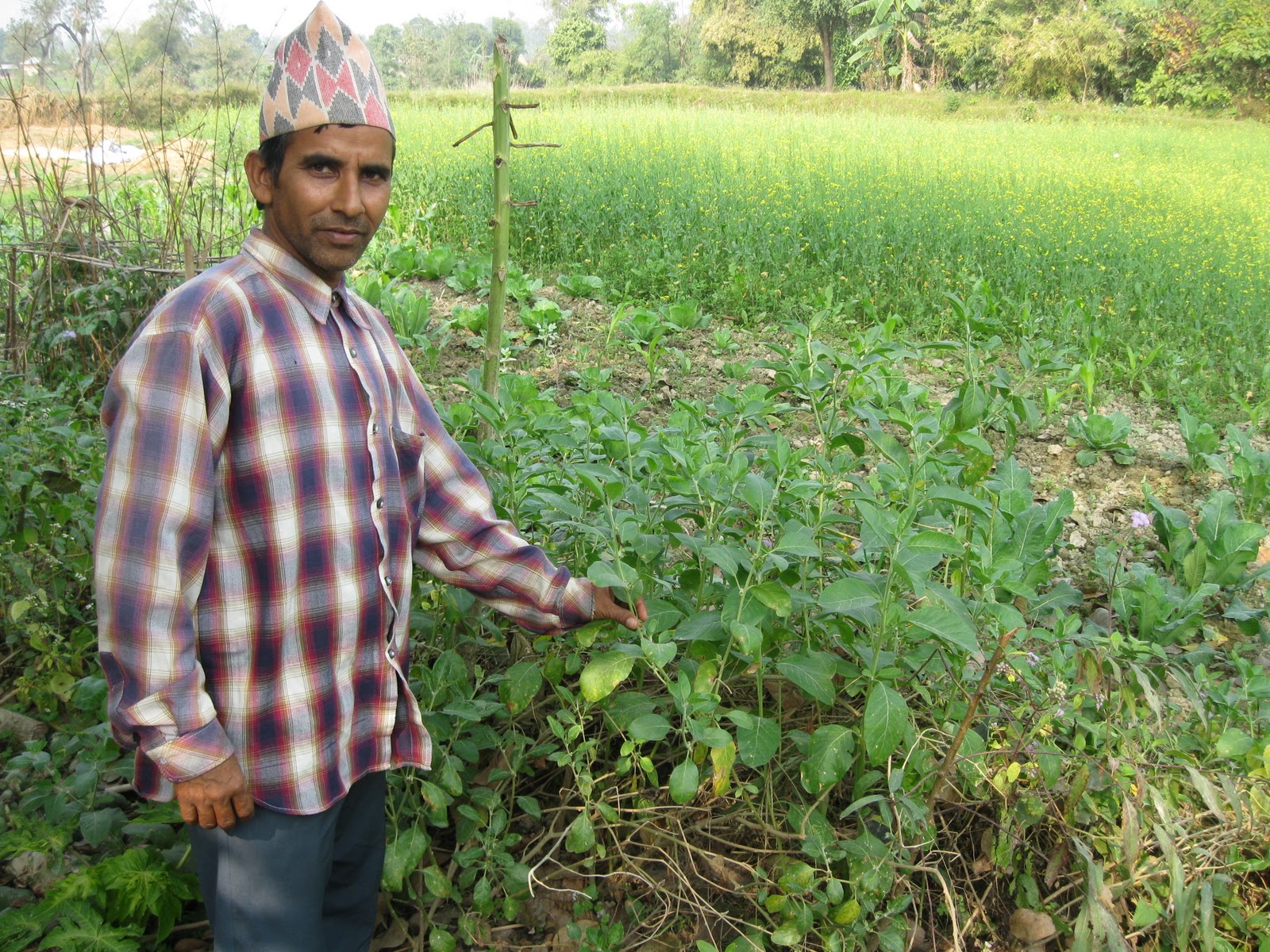
A Vaidya (Ayurvedic practitioner) in Kapilvastu district, Nepal, pointing out some Ashwagandha (Withania somnifera)

Bishunath Karmacharya, a Newari vaidya and alchemist, at his home in Banepa, Nepal, with some of the sought-after medicinal Yarshagumba (Cordyceps).

A father and son team at the family clinic in Naradevi, Kathmandu.  

A tantric jharphuke vaidya practicing his "brushing and blowing" ritual technique in combination with herbal medicine in Bhaktapur, Nepal.  

Matthew Wood, author of The Earthwise Herbal and The Book of Herbal Wisdom and my primary teacher at The School of Traditional Western Herbalism.

Gail Faith Edwards, founder of Blessed Maine herb farm, author, and teacher.  

Dr. Heiner Fruehauf, Classical Chinese Medicine luminary, founder of the CCM program at National College of Natural Medicine, and creator of the Classical Pearls formula line.  

Sunday, March 27, 2011

Chinese Organ Networks: The Bladder


This is the final installment of the first set of four articles on Chinese organ networks.  I have posted these in quick succession, so if you are interested in reading them all and are not caught up, I recommend going back to the article on the Heart and working your way through the Small Intestine and the Kidney before tackling the Bladder.  (If that sounds like an improbable route through the body, you’ll trust have to take my word for it that you’ll arrive eventually.)  
The Bladder is the counterpart to the Kidney, but whereas the Kidney was all about storing essence, the Bladder is about moving it around and transforming it.  First, though, a little bit on nomenclature.  As with all of the organ networks, the Bladder network refers to the anatomical bladder but is not limited to that structure.  The Chinese concept of the Bladder can be said to include the prostate (and perhaps the uterus) and the perineum, that muscular space between anus and genitalia.   
Each organ network is associated with a hexagram, that is a set of six stacked horizontal lines, each of which is either whole or broken.  Hexagrams are the language of the I Ching (Yi Jing in the Pinyin system of romanization), the famous oracle and symbolic alphabet--and one of the oldest books in the world.  Each of its 64 hexagrams is composed of two trigrams.  Each trigram has three lines,each of which can be either whole (yang) or broken (yin); 2 times 2 times 2 gives 8 different trigrams.  8 times 8 gives the 64 hexagrams.  To start understanding a hexagram and begin conversing with this fascinating and boundless cosmological sourcebook, it is only really necessary to have a basic sense of the nature of the 8 trigrams.  The simplest are named Qian and Kun, and are composed of three yang lines and three yin lines, respectively.  Thus Qian is the most yang trigram and represents the sky or heaven, while Kun is the most yin and represents the earth.  In this basic polarity, the sky is light, clear, masculine, while the earth is dark, opaque, feminine.  Sky rises; earth sinks.  This is really all you need to know about the I Ching to understand the hexagram called Pi, the key to the Bladder network.  
Pi is composed of Qian (the sky trigram) on top and Kun (the earth trigram) below.  Since sky wants to ascend and earth descend, this is a picture of separation: different things going different ways.  If sky were below and earth above, the tendency would be for them to unite in joyous union.  But that is not the case here.  A common translation for Pi is, indeed, “separation;” when consulting the I Ching as an oracle, Pi is considered “the biggest ‘no’ you can get” (according to Dr. Fruehauf).  How is this the key to the Bladder?  Well, the bladder is all about saying “no.”  This plays out in two different ways.
The first has to do with the surface of the body.  Our surface--our skin--is what separates us from the outside world, and our first line of defense against invading pathogens.  In the Small Intestine article we talked about the inner boundary; here, we are dealing with the outer one.  Strange as it may seem, this is the realm of the Bladder (if not the bladder).  It is the Bladder’s job to keep the surface sealed tight, telling invading bugs and unwelcome climatic influences a resounding “no” and slamming the door in their face.  
The second way that the Bladder says “no” is in regard to the watery essence discussed below, in the Kidney section.  The Kidney stored that essence, and now the Bladder has to utilize it.  This means, first of all, not squandering it.  The Bladder is the stopper that keeps jing from leaking out; in the somewhat male-centric world of classical Chinese medicine, the Bladder “just says no” to--amongst other things--ejaculation.  In women, the corresponding action would be to limit the menstrual flow and preserve juicy essence that way.  In both sexes, this is accomplished through strengthening and making use of the perineal muscles to tone and control sexual activity.  In Taoist sexual yoga (for lack of a better term; some have called it “sexual kung fu”), this practice of restraint is the foundation.  The second step, and the other major role of the Bladder, is to sent this essence up the spine and to the head.  This sounds exceedingly odd to most Western ears, but the idea of transmuting sexual energy to enhance the quality of consciousness and promote longevity is one common to other Asian cultures.  (Does anyone know if there are other traditions that advocate similar methods of sexual control and transmutation?  Anything native American?) The idea is closely related to the Indian one of Kundalini energy that lives coiled like a snake at the base of the spine and can be awoken and ascended through the various chakras to the cranium.  Indeed, the Bladder is associated with the spine and with straightness (or, yes, with erectness).  
So our picture of the Bladder is quite specific and limited in scope: it is the organ network that seals the surface, preventing invasion from without and essence leakage from within, and pressurizes or pumps a form of that essence up the spine and out to the surface.  Its action is one of cold squeezing.  With the emphasis on the spine and the surface and the obvious association with urine, who but the monkey should be the representative animal here.  Half erect (seemingly halfway between animals and human); known for playing with their pee; absurd in their half dignity or ridiculous in their playfulness.  Monkeys are a virtual symbol of immaturity: not fully evolved into human, but partway there.  And maturity--sexual and spiritual--has much to do with the Bladder.  
In terms of the sacred geography of ancient China, it is the border lands that go with the Bladder network.  During the Warring States period, these areas were ruled by semi-independent vassals who, like “monkey kings,” ran things the way they wanted to in exchange for supporting the central power in times of need.  
This wraps up the first set of four organ networks.  I shouldn’t neglect to mention that these four--Heart, Small Intestine, Bladder, and Kidney--are the four associated with the Heavenly realm, as best understood in the fire organs.  In the coming few months, I will be tackling the organs of the Human realm: Pericardium, Triple Burner, Liver and Gallbladder.  Stay tuned!  As always, questions and comments are most welcome.  

Chinese organ networks: The Kidney


Welcome to the next installment of Chinese organ networks.  Just to be extremely clear in giving credit where credit is due, virtually all the material in this post and in the whole series on each of the 12 organs comes from Dr. Heiner Fruehauf’s Chinese cosmology class at NCNM.  This series is in part a project for that class, a way for me to integrate the material by presenting it to the public eye.  The other things I have chosen to do for the project is a large-scale rendition of the “organ clock,” a 12 sectioned wheel that lays out the organs along with various symbols associated with them.  It is a multivalent calendar and a reference sheet for the organ networks.  It will also look extremely cool when I am finally finished putting in all the hexagrams, animals, Chinese characters and other symbols.  I will upload a photo as it develops.
In preparing this batch of organ network posts, I had do decide whether to proceed in the order of the organ clock or to switch it up slightly.  It made sense to present the Heart first (although it is actually associated with the fifth month of the Chinese character) and the Small Intestine afterwards because of their relationship, but this is also the order on the clock.  With the next two organs, the Bladder and Kidney, I am reversing the clock order and discussing the Kidney first because it is the more essential organ, the archetype of its water phase-element, and the Bladder is best understood in the context of water in general and the Kidney in particular.  So here we go: the Kidney.
At the heart of the Kidney network is a string of associations that I will simply spout out here and unpack as we go along: kidney-water-storage-lowness-north-winter-black-essence-sticky.  We could add more: humility-fear-awe; bones-ears-lower body; determination-memory.  Chinese medicine, like other traditional medicines of the world, works this way, through interlocking resonances.  This makes it hard to explain one part without the whole, but then, once the whole is sketched out, all the parts fit in beautifully.  Once fully fleshed-out, such a system gives rise to great explanatory and, ultimately, clinical power.
The kidney is the organ most closely associated with winter.  The phase-element (one of 5 stages in cycle of nature, which proceeds from water to wood to fire to earth to metal and back to water) of winter is water.  Not the water that courses and rushes, overwhelms, or even refreshes on a sunny day, but the deep, salty, source water we come from.  The ocean.  This water is what we rest in, what connects us to vastness, to the past of our ancestors and, through our own bodily “waters” to our genetic futures.  The key qualities of water in this sense--let’s call it Water--are its depth and lowness.  It seeks always the lowest place and quietly fills it up.  Winter is Water season because of this inward, downward turning.  In yin-yang terms, yang has long since peaked (at midsummer) and declined (during autumn) and now yin rules: the passive, dark, quiet, interior side of nature.  Summer was fire; winter is water.  What nature is doing at this time may be passive, but it is not nothing: rather, she is biding her time and stowing away her resources, for out of the stillness and depth of winter’s Water will spring the new year’s woody growth.  But in order for this to happen, Water must fulfill its function of storage.  At this time of year, the upper parts of plants have died off, and their life force descends into their roots or lies waiting in seeds.  Humans mirror this activity in taking the fruits of our agricultural labors, gathering them up, and preserving them.  It makes sense, then, that the scent associated with Water would be that of fermentation; I picture crocks of kim chee ripening underground, or barrels of miso quietly bubbling in a dank basement.  This is storage, holding the seed of new (yang) growth in the root cellar until the time is ripe. 
People would be well advised to heed this rhythm of nature, to honor the winter season by slowing down, conserving their energy, resting and recharging.  But we also need to do so on a smaller time-scale: nighttime is our daily winter, the time when yang (fire) descends into the embrace of yin (water).  Our society’s epidemic of insomnia and anxiety is one reflection of a deep imbalance here: our stores are depleted.  Without a healthy amount of water down below, there’s nothing to keep the fire of the heart-mind (the Kidney’s partner in the Shaoyin layer, from the perspective of the 6 layers/conformations model) from flaring out of control.  So our minds race, hearts palpitate.  But the relationship between fire and water is not quite what it sounds like.  It isn’t that the Kidney’s water somehow quenches the fire; rather, and somewhat counterintuitively, the water of the Kidney feeds the fire.  Water is not the right word to express this aspect of the kidney’s substance; fat or oil is more like it, or wax.  A candle flame sputters and flares when the wax has burned low; our consciousness reacts similarly when our energy reserves are depleted.  In order to keep the flame steady, we need to assure it that there is adequate fuel waiting in the tank.  
In naturopathic medicine there is much talk of adrenal depletion; the adrenal glands are situated directly on top of the kidneys, and their function is very much part of the sphere of the Chinese Kidney.  The adrenals can shift us into and out of the fight-or-flight adrenaline/cortisol response, i.e. they dictate whether it is appropriate to rev up the afterburners, to “burn the candle at both ends,” as it is sometimes necessary to do in order to overcome a challenge.  With the stresses of modern life, however, many of us are stuck in this sympathetic nervous system/adrenal stress response mode most of the time.  Our waxy, watery reserves are in jeopardy as we fuel the fire with endless cups of coffee, late nights, adrenaline-junkie behavior.  The antidote is as simple as “nourish, rest and relax,” but who has time for that?  Indeed, who even really knows how to get out of the careening, adrenaline-fueled vehicle that thrills us even as it hurtles us towards the cliff of burnout, nervous breakdown, thyroid crash?


Perhaps the most apt modern metaphor for the Kidney is a battery.  Throughout life we run off both the “post-natal” energy we derive from food and drink and from the air, and the “pre-natal” energy stored in the Kidney.  Even without taxing lifestyles, the Kidney energy slows drains as we age.  This is reflected in some of the common ailments of old age: back pain, knee pain, hearing loss, greying of hair, thinning of bones.  All of these aspects of anatomy and physiology are associated with the Kidney: the lower parts of the body, the bones and teeth, the luster and color of head hair, the ears.  And perhaps the most essential of all: the gonads.  The Chinese word for kidney, “shen,” also means testicle, and to a great extent the sexual functions (of males especially) fall under the realm of the Kidney network.  Semen, the very water of life, sticky, fatty, precious, is the quintessential kidney substance, the closest physical correlate of kidney essence, jing.  There is no quicker way for men to deplete our jing, the very essence of kidney water, than by overindulging in ejaculatory sex.  Nutritionally, we can understand this when we consider that semen contains large amounts of precious nutrients like zinc and omega-3 fatty acids.  It is the final, distilled end product of nutrition, a form of energy so concentrated that it has condensed into a physical substance.  Taoist longevity practices teach techniques for conserving semen, while using kidney-tonifying substances to supplement the jing.  Following the logic of our string of associations, such substances are sticky, dark or black (the color of water and winter), heavy.  Steamed Rehmannia root, an extremely dense and sticky sweet black root, is the classic example from the Chinese pharmacopeia; Ayurvedic tradition uses different terminology but could be said to tonify the Kidney using Shilajit, a highly revered, black, tarry substance that oozes from cracks in the Himalayas during the summer.  The origins of Shilajit are uncertain; it may actually be an extremely condensed form of decomposed plant matter.  It resonates with the Kidney by this fact of its being rotted down, concentrated, as well as by its blackness, stickiness, and heaviness.  Good quality Shilajit is even said to smell like cow urine; it also bears a certain resemblance to crude oil.  A partial list of ailments Shilajit treats: weak bones and fractures, diabetes, infertility, impotence.  Kidneys indeed.

              ^^ Kidney territory: Shilajit bubbling away quietly in the basement.  According to Ayurveda, Shilajit needs to be processed with triphala.  Singh Durbar Vaidyakhana, Kathmandu.  

The Kidney’s animal totem is a bird, either a chicken or an owl.  The chicken is a “slave bird,” as humble as they come, who stays low to the ground selflessly provides eggs.  The more mysterious owl’s night vision is symbolic for the mystical ability of the Kidney to “see in the dark.”
Emotionally, the healthy Kidney ought to manifest humility and awe, and the watery ability to “go with the flow.”  Pathologically, then, arrogance and rigidity can be seen as Kidney pathology.  The Kidney’s chief virtue is said to be zhi, determination or will power.  Kidney people (people who strongly express the positive qualities of the Kidney) include shamans, diviners, physicians, and artisans.  All of these paths carry a certain risk of arrogance, but it is only in making themselves low like water can true mastery be achieved in any of them.  

Saturday, March 26, 2011

Chinese Organ Networks: The Small Intestine


Last time, while updating essays I’d originally written for class and adapting them for blogging purposes, I found myself digressing at some length about the heart.  Not the heart, as in the four-chambered muscular blood pump, but the Heart, the emperor of the organs, the one that receives the divine mandate and provides sacred connection to the source.  The Heart is one of four organ networks that we covered this term in Dr. Fruehauf’s Chinese Cosmology course.  Our final project for the quarter is an open-ended integration of the material.  I didn’t even realize it at the time, but it makes perfect sense for me to use this blog for that assignment, and that assignment for this blog.  I’ve already covered the Heart; today’s topic is the Small Intestine, and in the next few days I will be posting on the Bladder and Kidney as well.  Next quarter I’ll tackle the organs we’re learning about one by one, rather than saving them all for finals week.  By summer’s end, if all goes according to plan, I will have covered all 12 organ networks and completed the cycle. 

The Small Intestine
In the organ clock/calendar, the Small Intestine follow on the heels of the Heart.  Within the body, the SI is the Heart’s zang-fu partner, meaning that it is the hollow organ paired with the solid Heart.  While the zang, solid organs, are full of essence but empty of contents, the fu organs are the reverse: they serve as conduits for physical matter--in this case, digesting food--but they don’t store essential things like blood or shen (spirit/consciousness) or the sticky, concentrated life-stuff of the kidneys, called jing.  What unites the Heart and Small Intestine, then?  Both are fire organs, imperial fire organs to be specific (as the fire element is split into two sub-types, at least partly so that the 6 organ pairs can be neatly matched with the 5 basic phase elements).  Fire is code for the immaterial realm, for spirit; it is the most exalted of the elements.  We discussed the Heart’s firiness; the Small Intestine’s is of a complementary sort.  What the Heart decrees, the Small Intestine carries out.  The Heart-emperor is ever sequestered in his royal chambers, secreted away in the innermost part of the palace, and she must depend on his cabinet of ministers to accomplish anything material.  Closest to her physically is the Pericardium or Heart Protector, but it is the Small Intestine who is most aligned in function.  For the Small Intestine is the High Priest, the minister in charge of sacrifice: that is, of receiving and then giving away.  This is, after all, its physiological function, to “sort” through the half-digested mass it receives, pluck the nutritive pearls from the muck, and let the rest go.  This function operates on the symbolic realm as well as the physical, digestive one, so that it is the Small Intestine’s duty to discriminate between what is useful to the us--to the Heart’s mandate--and what is useless.  It is a gatekeeper of sorts, since it determines what will be allowed to enter the body and what will stay on the outside.  It is important to keep in mind that the digestive tract is not actually part of the body’s interior, but rather a convoluted extension of the outside world that stretches between mouth and anus.  This fact is recognized in the Chinese system by the fact that the Small Intestine is paired with the Bladder in yet another class of pairing to form the Tai Yang layer.  This is the outermost level of physiology, that of our boundary.  The Bladder has to do with the more obvious boundary, the skin surface, while the Small Intestine governs the inner boundary.  It is essential to health that the Small Intestine maintain its tight seal between interior and exterior, otherwise particles that the body does not know how to handle will seep in.  This phenomenon is called “leaky gut syndrome” and has become a widespread problem within the last generation or two; it leads to a cascade of auto-immune reactions triggered by unrecognizable, not-fully-broken-down molecules that ought to have been stopped at the border.  
I mentioned the archetype of the High Priest; it is the Small Intestine’s role to maintain ritual propriety, a healthy sense of the sacred.  Yet within this seriousness should be a certain levity, the humor that makes the guru’s harsh instruction not only bearable but wonderful.  Founder of modern 5 Element acupuncture J.R. Worsley must have intuited this aspect of the Small Intestine, since he speaks about the “court jester” in relation to the S.I.  Here we have the flipside of the High Priest: instead of levity within seriousness, we have a certain sacredness within jesting.  Either way--whether as holy fool or twinkly-eyed priest--this is healthy Small Intestine territory.  Conversely, Small Intestine pathology can take the form of a lack of propriety, as in someone who doesn’t know when to stop joking or for whom nothing is sacred.  

(photo: Small Intestine symbolism run amok?)

Every organ is associated with a feature of ancient China’s geography.  The Small Intestine’s correlative is Mount Song, an appropriately sacred mountain in the heart of China that is best known in the West as the site of the Shaolin temple of kung fu movie fame.  It is also one of the five mountains most revered by Taoists.  Getting closer to the real significance of this geography, however, is the fact that Mount Song is the mythical point of entrance to the underworld.  Somewhere on the mountain, a tunnel leads away from the bright light (tai yang) of the outside world, down into the dark, into hidden places where who knows what all monsters may lurk.  In the body, the Small Intestine is indeed a difficult region to know; as with the Mines of Moria, it’s a long way from either opening to this winding and narrow passageway.  As such, it’s a good place indeed for monsters to lurk: this is prime terrain for parasites who would prefer not to be ousted by the simple expedient of a laxative or emetic.  Undiagnosed parasitic infections may represent a major slice of the causal pie for patients of chronic disease, especially those who suffer from difficult to diagnose, harder to treat problems involving “brain fog,” chronic fatigue, fibromyalgia, and a host of other murky symptoms.  Dr. Fruehauf has done a good deal of work in this area and has re-introduced the concept of Gu syndrome, parasitic illness in which the pathogen has established itself so well in the body that it is like oil that’s seeped into a sack of flour.  And yet there may be another dimension to parasites, those feared and reviled little (and not-so-little) gut-dwelling fiends.  We have evolved alongside parasites, and while they may not be our friends exactly, it is possible that the relationship is sometimes more symbiotic than we would like to admit.  Ironically, while systemic infections like candidiasis are associated with leaky-gut syndrome and auto-immune havoc, other parasites may have the opposite effect on our immune systems.  By giving our defenses something to react to, they set a baseline of comparison.  Basically, when they are filled with squirming wormlets, our intestines are less likely to freak out at the bits of protein that more and more people are allergic to.
The animal representing the Small Intestine is the sheep or goat (oddly, the Chinese term doesn’t distinguish between the two).  It makes sense to imagine here the wild ancestor of both of these ruminants, something like the Bharal that Peter Matthiessen describes in The Snow Leopard.  This is a hardy creature that depends for survival on its digestive capacity.  Goats can eat almost anything, as anyone who’s ever spent time around them learns when they feel a tell-tale tug at their shirttail or leather shoe.  Their small intestines are extremely well-developed, and it seems to me they carry themselves with just the right blend of humor and dignity, too.