Showing posts with label Ayurveda. Show all posts

Tuesday, November 29, 2011

The Guru Who Almost Was


A few days ago, during my sporadic Ill Wind housecleaning, I stumbled upon an orphan post from July 2010, never published.  The post, re-printed below, begins to spin a yarn about what seemed a serendipitous encounter with just the sort of ritual practitioner of Ayurveda that I was hoping to connect with during my Fulbright year in Kathmandu.  Events played out a little differently than I was expecting when I began composing, however, and the piece lay there unfinished.  Without further ado, then, an artifact from the archives:

                                                                *          *          *

A rainy morning in Kathmandu, finally proper monsoon downpour.  I've been up since dawn, squatted on the toilet for a while in the grey light, taken a bracing cold shower, and meditated a scant, distracted few minutes before sweeping out the door with a Chinese umbrella and a plastic bag of fruit, down the alley and up the street through fresh rivulets and growing pools.  At the next alley I turn right and duck into a little doorway next to a neighborhood Ganesh temple, a simple aniconic stone decked with flower garlands and vermilion.  On the wall next to the doorway is an old handwritten poster with a mantra to Hanuman, the brave monkey king largely responsible for the rescue of Sita from the clutches of Ravana and purveyor of courage and strength.  Under the mantra is a simple descriptive advertisement printed out in Nepali for the services of a baidya, or healer, named Padamnath Agasti.  It lists cures for "gastric," "sugar," and "pressure," as well infertility, jaundice, and a host of other ailments extending beyond what Americans consider the role of a doctor.  Remedies are achieved with herbs or by  tantra and mantra and the shamanistic technique of jharphuk (brushing and blowing).  The baidya here is a Hanuman bhakta (devotee), and his cures are by the grace of the monkey king (who, Padamnath-ji will soon insist, can be found living in a cave in South India).  It is this man I am here to see.  He has offered himself as my teacher.   

Life is funny like this.  In 10 months here I wanted nothing more than to meet an embodiment of the living tradition of Ayureda who was willing to pour some of that nectar into my vessel.  Perhaps my vessel wasn't empty enough; it seemed at the time that no one was willing to teach.  The hoped-for doors weren't opening.  When I met Keshab Kavi Baidya, one of the lasta rasa shastra alchemist-pharmacists in Nepal, it was too late.  He was already sick and no longer had any laboratory space in which to make the important bhasma medicines.  I found out after I left, almost exactly a year ago, that he died shortly after my last visit.  All in all, circumstances conspired against my delving deep into that particular ocean.  My 10 months here accomplished plenty else, if I recall that at the beginning I had ideas about pursuing anthropology.  I'm no longer interested in objectivity, if indeed I ever was, nor in theory divorced from practice.  Which is to say, I now fancy that I'll eventually transform myself into some sort of baidya myself.  That gets ahead of me, however: I don't think I had realized a year ago how much of a transformation it would be.

A year later, I return to find Kathmandu much the same as ever, except maybe for larger private vehicles on the street (VW SUV's?!) and infinitesimal progress on the Japanese-funded road project connecting Bhaktapur and Kathmandu across the width of the Valley.  The place hasn't changed much, but I find that I have.  A reaction has been set in motion, the result of time ripening and of a catalyst.  Old paths through the city, literal and figurative, no longer hold the allure they did, and new doors are ajar and ripe for exploration.

This particular passageway between Ganesh and Hanuman I stumbled onto through what Michael Gruber calls (in referring to god's work) a "conspiracy of accidents." A poster in a tea shop down the street from our guest house, a whim.  Following the directions on the poster I found the baidya seated in his room with a client (though that word, along with "patient," rings false here), rubbing her down with a mala of rudraksha beads.  I explained quickly that my companion and myself were well and had come to chat, and he beckoned warmly for us to sit.  Soon, to my surprise, he was telling me what he could teach me...

different paths.  crossroads.  I ching omens.  Hanuman and indications of the need for a warrior spirit.  strength for what is to come.  paths leading to paths...highway?  patience.
paths or windtrails on the sea?  paths we make

                                                                   *          *          *


11/29/11

So that's what I found in the bowels of this blog's archives, and that's how it shall stand; perhaps reading my recently deceased father's old journal has instilled in me a reticence to alter the historical record, even in such a trifling way as this.  I didn't finish the original post, I think, because the story I was spinning took a couple further left turns and ended up petering out--no mystical apprenticeship or Ayurvedic secrets forthcoming from this charismatic ritualistic physician.  I can't remember the content of the "I Ching omens" referred to in the last fragment; Hanuman and the warrior spirit are clear enough (who doesn't need some of that? Especially given the turbulent times that were to follows.) Anyway, what ended up happening in those early monsoon season weeks in Nepal the summer before last was this:

I met with the baidya in question a couple times but balked slightly when it became clear his teaching was to consist primarily of spiritual practices and pursuits.  I was most interested in techniques, quick and dirty, from the toolbox of esoteric Ayurveda; he wanted to whisper a secret mantra in my ear, to have me adopt a particular set of mantra and visualization, to take me on as spiritual son. He was a compelling man, dedicated, and pure in his intentions as far as I could tell.  I was mighty tempted to jump what seemed a fortuitous opportunity with both feet; after all, an awakened interest in spiritual pursuits was in large part what had brought me back to Southasia less than a year after I'd left.  It was partly the fact that I was expecting to deepen my engagement with Buddhism, not Hinduism, that held me back--all roads may lead to the mountain, as I've heard Indians say about comparative religious practice, but it helps to stick with one path at least 'til you know where you're going.  Moreover, I had the sense that in gleefully adopting a sexy new practice from my very own, private, Kathmandu-back-alley guru, I would be turning my back on the less glamorous but honest meditative work I'd been cultivating for the previous several months.  And much as I would have loved to learn how this guy treated people, just what the mysterious, shamanic brushing-and-blowing of the jharphuke baidya was all about, I was prepared neither to commit to the pre-requisite devotional practices nor to try and bluff my way through them in the hope of catching a glimpse of something either therapeutically or intellectually interesting.  So I met with Padamnath Agasti one last time and mumbled to him (my rusty Nepali feeling especially inadequate in contrast with his highly Sanskritized, thik speech) about my hesitation.  He must have let me off the hook.  I remember telling him that I was leaving for India but would be back in Nepal in a few months to show my mother around; he replied with a hitherto unseen fierceness that people who didn't treat their own mothers well were the lowest of the low.  I agreed with as much vehemence as I could muster. Then he asked me if I could spare some money for some sort of temple building project he was involved in.  I gave him, I believe, 1000 Nepali rupees--neither enough to make any substantial contribution nor little enough for me to forget about this intrusion of business into the spiritual realm (as if they were ever separate to begin with). I left him with a slightly funny taste in my mouth, a taste which only got funkier during my subsequent months of travel, and when I met my mother in Kathmandu I never did take her to that back alley in Pakhnajol to meet my once-upon-a-time would-be Nepali guru.   

Monday, August 29, 2011

Chinese Organ Networks: Stomach


Agni, the Vedic god of fire.  Agnih Ayuh - fire is life.

If the twelve organ networks are 'frequencies' that we tune into like radio stations, the Stomach is our culture's Hot 97.  Is Hot 97 still around?  Am I dating myself hopelessly here?  In New York when I was growing up, at least, that particular vein of mainstream Hip-Hop and R & B was everywhere.  And the themes of most rap lyrics ("Ice Cream," anyone?) fit right into the Stomach paradigm: oftentimes they're about chasing sensory pleasures and material success.  About the rush forward to feast the senses.  The Stomach, in short, is about appetites.  

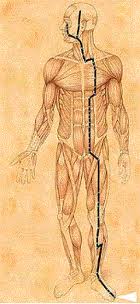
We haven't met an organ network this familiar to our collective unconscious since, well, the Large Intestine.  The resonance between the two of these unsubtle, materialistic organs is no accident, either; together the Stomach and L.I. make up a single hand-to-foot acupuncture channel called the Yang Ming meridian.  Yang Ming means 'bright Yang' or by extension 'bright sun,' and this meridian runs right down the frontmost part of the body.  It's where the sun do shine.  And think of this: the Stomach portion of the channel runs through or around all of the "sense doors"in the head (eyes, nose, mouth, ears), down the front through the nipples, down next to the genitals and the rest of the way down the anterior aspect of the legs.  It's as far forward as it could possibly be, and it takes in all of our sensory/pleasure centers.  It's no leap, then, to say the Stomach is the organ that draws us forward in the world.  This is the frequency of appetites of all kinds.  The Hexagram--number 43, Guai--even looks like a bucket that wants filling.


Nothing wrong with all this rushing and feeding.  We need strong instincts and appetites to keep us on top of the natural selection heap, or once did (now a little cash goes a long way).  But as with any of the organ frequencies, the trend of the Stomach can get out of control.  When the pursuit of sensory pleasures becomes the main purpose in life, the Stomach has usurped the imperial role of the Heart and put the gross (matter) above the subtle (spirit).  The Stomach's totem is the dragon, and it is the dragon's classic pathology to be greedy, hoarding material treasure.  Together with the Pericardium, then, the Stomach is the organ frequency most closely associated with addictions: the drive to get more of something that makes us feel good.  Neurologically, all addictions may be addictions to dopamine, the 'reward' chemical in our brains whose release our drugs (or activities) of choice stimulate.  Dopamine response is, on some level, a Stomach phenomenon.   This all is not to say that we should refrain from pleasures in general, or even that we should never let ourselves rush headlong into them.  But it's worth keeping in mind--and embodying--that the other half of the Stomach's rush is its ability to ruminate.  To chew on something for a long time; maybe even to follow the lead of our four-stomached friends and regurgitate it and chew some more.  After the rush comes the rest-and-digest.  A full belly allows us to move onto other, perhaps nobler pursuits.

Anyone who has ever fasted, even for a day, knows how much time there is all of a sudden when feeding falls off the agenda.  But this radical Stomach-centered therapy has its dangers: many of us are in need of firming up our connection to the material world, not weakening it.  Still, even simply skipping a meal once in a while can serve as a powerful reminder both that nourishment is precious and we are lucky to have such abundant access to it, and that there are other things were pursuing.

Back to the dragon: here we have a creature blessed with great strength, the gift of flight, and the ability to breathe fire.  A fierce fire-breather with a tender underbelly--what better symbol for the Stomach?  Although Chinese medicine does not refer to "digestive fire" the way Ayurveda does, the concept is implicit in the symbol of the dragon.  A healthy stomach means a healthy complement of fire, in the form of hydrochloric acid and digestive enzymes.  Of course we don't want this fire to come out; actually breathing fire is a sign of gastric distress.  But the ability to cook and transform what we take in is critical to digestive function.  The Stomach itself is responsible only for the first part--'cooking' and breaking down what we take in.  (The Spleen, as we shall see, takes over where the Stomach leaves off.)

Ayurveda may evocatively conceptualize the digestive process as one of fire--cooking and transforming--but Chinese thought takes another, equally interesting perspective.  The main digestive organs are classified as belonging mainly to the Earth element.  In the five element or five phase system, there are four directions with Earth in the center.  Earth is the stable point in the middle and so anchors the movement of the other elements.  As herbalist Paul Bergner points out, if we were plants, our roots would be the intestinal villi, and our digestive tract itself the soil out of which we grow.  Our food is our fertilizer, which these villi absorb.  Like Earth, nutrition is the very foundation of health.  Failure to digest well results in a variety of diseases, but one of the first signs of imbalance in the Earth element is what else but a feeling of ungroundedness.  When we lose our connection to Earth, "things fall apart, the center cannot hold," (thank you, Yeats) and our precarious embodied existence loses its foundation.

The theory's all well and good, but it's nice to have something to take home and chew on.  As an herb freak, I can't help but bring up ginger here.  Ginger is a simple but powerful medicine for the digestion: it somehow manages to be soothing and stimulating at the same time.  It calms nausea, relieves cramping, and generally tones the digestive fire, agni.  Of the two forms--fresh and dry--the dry stuff has a greater affinity for the Stomach (the fresh tends to go more towards the exterior of the body and cause sweating).  Perhaps because it can be drying, Chinese herbalism usually combines dry ginger with some licorice.  (Then again, Chinese herbalism combines almost everything with licorice.)  Ayurveda pulls a similar trick and often doles out pungent herbs with something sweet; perhaps the most convenient try-this-at-home approach is to use candied ginger.  Whatever form you use it in, though, ginger combines brings the fire back to the center and leaves the belly happy.


Credit: The bulk of this material was presented in the Chinese Cosmology course at NCNM that was originated by Heiner Fruehauf and taught this summer by Gregory Sax.  Thanks to them and my classmates for all the insights!


Wednesday, June 22, 2011

Chinese Organ Networks: Liver

And so we come around to the Liver.  The Liver is a frickin' doozy.  Enough so that I'm actually procrastinating jumping into the meat of the matter, because I hardly know where to start.  This is an organ system rife with rich associations and layers of meaning that seem to shoot out in all directions like fresh green tendrils in springtime.  Stubbornly spreading up and out, against gravity, persevering against tough odds--namely the laws of physics, which luckily seem not to apply to living things.  Or rather, life finds the loopholes and bends said laws to its own benefit and makes of Newton and Descartes a gleeful mock.
                                                                          ^An ancient Etruscan bronze liver, probably used for divination instruction and practice

As usual, the macrocosmic position of the organ reveals much of its nature.  We saw how in a sense the Gallbladder marks the beginning of the new year, as yang (light, warmth) makes its return--as yet unfelt, perhaps, but influential all the same.  To the Liver falls the task of continuing the what the Gallbladder has initiated.  The Gallbladder's job was romantic--the spark in the dark, setting things off with a little explosion; the Liver's is decidedly less so.  The Liver doesn't take that critical first step back towards the light, but rather the equally critical second step.  It plods forward, against the flow, against gravity.  It perseveres.  Its animal symbol is the ox: the creature best suited to long, hard labor.  The ox wants and needs something to push against.

Labor...pushing...if this is all sounding suspiciously feminine, it's not a coincidence.  The Liver is the organ most closely associated with womanhood, most obviously through the blood, which the Liver is said to store.  "Women are blood, men are qi," goes a Chinese medicine saying.  But we are getting ahead of ourselves.  We aren't finished with the ox.  Could there be a more specific connection between oxen and women?  Here's a hint: take a look at a picture of an ox head or skull.  Georgia' O'Keeffe was on top of this one (though she chose a ram, the effect is much the same.)  The relation of head and horns is strikingly similar to that of womb and ovaries via the Fallopian tubes.  Women, in some sense, have the power of oxen: to push, to persevere, to plod forward and continue the endless work.  Masculine energy is more apt to come in bursts; men are often good initiators and warriors, hunters, whereas women keep the ball rolling.  Hormonally, women may be better suited to traditional "women's work"--not just the obvious maternal activities but such slow, methodical, careful work as weaving, spinning, seed-sorting, knitting.  It's not just a matter of culture.  Women are rich in blood, which in Chinese medicine also means certain hormones, and this hormonal reality shapes much of physical, psychological reality.

Of course it's not just women who benefit from the ability to push, to go against the flow.  This type of sustained work is at the heart of self-cultivation practices, from martial arts to meditation and everything in between (Tai Qi and Qi Gong and genuine Hatha Yoga tend to fall towards the center of this spectrum).  The Chinese sagely ideal is of wu wei, effortless action; but in order to achieve such a state of skill it is necessary to train intensively.  The archetypal Zen master who flows so artfully through life does not achieve their mastery except through rigorous training.

There's yet another feminine connection to be made.  The Liver's cosmological time is most of January and the beginning of February, a period which overlaps (even if it doesn't completely correspond) with the Western astrological sign of Aquarius.  At first glance the associations are disparate; the Liver with blood and femininity and Aquarius with water, creativity, prophetic change.  Symbols take us deeper, however.  The traditional shorthand for Aquarius is a double squiggle, like two letter M's nested on top of one another.  Now it is an interesting fact that the word for "mother" in virtually every language begins with or contains the "m" sound.  mother, mama, mom, mu, ma, aama, maman...there are probably exceptions, but I can't come up with any.  Infants seem hardwired to make the "m" sound in relation to their mothers.  The letter M even look like a couple of a pair of bent legs, spread, as in a reclining birthing position.  Aquarius is also classified as an air sign; we'll soon see how air or wind relates to the Liver.


That's two liver-blood-femininity strings of association so far.  We've momentarily come up for air; time now to dive down and pull up one more set.  The Liver stores the blood, has everything to do with this vital substance.  What is the blood, on the level of micro-macrocosmic correspondences?  It is our vital water, our veins and arteries like rivulets and streams and great rivers.  They all flow into the sea, our great reservoir of blood, the Liver.  Another way to look at it: evolutionarily we come from the ocean.  Primitive sea creatures need no closed circulatory systems, but when we crawled out of the watery depths, we needed a way to bring some of that ocean with us.  The blood, and especially the Liver's blood reservoir, is that oceanic remnant.  It's noteworthy, too, that we're not talking about fresh water here.  The ocean is salty, and so is the blood.  Nor is the saltiness of either composed of simple sodium chloride, though that is the most prominent component of ocean and blood salts by weight.  The ocean contains hundreds of trace minerals in solution, and so does our blood.  Though nutritional science hasn't uncovered a physiological need for every such mineral, more and more are being found to be essential to health.  This is why unrefined sea salt (including salt mined from ancient sea beds) are so critical to health.  Remove all those essential trace minerals, and you compromise the quality of your internal ocean.

Another conceptual leap: the Liver and blood relate directly to Wind and the nervous system.  The most basic connection is to be found in the trigram Xun, The Gentle or Wind or The Subtle.  It shows a single yin line penetrating up through two steadfast yang lines.  It is yin moving upwards, and represents the pervasiveness of subtle influence.  This is how a breeze operates: it is gentle, but if it maintains a consistent direction it can be powerful in the long run.  But Xun is also a symbol for Wood, the upward growth of springtime.  It is the yin aspect of Wood, just as the Liver is the yin Wood organ (and the Gallbladder yang Wood, as represented by the trigram Zhen, with one yang line thrusting up below two of yin).  Wind, the force of movement and communication, is related to springtime.  Spring is, after all, the time when things are shaken up, when the "winds of change" blow.  That, roughly, is how the physiological force of Wind or Air is related to the Liver.  (An interesting contrast with Ayurveda here; in that system, Wind or Vata is more associated with the large intestine, and while it is closely related to the nervous system, the concept of blood and the liver is largely separate.  At least as far as I understand it.)

So the Liver is responsible for Wind, for proper movement.  Movement of what?  Of qi, primarily.  Of subtle energy, including perhaps the electro-chemical impulses that are the language of our nervous system.  Now it may be less surprising that trace mineral deficiencies have been implicated in a number of growing disorders including ADD and ADHD.  These can be viewed in terms of Wind; hypermobility; an ungrounded and in some sense overactive nervous system.  When our blood is not well fortified with the natural ocean's mineral spectrum, our Wood and with it our Wind go out of whack.  In our terms, its a Liver problem.

We've yet to look at the Confucian 12 officials system.  In it the role of the Liver is clear cut: it is the general.  It commands, strategizes, schemes.  Physiologically, the little-L liver sorts out thousands or millions of chemical reaction pathways, sending this here and that there and generally ironing out an operating plan for the Gallbladder to execute.  The Liver is resourceful.  As a commander it wants to win; it strives to live.  See?  It's not just the Chinese language that contains plenty of forgotten symbolic resonance.  The liver is the only organ that is capable of fully regenerating itself from a small fraction.  It's that (re)generative power of Wood.

Finally, the herbal side of the story.  The herb that best represents the upward and outward exuberance of Wood is none other than the familiar cinnamon (Chinese Gui Zhi (twigs) or Rou Gui (bark)).  Cinnamon was anciently classified in the Tang Ye Jing as a "Wood within Wood" herb, meaning that it is the essence of Wood.  Although modern TCM likes to treat the liver in terms of suppressing flaring liver yang with cold herbs and smoothing out the liver qi with herbs like Bupleurum (Chai Hu), much modern Liver pathology has more to do with cold in the blood.  Here our internal ocean gets frozen over, leading to blood deficiency and stasis, with signs like cold extremities, menstrual cramps with clotty bleeding, and sexual frigidity.  Bulldozing through the ice with qi-moving herbs won't work; we have to melt the ice.  Cinnamon gets into the blood layer (Jue Yin) and does just that, especially when combined with the star blood herb Dang Gui (Chinese Angelica).

Sources: as always with the Chinese Organ Networks series, virtually all the material for this post comes from Dr. Heiner's Fruehauf's Chinese Cosmology lectures at NCNM.  Hail the chief!


Monday, April 11, 2011

Dravyagunavijnana (Ayurvedic Pharmacology, or Foxy Science)

I was going to add this as a comment to my last post, but then no one would see it.  So here it is, my little footnote, writ large with its own heading.  Which may as well be in Sanskrit.  In that language's aggressively precise grammar, words are glommed onto each other to form compounds, like we sometimes do in English, btu moreso.  Dravyagunavijnana, a modest example of this phenomenon, is composed of the words for substance (dravya), quality (guna), and knowledge (vijnana), and is essentially the term for traditional pharmacology.  Could there be a more straightforward encapsulation of the herbalist's most basic line of study?  Knowing the qualities of different substances.  To think I forgot to mention this in my last post!


Dravyagunavijnana, or the art and science of the materia medica (to throw in scraps of another dead language here), is very much a foxy pursuit.  I don't mean it's leggy and red-headed, but rather that it's un-hedgehoglike.  According to this scheme of classification, which may or may not (anyone?) predate literary critic Isaiah Berlin and his Tolstoy study The Hedgehog and The Fox, hedgehog intelligence has one Big Idea, and everything fits into it.  This is the territory of ideology, big-time.  Of -isms.  Fox intelligence is of an opposite sort; it sees every situation as different, and accrues lots of little insights instead of one big one.  Berlin was arguing that the Tolstoy of War and Peace is at heart a fox, but one who wanted desperately to be a hedgehog.  But back to dravya, their guna, and the vijnana thereof.  It's foxy because every substance, be it an herb per se or a mineral, metal, or animal part, is its own entity.  The more hedgehoggy eye of theory comes and sticks all these things in categories--derived from if not one then just a few Big Ideas--so that oyster shells and coral are both cooling (from an Ayurvedic perspective) and calcium-rich (from a Western one) substances.  But in fact they are not the same, nor are red and white ginseng, nor aconite harvested on the summer solstice and aconite harvested at some other time of year.  They each have their own qualities.

This is all a very convoluted way of saying that it's helpful for an aspiring herbalist to be interested in these qualities.  To wonder what the spicy sweetness of American Spikenard root might signify, and how this sets it apart from the closely related but blander-tasting Wild Sarsaparilla.  To be the sort of person who can entertain themself for hours in a tea shop, sampling and reading about different varieties of Camella sinensis.  Some might say, "it's all just tea."  But they'd be missing so much!  The devil may be in the details, but so is the magic.  

Wednesday, April 6, 2011

You Might Be a Closet Herbalist If...

Teacher, carpenter, blacksmith; these are venerable trades as essential now as they were in antiquity.  Alright; being a blacksmith may no longer carry the social cache that practicing law or being an advertising executive does, but it's still a recognized vocation.  Other once-honorable trades haven't fared so well in post-modernity--and at the risk of spoiling my punch line too soon--herbalism is one of them.  After nearly a century of censure by the (still only fairly recently) dominant biomedical establishment, the status of "herb doctors" has plummeted to the point where it doesn't even register on most people's radar.  There are signs that this is changing, though, as part of the widespread resurgence of interest in sustainability, in local economies, in do-it-yourself self-reliance, and simply in health.  Though herbalism is a loose, diverse, and sometimes contentious catch-all category, it's on the rise however you slice it.  More and more people are claiming herb lore as a valuable part of humanity's heritage, whether through Chinese or American Indian traditions or from what their own grandmother passed along in the kitchen and woodlot.

Herbs are our original and (some of us believe) our best medicine.  No matter where you live, at least a few essential medicine plants--and there aren't any plants that aren't useful as medicine--are readily available and free; I would estimate that all the medicine most people need grows within a few mile radius of their homes.  This holds even for inner city neighborhoods: look at Detroit, which has half-reverted to wild fields and young forests, or New York City--I could spend a whole season foraging in Central Park.  Herbs are right under our noses, if only we knew where to look.

In the spirit of fanning the flames of the wholistic medical renaissance, this post is intended to root out potential herbalists amongst you, my readers.  This is not an evangelical mission--convert, convert!--but a gentle prod in the direction of asking yourself an oft-overlooked question: are you a closet herbalist?  Whether as a folksie kitchen concocter or a white-jacketed integrative clinic practitioner, would using plants as medicines fulfill you and benefit others? So:

You might just be an herbalist at heart if...

-You like plants, have always liked them, felt drawn to them, wanted to draw them, identify them, smell and taste them.  Or, perhaps, been intimidated or scared of them.  But either way, noticed their presence, took walks in the woods for no reason other than to gather some mushrooms, sit under your favorite oak tree, see if the basswood was blooming yet.

-You like to help people.  Again, maybe like me you're sort of scared of people, not entirely at ease in social situations with strangers.  But you feel the flow of fulfillment when you're able to help ease someone's mind, answer a question, solve a problem.

-You're at home in the kitchen; you love to cook, brew, concoct.  This is not an absolutely essential characteristic of an herbalist, since some practitioners use crude herbs exclusively or practice shamanistic "plant spirit medicine."  But, historically, herbalism falls under the twin domains of outdoors and kitchen.  Add to that, "laboratory."

-You're interested in ways of knowing beyond the standard, modern scientific paradigm.  Reductionist science is a valid and useful epistemological model, but its microscopic tunnel vision often misses the forest for the trees.  Trying to understand herbs through pharmacology alone is practically impossible, as a single plant can contain hundreds of "active" compounds.  Traditional ways of knowing, from shamanistic to intuitive to "energetic," fill out the big picture view.  If you are interested in these "alternative" models but don't feel you have an inroad, plants can provide the bridge.

I'm sure there are other characteristics that predispose one towards working with plants to heal, but this is what I've come up with here off the top of my head.  Let me know what I've missed!

While we're honoring the humble herbal vocation, here's a small gallery of herbalists from near and far, people I've had the opportunity to learn from in one way or another.


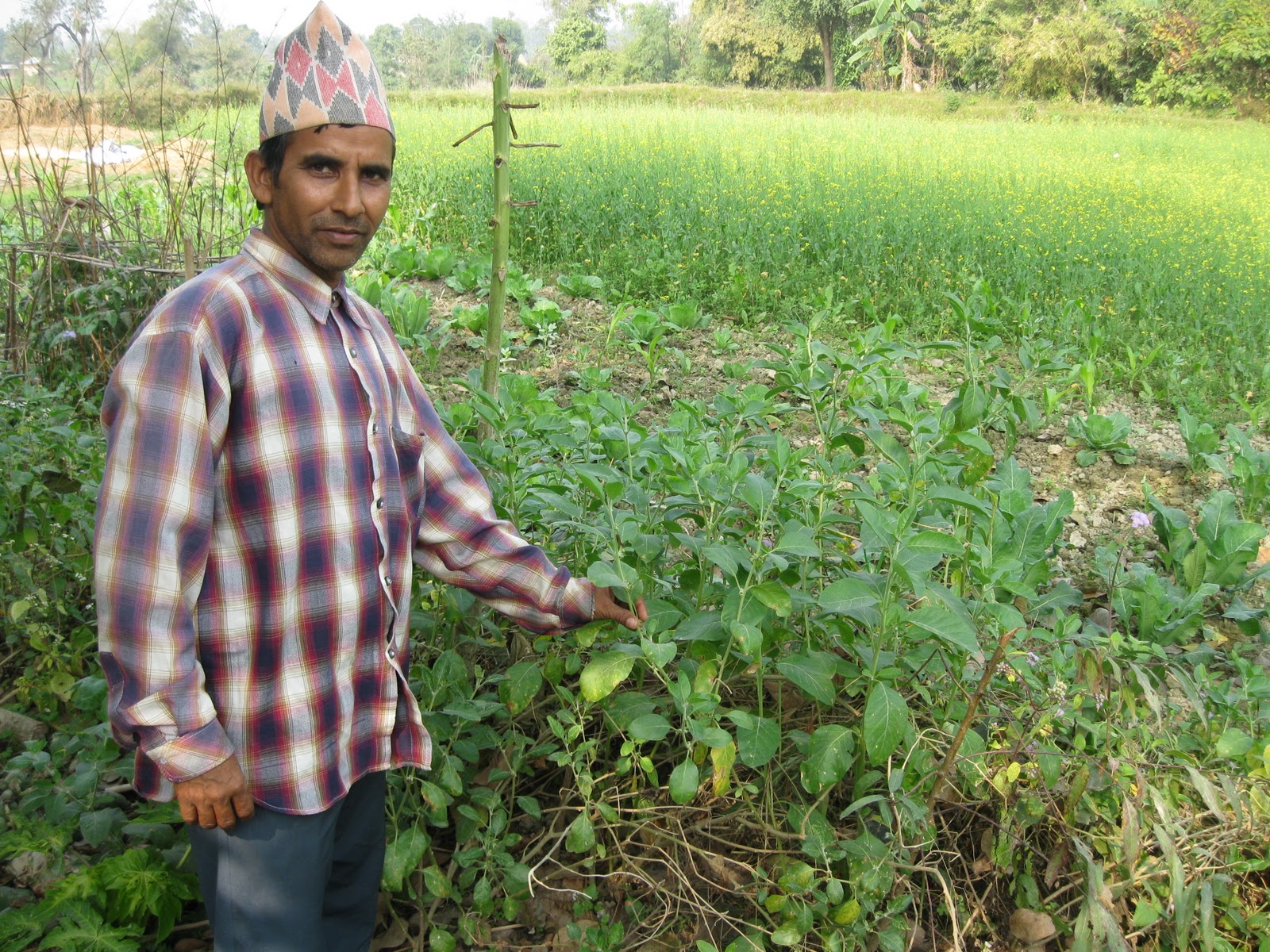
A Vaidya (Ayurvedic practitioner) in Kapilvastu district, Nepal, pointing out some Ashwagandha (Withania somnifera)

Bishunath Karmacharya, a Newari vaidya and alchemist, at his home in Banepa, Nepal, with some of the sought-after medicinal Yarshagumba (Cordyceps).

A father and son team at the family clinic in Naradevi, Kathmandu.  

A tantric jharphuke vaidya practicing his "brushing and blowing" ritual technique in combination with herbal medicine in Bhaktapur, Nepal.  

Matthew Wood, author of The Earthwise Herbal and The Book of Herbal Wisdom and my primary teacher at The School of Traditional Western Herbalism.

Gail Faith Edwards, founder of Blessed Maine herb farm, author, and teacher.  

Dr. Heiner Fruehauf, Classical Chinese Medicine luminary, founder of the CCM program at National College of Natural Medicine, and creator of the Classical Pearls formula line.  

Sunday, March 27, 2011

Chinese organ networks: The Kidney


Welcome to the next installment of Chinese organ networks.  Just to be extremely clear in giving credit where credit is due, virtually all the material in this post and in the whole series on each of the 12 organs comes from Dr. Heiner Fruehauf’s Chinese cosmology class at NCNM.  This series is in part a project for that class, a way for me to integrate the material by presenting it to the public eye.  The other things I have chosen to do for the project is a large-scale rendition of the “organ clock,” a 12 sectioned wheel that lays out the organs along with various symbols associated with them.  It is a multivalent calendar and a reference sheet for the organ networks.  It will also look extremely cool when I am finally finished putting in all the hexagrams, animals, Chinese characters and other symbols.  I will upload a photo as it develops.
In preparing this batch of organ network posts, I had do decide whether to proceed in the order of the organ clock or to switch it up slightly.  It made sense to present the Heart first (although it is actually associated with the fifth month of the Chinese character) and the Small Intestine afterwards because of their relationship, but this is also the order on the clock.  With the next two organs, the Bladder and Kidney, I am reversing the clock order and discussing the Kidney first because it is the more essential organ, the archetype of its water phase-element, and the Bladder is best understood in the context of water in general and the Kidney in particular.  So here we go: the Kidney.
At the heart of the Kidney network is a string of associations that I will simply spout out here and unpack as we go along: kidney-water-storage-lowness-north-winter-black-essence-sticky.  We could add more: humility-fear-awe; bones-ears-lower body; determination-memory.  Chinese medicine, like other traditional medicines of the world, works this way, through interlocking resonances.  This makes it hard to explain one part without the whole, but then, once the whole is sketched out, all the parts fit in beautifully.  Once fully fleshed-out, such a system gives rise to great explanatory and, ultimately, clinical power.
The kidney is the organ most closely associated with winter.  The phase-element (one of 5 stages in cycle of nature, which proceeds from water to wood to fire to earth to metal and back to water) of winter is water.  Not the water that courses and rushes, overwhelms, or even refreshes on a sunny day, but the deep, salty, source water we come from.  The ocean.  This water is what we rest in, what connects us to vastness, to the past of our ancestors and, through our own bodily “waters” to our genetic futures.  The key qualities of water in this sense--let’s call it Water--are its depth and lowness.  It seeks always the lowest place and quietly fills it up.  Winter is Water season because of this inward, downward turning.  In yin-yang terms, yang has long since peaked (at midsummer) and declined (during autumn) and now yin rules: the passive, dark, quiet, interior side of nature.  Summer was fire; winter is water.  What nature is doing at this time may be passive, but it is not nothing: rather, she is biding her time and stowing away her resources, for out of the stillness and depth of winter’s Water will spring the new year’s woody growth.  But in order for this to happen, Water must fulfill its function of storage.  At this time of year, the upper parts of plants have died off, and their life force descends into their roots or lies waiting in seeds.  Humans mirror this activity in taking the fruits of our agricultural labors, gathering them up, and preserving them.  It makes sense, then, that the scent associated with Water would be that of fermentation; I picture crocks of kim chee ripening underground, or barrels of miso quietly bubbling in a dank basement.  This is storage, holding the seed of new (yang) growth in the root cellar until the time is ripe. 
People would be well advised to heed this rhythm of nature, to honor the winter season by slowing down, conserving their energy, resting and recharging.  But we also need to do so on a smaller time-scale: nighttime is our daily winter, the time when yang (fire) descends into the embrace of yin (water).  Our society’s epidemic of insomnia and anxiety is one reflection of a deep imbalance here: our stores are depleted.  Without a healthy amount of water down below, there’s nothing to keep the fire of the heart-mind (the Kidney’s partner in the Shaoyin layer, from the perspective of the 6 layers/conformations model) from flaring out of control.  So our minds race, hearts palpitate.  But the relationship between fire and water is not quite what it sounds like.  It isn’t that the Kidney’s water somehow quenches the fire; rather, and somewhat counterintuitively, the water of the Kidney feeds the fire.  Water is not the right word to express this aspect of the kidney’s substance; fat or oil is more like it, or wax.  A candle flame sputters and flares when the wax has burned low; our consciousness reacts similarly when our energy reserves are depleted.  In order to keep the flame steady, we need to assure it that there is adequate fuel waiting in the tank.  
In naturopathic medicine there is much talk of adrenal depletion; the adrenal glands are situated directly on top of the kidneys, and their function is very much part of the sphere of the Chinese Kidney.  The adrenals can shift us into and out of the fight-or-flight adrenaline/cortisol response, i.e. they dictate whether it is appropriate to rev up the afterburners, to “burn the candle at both ends,” as it is sometimes necessary to do in order to overcome a challenge.  With the stresses of modern life, however, many of us are stuck in this sympathetic nervous system/adrenal stress response mode most of the time.  Our waxy, watery reserves are in jeopardy as we fuel the fire with endless cups of coffee, late nights, adrenaline-junkie behavior.  The antidote is as simple as “nourish, rest and relax,” but who has time for that?  Indeed, who even really knows how to get out of the careening, adrenaline-fueled vehicle that thrills us even as it hurtles us towards the cliff of burnout, nervous breakdown, thyroid crash?


Perhaps the most apt modern metaphor for the Kidney is a battery.  Throughout life we run off both the “post-natal” energy we derive from food and drink and from the air, and the “pre-natal” energy stored in the Kidney.  Even without taxing lifestyles, the Kidney energy slows drains as we age.  This is reflected in some of the common ailments of old age: back pain, knee pain, hearing loss, greying of hair, thinning of bones.  All of these aspects of anatomy and physiology are associated with the Kidney: the lower parts of the body, the bones and teeth, the luster and color of head hair, the ears.  And perhaps the most essential of all: the gonads.  The Chinese word for kidney, “shen,” also means testicle, and to a great extent the sexual functions (of males especially) fall under the realm of the Kidney network.  Semen, the very water of life, sticky, fatty, precious, is the quintessential kidney substance, the closest physical correlate of kidney essence, jing.  There is no quicker way for men to deplete our jing, the very essence of kidney water, than by overindulging in ejaculatory sex.  Nutritionally, we can understand this when we consider that semen contains large amounts of precious nutrients like zinc and omega-3 fatty acids.  It is the final, distilled end product of nutrition, a form of energy so concentrated that it has condensed into a physical substance.  Taoist longevity practices teach techniques for conserving semen, while using kidney-tonifying substances to supplement the jing.  Following the logic of our string of associations, such substances are sticky, dark or black (the color of water and winter), heavy.  Steamed Rehmannia root, an extremely dense and sticky sweet black root, is the classic example from the Chinese pharmacopeia; Ayurvedic tradition uses different terminology but could be said to tonify the Kidney using Shilajit, a highly revered, black, tarry substance that oozes from cracks in the Himalayas during the summer.  The origins of Shilajit are uncertain; it may actually be an extremely condensed form of decomposed plant matter.  It resonates with the Kidney by this fact of its being rotted down, concentrated, as well as by its blackness, stickiness, and heaviness.  Good quality Shilajit is even said to smell like cow urine; it also bears a certain resemblance to crude oil.  A partial list of ailments Shilajit treats: weak bones and fractures, diabetes, infertility, impotence.  Kidneys indeed.

              ^^ Kidney territory: Shilajit bubbling away quietly in the basement.  According to Ayurveda, Shilajit needs to be processed with triphala.  Singh Durbar Vaidyakhana, Kathmandu.  

The Kidney’s animal totem is a bird, either a chicken or an owl.  The chicken is a “slave bird,” as humble as they come, who stays low to the ground selflessly provides eggs.  The more mysterious owl’s night vision is symbolic for the mystical ability of the Kidney to “see in the dark.”
Emotionally, the healthy Kidney ought to manifest humility and awe, and the watery ability to “go with the flow.”  Pathologically, then, arrogance and rigidity can be seen as Kidney pathology.  The Kidney’s chief virtue is said to be zhi, determination or will power.  Kidney people (people who strongly express the positive qualities of the Kidney) include shamans, diviners, physicians, and artisans.  All of these paths carry a certain risk of arrogance, but it is only in making themselves low like water can true mastery be achieved in any of them.  

Sunday, February 6, 2011

Springtime Stirrings

It's been a long time, here at your random word generation device--over a month, I guess--and I apologize.  I try not to let more than two or three weeks go by between posts.  But I been busy with moving in, adjusting to school life, and getting my head and belly fully into the game of my studies in Chinese medicine and traditional Western herbalism.  I'm a month into my four year program in the former, and about to start a 9-month long course in the latter at the School of Traditional Western Herbalism with renowned herbalist Matthew Wood and some bad-ass local teachers to boot.  I'm probably slightly insane to be taking all of it on at once, but I'm awful thirsty.  More on the herbal stuff later, as it gets rolling.  Today (in honor of the advent of the Year of the Rabbit, perhaps?) I want to focus on the Chinese end of things.

Underlying the bustle of a busy new school schedule and tying together my seemingly disparate set of classes at the Classical Chinese Medicine program at NCNM is the real work: becoming intimately familiar with the conceptual framework of pre-modern China.  I may be spending a lot of time learning Chinese characters, probing auricular acupoints and practicing pulse and tongue diagnosis, but the fundamental task of this first year is getting grounded in another worldview.  This process involves a certain amount of culture shock, as when the "organs" of Chinese medicine turn out not to correspond too terribly closely to their anatomical namesakes, or even to anatomy at all.  In the CCM program luminary Dr. Heiner Fruehauf's cosmology course, we explore the esoteric resonances of each of the 12 "organ networks" one at a time, spending weeks on each one as we examine the hidden layers of depth that will ultimately serve to unlock the medical system but that modern "traditional Chinese medicine" (TCM) too often misses completely in its drive to root itself in modern scientific objectivity.  Thus TCM usually dismisses the association of the Lung (capitalization indicating that it is the Chinese organ in question) with the Tiger as mere superstition, when in fact this connection is one of the keys to understanding the function of the Lung both in terms of healthy function and pathology of that organ network.  Check out Dr. Fruehauf's work for in-depth exploration of these rich and fascinating correspondences; here is a good place to start.  

Medical systems based on traditional worldviews, while themselves scientific and empirical, defy both the reductionist and the materialist assumptions of modern science; when these complex and ungainly pegs are forced to fit into the straight and narrow hole that currently prevails (but whose days, quoth the red one, are numbered), most of that brilliant complexity is shorn off.  I saw this happening in Nepal while studying Ayurveda, and I gradually came to understand that traditional Southasian medicine has been deforming in response to colonial pressures since the days of the East India Company.  Is it still Ayurvedic practice when local herbs like Guduchi (Tinospora cordifolia) are prescribed by doctors on the basis of their anti-inflammatory properties instead of based on their rasa, virya, vipak, and prabhav, on the prakrti and vikrti (constitution and current state of im/balance) of the patient, and on other factors like kala and avastha?  Likewise, Goldenseal may be a passable substitute for anti-microbial drugs, but in all honesty, why not just go straight for the Amoxicillin?  It'll probably work a lot better, and the principle is the same.  Really traditional medicine looks beyond the external manifestations of disease to the deeper, subtler, more internal realities that lie behind them.  What pattern resulted in the inflammation or the fever?  What is the state of the tissue, that it was unable to stave off the viruses or bacteria?  In wholistic medical thinking, the internal factors are at least as important as the external ones.  What sane farmer blames the weed seeds in his soil when, in mid-July, his crops are being smothered?  Of course there are weed seeds; of course there are viruses and bacteria out there; our job as stewards of the land or of the body is to cultivate properly and practice preventatively when possible, and in times of acute need to make the appropriate intervention.  There may be times for herbicides and antibiotics; to use them indiscriminately is irresponsible and ultimately detrimental to health.

The beauty and difficulty of medicine--any intelligent, sensitive, medicine, no matter what tools and intellectual tradition it comes out of--is that treatment depends always on particulars.  In traditional (as opposed to conventional) medicine, these particulars include such subjective factors as whether the patient feels hot or cold; some fevers call for "cold" herbs like Goldenseal, others for "warm" ones like ginger or even "hot" ones like prepared Aconite.  Of course this "energetic" understanding is much more nuanced than a simple spectrum measuring pseudo-temperature; herbs have many qualities, each with its own spectrum, and multiple dimensions beyond such considerations.  It's all beautifully knotted up into the fabric of traditional understandings not only of herbs, medicine, and bodies (the microcosm) but of the world, the universe (the macrocosm).  This is why it's a year before we even start learning herbs and points in our Chinese medicine program.  There's a couple millennia's worth of groundwork to cover.


This is one of those posts where I've come to a stopping place without ever getting to what I set out to cover, namely the rudiments of the Chinese system, the 5 elements or phases.  In truth, my plan was to paste in (and dress up and contextualize) an essay I just wrote for one of my classes on the phases and their relationship to the 5 flavors recognized in Chinese medicine.  Evidently I had some venting to do first.  This is what happens when I stay away for too long!  And, if I look at the historical trend, what happens to me at the early stirrings of Spring.  Hinting ahead to the next post's material for a moment here, it's relevant that the liver and the element of wood--think green growth, not dead lumber--govern this season.  Out of the abundant stillness of winter's water burst the new green shoots, up and out.  It's a time of shaking up, bursting out, and as I've just experienced, dredging stale remnants of resentment or frustration and doing a little good, old-fashioned ranting.  May the new shoots soon bear more palatable fruit!

Wednesday, May 5, 2010

Pathfinding

I'm not always sure whether this blog is more an open journal (as the subheading once proclaimed), a manifesto, a travelogue, a sort of ethnographic cookbook, or a resource for seekers of holistic health.  It's safe to say that, like Daniel Dravit in The Man Who Would Be King, Ill Wind has been "most things in [its] time."  Today I'll venture into the swampy terrain of self-disclosure and make a declaration, a sort of "contrack" between myself and myself, witnessed by you-out-there.  To wit:

I hereby declare to remove myself, after a third and surpassingly glorious and chaotic romp through the subcontinent to be chronicled in due course, to Portland, OR, city of bridges and natural health mavens and Ursula K. LeGuin, to immerse myself mind body and spirit in the philosophy, art, science, creed, and praxis of Classical Chinese Medicine.  That deep-rooted stuff.  That heterogeneous, contested, obscure, decidedly living body of traditions about the body.

It's official--I've sent in my deposit and I'm crazy excited to make a four-year run of it at National College of Natural Medicine.  This both is and is not a change of track for me.  Is, because I've spent so much time and energy on Southasia and its languages (Nepali, Newari, now Hindi) and medical traditions.  Isn't, because, like Ayurveda, Chinese medicine, in its classical, non Mao-censored glory, has the potential to integrate immanent spirituality and transcendent health.  And unlike for Ayurveda, there is both solid legal basis for practicing Chinese medicine in the States and a deep bank of resources (other practitioners and teachers) to tap into.  So as of January '11, I'm going to shift gears and dive into East Asia.  I'll be starting from scratch in some ways, and what I do already know may get in the way at times, but I have faith that I will not only become adept as an acupuncturist and herbalist in the Chinese tradition but also be able to integrate my Ayurvedic understandings and eventually become a stronger practitioner because of my eclectic background.

Not that it's all so cut and dry as this last statement may make it sound.  In fact, I suspect that this departure will end up being not so much a destination in itself but a substantial length of road to wherever it is I'm going.  Odd as it may sound heading into an intensive four-year program,  I see an intimacy with the Chinese traditional arts as a pre-requisite to something else--even if I don't know what that something is yet.  For I can't help but entertain notions of integration, in the most ambitious and inclusive sense, extending in this case to integration medico-spiritual understanding and techniques from different traditions into one eventual Path.  I'm highly aware of my tendency to think too much (why else would I do so much rambling?), but I think a lot these days about what that ultimate Path will be.  What vehicle I will wind up in for the better part of my journey in this life.  And I have inklings.  Unwise to articulate them too soon, perhaps, but I have inklings that this yog, this union, will occur in the historical meeting ground between India and China, in Tibetan soil.  I'm not sure about this, and even if I were, I don't think there's any shortcut there.  If I'm headed to the mythical Mt. Kailash, abode of Shiva, I must approach it as the pilgrims do, by making a kora.  Perumbulating.  Completing my part of the mandala, so that when I reach the destination I am prepared, i.e. equipped with the appropriate knowledge and experience.  For now, my path leads through China, if not actual China (and I am bone-scared of modern China), then a representative cultural distillation thereof.  Wish this foolish pilgrim luck.

Even as I write this, I'm conscious that it may be the most presumptive and pretentious thing I've spouted in quite some time.  In these few paragraphs are embedded some of deepest visions, faith, and (surely) pride.  But today I feel like letting all that hang out there flapping in the ether, if for no other reason that I'll have something to look back at in, say, ten years time, and be able to judge whether I was more full of pretension or prescience.

Thursday, April 22, 2010

The Age-Old Quest for Nourishment

Today on the bus I saw a woman with a stroller get on and take a seat near the front.  She took out a bag of jelly worms and ate one, then fed another of the chewy red and yellow tubes to her infant.  I couldn’t see his or her little face, but I could picture the baby sucking the candy right down like a fat strand of spaghetti.  Ah, I thought--sweetness.  It’s the primordial taste, a direct link to our animal brains, the message that says “nourishment.”  But before someone gets on my case for advocating a diet of Haribo gummy candies for newborns, there’s a distinction that ought to be made.  There’s sweet, and then there’s sweet.  
As hunter-gatherers and early agriculturalists--in other words, people who got along somehow without food-processing technology much more sophisticated than the blade, the mortar and pestle, and the clay cooking/fermenting vessel, humans evolved to recognize viable sources of nourishment by taste.  Basically, the things that tasted good to us were the things that would keep us going, providing strength and nourishment to keep us not just alive but thriving.  Things like animal parts (especially internal organs like liver and heart, which are typically prized by traditional cultures and are eaten first by wild animals), seeds and grains, starchy roots and tubers, fruit and nuts.  Most of these foods taste sweet, in subtle or not-so-subtle ways.  Take bread, for instance: chewed for more than a few seconds, the starches in any loaf break down into shorter-chain carbohydrates, i.e. sugars.   So, in the mythical golden age of human nutrition, when the only problem with most people’s diets was that they might not be getting enough to keep body and soul together, sweetness was a pretty good indicator of nutritional value.  Enter the industrial revolution, slave labor, factory farming, and the McDonald’s-ization of global food trends, and the picture gets pretty distorted.  Now sweetness can be extracted from its nutrient matrix and concentrated, packaged and sold.  And by golly the stuff is a hit.  Rather like crack is a hit.  The same can be done with fattiness and saltiness, two other once-reliable indicators of nutrient-density.  The result?  The ketchup-dipped french fry, which to our taste buds is the perfect combination of fat, salt, and sugar.   Unfortunately, 99.999% of the fries out there are made with bad fat (chemical gobbledygook with names like ‘partially hydrogenated cottonseed oil’) bad salt (refined NaCl, possibly iodized but stripped of all other trace minerals), and even bad sugar (high-fructose corn syrup, which manages to be even sweeter and more problematic than the old devil, regular old white sucrose).  The potatoes are from a sterile, mineral-depleted lunar wasteland fumigated by spacesuit-wearing farmers, and the tomatoes, well, aw hell, they can count as a vegetable!  
I tend to get a little carried away when I think about what our society eats.  But it’s not my fault--things really are that unbalanced.  I’m not really one for statistics, but I’d be willing to bet that the average American is at least five times more likely to know how to drive a car and upload a digital photo than how to cook a simple meal of beans, greens, and grains from scratch.  And once quotidian food preparation techniques like making sourdough bread or fermenting a crock of kraut are practically obsolete in mainstream  America.  There’s a lot more that can be said on the subject of our “national eating disorder,” as Michael Pollan puts it, but as that wasn’t really meant to be my focus in this post I’ll refer interested readers to his by-now seminal The Omnivore’s Dilemma instead.  My contribution here is this: people should eat real (ideally, local, seasonal) food in appropriate quantities, yes.  But what if that’s not enough?
Most of the people I see in my capacity as an Ayurvedic/herbal health consultant have something in common.  They are craving nourishment.  I don’t mean that they are wasting away, suffering from calorie-deficiency, but they find that they’re not as satisfied by their food as they would like, or they feel a nameless hunger for something beyond what they’re getting.  This hunger has spiritual dimensions as well, of course--the hunger for meaning that typifies the postmodern era--but I’m talking about the physical plane.  Perhaps its simply the people I attract--I, as someone who has struggled with issues of nourishment and who envision my work in this world as an act of nourishing, broadly-defined; maybe it’s the spectacles I wear that see everything in a nutrition-tinted hue--but I don’t think that’s all of it.  Across the nation and the world, people are hungry.
As I learned to see from Ayurvedic teacher Claudia Welch, how many Americans are weighed down with weight that doesn’t really belong to them, sheer ballast that’s standing in for true nourishment?  Eating nutritionally empty foods can lead easily to a vicious cycle of hunger for nutrients, a hunger which is then fed with more junk, which creates weight but leads to ever more ravenous hunger...even for those who eat a reasonably balanced, mostly whole-foods diet, there is the same craving for grounding.  
Grounding: this mysterious-sounding idea bridges the gap between physical and non, and ties in another symptom of post-modernity: we live too much in our heads.  Our lack of nourishment is inseparable from our lack of sensitivity to our bodies, and to the earth.  It might be said--I’ll say it--that we hunger, at root, for connection, for the umbilical cord linking us to the great mama underfoot.  “Alternative medicine” abounds in ways to talk about this: the root chakra, the earth element, sacral vibrations...these ways of conceptualizing all share an association with the lower parts of the body.  Maybe what we lack, on some collective level, is the ability to shake our metaphysical booty.  (This isn’t so far-fetched: health would be a lot more marketable if people realized the connection between it and their libido.) 
So what to do about it?  I haven’t even mentioned the myriad stresses we’re subject to, from traffic jams to conference calls and jet lag, environmental toxins, you name it.  From an herbalist’s point of view, luckily, these issues and those of grounding and nourishment all point to a common set of remedies.  For nourishing, for grounding, for cooling our feverish appetites, for building our reserves and stabilizing our frayed nerves, sweet roots are what the order of the day.  My staunchest allies, the herbs I find myself reaching for more than any other for myself and other people, belong to this class of nourishing, adaptogenic roots:  Ashwagandha.  Shatavari/Asian asparagus species.  American Ginseng.  Licorice.  These can be taken as powder or tea or even tincture, but my favorite way is simply to eat them, gnawing on the tough Ashwagandha, chewing the sweet Asparagus rhizomes like gummy candy, sucking and chewing up a slice of licorice root until the sweetness is gone.  All extremely safe herbs (the only contraindication for any of these is with licorice, which due to its watery nature shouldn’t be used in cases of water retention or hypertension), they can be chewed freely.  I’ve even been known to give a Christmas present of a jar of “nourishing roots to gnaw” to a certain family member who, I was reminded, loves to do just that.  
To these grounding, building, soothing roots, I like to add some more specifically nervine herbs, especially in cases of heavier stress or where there is more heat and irritation (Pitta involvement).  With my Ayurvedic background, Gotu Kola (Centella asiatica) and Shankhapushpi (Convolvulus alsinoides) are my go-tos, but more recently I’ve been discovering the deeply cooling, calming, tension-relaxing nature of Motherwort and the nerve-feeding capacity of Oatstraw and seed.  A nice Ayurvedic trick is to add some calcium-rich bhasma (calcined mineral) preparation such as prawal or muktasukti bhasma, coral or oyster shell ash.  Given conservation issues, I go with oyster shell.  It lends a grounding weight to a formula and is especially nice for the Vata/Pitta conditions that so many people seem to be struggling with, and it isn’t expensive.  Finally, in cases where some extra grounding (bordering on mild sedation, such as in anxiety with insomnia) is in order, I will use something along the lines of Valerian root.  I prefer not to give heavy, dulling herbs for long periods, but they can be indispensably useful in the short-term.  

     Nourishing roots: Dong Quai (Chinese Angelica), Asian licorice, Ashwagandha, Tien Moon Dong (Asian Asparagus rhizome), American Ginseng

While herbs can nourish us and supplement the problematic food sources that are unavoidable, they are no substitute for deeper grounding work.  Depending on who, what, when and where you are, this might mean digging in a garden bed, sitting quietly and doing nothing for ten minutes, going for a walk in the woods, or playing soccer.  It almost certainly means unplugging yourself from the cyberworld for a spell.  In the spirit of practicing what I preach, I’m off to cook some dinner.  

Friday, February 12, 2010

Agni and Ama--An Ayurvedic Perspective on Digestion

I've been immersed in all things herbal lately and haven't been writing much.  Here's a little something to chew on from the Ayurvedic archives.

Agni and Ama 
The concept of agni, or digestive fire, is central to Ayurveda.  The idea is that our digestive capacity transforms food into energy just as fire turns wood into heat and light.  Healthy agni is synonymous with a hearty appetite, radiant skin, enthusiasm and an abundance of energy.  Like other fire, agni needs proper fuel and tending to burn optimally.  Without fuel--food-- the flame of agni will grow small and disappear.  On the other hand, an excess of heavy, hard-to-burn foods will smother the fire, generating unwanted byproducts--picture a fire fed with wet cardboard sending off a plume of thick black smoke.  The physiological equivalent of such smoke and soot is known as ama, and it lies at the root of many types of ill health.  Over time Ama can accumulate and cause a sense of heaviness, fatigue, sticky and smelly feces, foul breath, diminished appetite and a host of other symptoms.  Ama clogs the system and undermines our bodily intelligence.  
When this happens it can change the nature of our cravings, from natural balance-maintaining urges to perverse once that perpetuate imbalance.  For example, a healthy person with slightly high kapha but no ama may crave hot, spicy food and bitter greens, both of which will help to reduce kapha and restore balance.  However if the same person has an ama condition, his natural bodily intelligence may become distorted.  He may crave ice cream and cookies, even though he doesn’t have the agni to digest them thoroughly.      
Agni and ama are two sides of the same coin: without strong agni, ama develops; without ama, agni is free to burn hot and clean.  However, agni is vulnerable not only to ama but also to the three doshas.  

                                                       
                                                   Without agni, this isn't any fun at all.  The yellow stuff is kichari, the perfect fuel for your fire.

Types of Agni
There are four classifications of agni, although most people will experience some combination.  
The idea type of agni is sama agni, balanced digestion.  Those with sama agni can digest almost anything and experience no gas, bloating, or discomfort after eating.  They get hungry at regular intervals but not so intensely that they cannot function if they skip a meal.  Sama agni is closely associated with a balanced state of the doshas and is both a cause and an effect of good health.
Each of the other types of agni is connected with an imbalance of each of the three doshas:
Vishama agni is agni affected by Vata, the airy humour.   Vata affects agni like a wind does a fire, sometimes causing it    to flare up and other times nearly extinguishing the flame.  Vishama means “irregular,” and those with vishama agni may get intensely hungry or may forget to eat for a day or more at a time.  Their digestive capacity is often limited so they may eat more than they can properly digest.  They usually have sensitive digestion, and can feel off if they don’t eat the right thing at the right time.  In general, those with vishama agni should take care to eat a Vata-pacifying diet and to eat regular, small-to-moderate size meals without snacking in between.  Establishing regular dietary habits and controlling Vata are key to bringing vishama agni back to balance.  
Tikshna agni is associated with high Pitta, the force of fire.  Tikshna means sharp, and those with tikshna agni tend to get extremely hungry and burn through their food quickly, as a hot fire that requires frequent feeding.  They are prone to hyperacidity and burning pain during digestion or elimination and are intolerant of missing a meal.  Tiskhna agni can handle heavy, relatively hard-to-digest foods like dairy products and meat and indeed need sweet and heavy foods to cool their fire.  A generally Pitta-pacifying diet is appropriate for them. 
Manda agni is Kapha-type digestion.  Kapha affects agni like damp weather does a fire.  This kind of agni is sluggish, so those with manda agni find it easy to gain weight and hard to lose it.  They can often get by eating only one meal a day, and if they eat heavy, greasy food they may feel like it lingers in their stomachs for hours.  Those with manda agni should eat lightly and sparingly and favor Kapha-reducing foods.  It those with manda agni for whom standard western dietary advice is often most appropriate.  
Stoking Agni
According Ayurveda, a marked lack of appetite and chronic digestive issues are signs that agni is low.  Whatever your agni type (see above), low agni needs to be treated just as you would tend a tiny flame when trying to build a fire.  If starved for too long, any fire will go out.  Yet a small flame cannot handle too much fuel, or too heavy or wet fuel, at one time.  Just as you would build a fire by feeding it increasingly larger sticks, your internal fire needs to be fed conservatively at first, then with gradually more substantial foods until finally it burns hot and clean.  Let your appetite and intuition be your guide as you work on building your agni.  Practice eating light foods in moderate quantities, and stop eating before you feel completely full.  Favor warm, cooked foods, especially vegetables and whole grains.  Soups, stews and other one-pot meals are excellent food for agni.  Perhaps the best possible such dish is called kichari, made of split mung beans (mung dal) and basmati rice stewed together with spices and vegetables.  
          A simple home remedy to boost agni is a home-made ginger pickle: grate a couple inches of freshly peeled ginger and season to taste with lemon or lime juice, honey, and rock salt (use the stinky Indian black salt if you can find it).  Eat a small spoonful of this before meals, or treat it like a condiment.