Showing posts with label agni. Show all posts

Monday, August 29, 2011

Chinese Organ Networks: Stomach


Agni, the Vedic god of fire.  Agnih Ayuh - fire is life.

If the twelve organ networks are 'frequencies' that we tune into like radio stations, the Stomach is our culture's Hot 97.  Is Hot 97 still around?  Am I dating myself hopelessly here?  In New York when I was growing up, at least, that particular vein of mainstream Hip-Hop and R & B was everywhere.  And the themes of most rap lyrics ("Ice Cream," anyone?) fit right into the Stomach paradigm: oftentimes they're about chasing sensory pleasures and material success.  About the rush forward to feast the senses.  The Stomach, in short, is about appetites.  
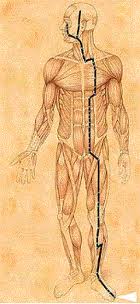
We haven't met an organ network this familiar to our collective unconscious since, well, the Large Intestine.  The resonance between the two of these unsubtle, materialistic organs is no accident, either; together the Stomach and L.I. make up a single hand-to-foot acupuncture channel called the Yang Ming meridian.  Yang Ming means 'bright Yang' or by extension 'bright sun,' and this meridian runs right down the frontmost part of the body.  It's where the sun do shine.  And think of this: the Stomach portion of the channel runs through or around all of the "sense doors"in the head (eyes, nose, mouth, ears), down the front through the nipples, down next to the genitals and the rest of the way down the anterior aspect of the legs.  It's as far forward as it could possibly be, and it takes in all of our sensory/pleasure centers.  It's no leap, then, to say the Stomach is the organ that draws us forward in the world.  This is the frequency of appetites of all kinds.  The Hexagram--number 43, Guai--even looks like a bucket that wants filling.


Nothing wrong with all this rushing and feeding.  We need strong instincts and appetites to keep us on top of the natural selection heap, or once did (now a little cash goes a long way).  But as with any of the organ frequencies, the trend of the Stomach can get out of control.  When the pursuit of sensory pleasures becomes the main purpose in life, the Stomach has usurped the imperial role of the Heart and put the gross (matter) above the subtle (spirit).  The Stomach's totem is the dragon, and it is the dragon's classic pathology to be greedy, hoarding material treasure.  Together with the Pericardium, then, the Stomach is the organ frequency most closely associated with addictions: the drive to get more of something that makes us feel good.  Neurologically, all addictions may be addictions to dopamine, the 'reward' chemical in our brains whose release our drugs (or activities) of choice stimulate.  Dopamine response is, on some level, a Stomach phenomenon.   This all is not to say that we should refrain from pleasures in general, or even that we should never let ourselves rush headlong into them.  But it's worth keeping in mind--and embodying--that the other half of the Stomach's rush is its ability to ruminate.  To chew on something for a long time; maybe even to follow the lead of our four-stomached friends and regurgitate it and chew some more.  After the rush comes the rest-and-digest.  A full belly allows us to move onto other, perhaps nobler pursuits.

Anyone who has ever fasted, even for a day, knows how much time there is all of a sudden when feeding falls off the agenda.  But this radical Stomach-centered therapy has its dangers: many of us are in need of firming up our connection to the material world, not weakening it.  Still, even simply skipping a meal once in a while can serve as a powerful reminder both that nourishment is precious and we are lucky to have such abundant access to it, and that there are other things were pursuing.

Back to the dragon: here we have a creature blessed with great strength, the gift of flight, and the ability to breathe fire.  A fierce fire-breather with a tender underbelly--what better symbol for the Stomach?  Although Chinese medicine does not refer to "digestive fire" the way Ayurveda does, the concept is implicit in the symbol of the dragon.  A healthy stomach means a healthy complement of fire, in the form of hydrochloric acid and digestive enzymes.  Of course we don't want this fire to come out; actually breathing fire is a sign of gastric distress.  But the ability to cook and transform what we take in is critical to digestive function.  The Stomach itself is responsible only for the first part--'cooking' and breaking down what we take in.  (The Spleen, as we shall see, takes over where the Stomach leaves off.)

Ayurveda may evocatively conceptualize the digestive process as one of fire--cooking and transforming--but Chinese thought takes another, equally interesting perspective.  The main digestive organs are classified as belonging mainly to the Earth element.  In the five element or five phase system, there are four directions with Earth in the center.  Earth is the stable point in the middle and so anchors the movement of the other elements.  As herbalist Paul Bergner points out, if we were plants, our roots would be the intestinal villi, and our digestive tract itself the soil out of which we grow.  Our food is our fertilizer, which these villi absorb.  Like Earth, nutrition is the very foundation of health.  Failure to digest well results in a variety of diseases, but one of the first signs of imbalance in the Earth element is what else but a feeling of ungroundedness.  When we lose our connection to Earth, "things fall apart, the center cannot hold," (thank you, Yeats) and our precarious embodied existence loses its foundation.

The theory's all well and good, but it's nice to have something to take home and chew on.  As an herb freak, I can't help but bring up ginger here.  Ginger is a simple but powerful medicine for the digestion: it somehow manages to be soothing and stimulating at the same time.  It calms nausea, relieves cramping, and generally tones the digestive fire, agni.  Of the two forms--fresh and dry--the dry stuff has a greater affinity for the Stomach (the fresh tends to go more towards the exterior of the body and cause sweating).  Perhaps because it can be drying, Chinese herbalism usually combines dry ginger with some licorice.  (Then again, Chinese herbalism combines almost everything with licorice.)  Ayurveda pulls a similar trick and often doles out pungent herbs with something sweet; perhaps the most convenient try-this-at-home approach is to use candied ginger.  Whatever form you use it in, though, ginger combines brings the fire back to the center and leaves the belly happy.


Credit: The bulk of this material was presented in the Chinese Cosmology course at NCNM that was originated by Heiner Fruehauf and taught this summer by Gregory Sax.  Thanks to them and my classmates for all the insights!


Friday, February 12, 2010

Agni and Ama--An Ayurvedic Perspective on Digestion

I've been immersed in all things herbal lately and haven't been writing much.  Here's a little something to chew on from the Ayurvedic archives.

Agni and Ama 
The concept of agni, or digestive fire, is central to Ayurveda.  The idea is that our digestive capacity transforms food into energy just as fire turns wood into heat and light.  Healthy agni is synonymous with a hearty appetite, radiant skin, enthusiasm and an abundance of energy.  Like other fire, agni needs proper fuel and tending to burn optimally.  Without fuel--food-- the flame of agni will grow small and disappear.  On the other hand, an excess of heavy, hard-to-burn foods will smother the fire, generating unwanted byproducts--picture a fire fed with wet cardboard sending off a plume of thick black smoke.  The physiological equivalent of such smoke and soot is known as ama, and it lies at the root of many types of ill health.  Over time Ama can accumulate and cause a sense of heaviness, fatigue, sticky and smelly feces, foul breath, diminished appetite and a host of other symptoms.  Ama clogs the system and undermines our bodily intelligence.  
When this happens it can change the nature of our cravings, from natural balance-maintaining urges to perverse once that perpetuate imbalance.  For example, a healthy person with slightly high kapha but no ama may crave hot, spicy food and bitter greens, both of which will help to reduce kapha and restore balance.  However if the same person has an ama condition, his natural bodily intelligence may become distorted.  He may crave ice cream and cookies, even though he doesn’t have the agni to digest them thoroughly.      
Agni and ama are two sides of the same coin: without strong agni, ama develops; without ama, agni is free to burn hot and clean.  However, agni is vulnerable not only to ama but also to the three doshas.  

                                                       
                                                   Without agni, this isn't any fun at all.  The yellow stuff is kichari, the perfect fuel for your fire.

Types of Agni
There are four classifications of agni, although most people will experience some combination.  
The idea type of agni is sama agni, balanced digestion.  Those with sama agni can digest almost anything and experience no gas, bloating, or discomfort after eating.  They get hungry at regular intervals but not so intensely that they cannot function if they skip a meal.  Sama agni is closely associated with a balanced state of the doshas and is both a cause and an effect of good health.
Each of the other types of agni is connected with an imbalance of each of the three doshas:
Vishama agni is agni affected by Vata, the airy humour.   Vata affects agni like a wind does a fire, sometimes causing it    to flare up and other times nearly extinguishing the flame.  Vishama means “irregular,” and those with vishama agni may get intensely hungry or may forget to eat for a day or more at a time.  Their digestive capacity is often limited so they may eat more than they can properly digest.  They usually have sensitive digestion, and can feel off if they don’t eat the right thing at the right time.  In general, those with vishama agni should take care to eat a Vata-pacifying diet and to eat regular, small-to-moderate size meals without snacking in between.  Establishing regular dietary habits and controlling Vata are key to bringing vishama agni back to balance.  
Tikshna agni is associated with high Pitta, the force of fire.  Tikshna means sharp, and those with tikshna agni tend to get extremely hungry and burn through their food quickly, as a hot fire that requires frequent feeding.  They are prone to hyperacidity and burning pain during digestion or elimination and are intolerant of missing a meal.  Tiskhna agni can handle heavy, relatively hard-to-digest foods like dairy products and meat and indeed need sweet and heavy foods to cool their fire.  A generally Pitta-pacifying diet is appropriate for them. 
Manda agni is Kapha-type digestion.  Kapha affects agni like damp weather does a fire.  This kind of agni is sluggish, so those with manda agni find it easy to gain weight and hard to lose it.  They can often get by eating only one meal a day, and if they eat heavy, greasy food they may feel like it lingers in their stomachs for hours.  Those with manda agni should eat lightly and sparingly and favor Kapha-reducing foods.  It those with manda agni for whom standard western dietary advice is often most appropriate.  
Stoking Agni
According Ayurveda, a marked lack of appetite and chronic digestive issues are signs that agni is low.  Whatever your agni type (see above), low agni needs to be treated just as you would tend a tiny flame when trying to build a fire.  If starved for too long, any fire will go out.  Yet a small flame cannot handle too much fuel, or too heavy or wet fuel, at one time.  Just as you would build a fire by feeding it increasingly larger sticks, your internal fire needs to be fed conservatively at first, then with gradually more substantial foods until finally it burns hot and clean.  Let your appetite and intuition be your guide as you work on building your agni.  Practice eating light foods in moderate quantities, and stop eating before you feel completely full.  Favor warm, cooked foods, especially vegetables and whole grains.  Soups, stews and other one-pot meals are excellent food for agni.  Perhaps the best possible such dish is called kichari, made of split mung beans (mung dal) and basmati rice stewed together with spices and vegetables.  
          A simple home remedy to boost agni is a home-made ginger pickle: grate a couple inches of freshly peeled ginger and season to taste with lemon or lime juice, honey, and rock salt (use the stinky Indian black salt if you can find it).  Eat a small spoonful of this before meals, or treat it like a condiment.  


Sunday, September 28, 2008

an upheaval, an uprise . . . an upchuck

It had to happen sooner or later--the dreaded, violent pangs of my digestive tract turning itself inside out. It hit my last night, after a beautiful afternoon of walking up to a Buddhist nunnery high in the hills that ring the city. My enthusiastic friend Dinesh had suggested the walk, me not realizing we were talking about a half-day excursion up a steep and winding dirt road. In lieu of sufficient water I was reduced to greedily slurping at the mealy apples and bland oranges we had bought down below in Budhanilkantha; at the top, tired and sweaty, I added to this churning brew some salty Tibetan tea, potatoes and flattened rice. I can't blame the water here for this intestinal insurrection, though I did drink it untreated from the taps on this pristine hillside; no, this ailment was a result of prajaparadha, the Sanskrit Ayurvedic term for "crime against wisdom." I ate when not hungry, just to be polite to our gracious host nuns, and mixed the verboten combination of fruit, dairy, and starch in an already struggling stomach. I made it back down the mountain fine in the dusk light, but barely survived the close, smoggy microbus rides back to my shared apartment without giving my guts their due. I'll spare the gentle reader my analysis of the physics of projectile vomiting.

I'm convincend it's good to have thorough purge once in a while--it breaks the routines that life can so easily slip into, gives a sense of perspective through its feverish lens of squirming self-pity. The real payoff, if I may be permitted a moment of masochism, is the following day, today, the day of shaky convalescence that closely resembles a mid-strength hangover. I did little but sit in the apartment and sweat, and read The Grapes of Wrath. Good timing, too: today there was a bandh, a sort of citywide strike that can be described either as popular protest against the latest governmental outrage or as blackmail--as in 'we'll shut down this city until you pay (up) for what you've done'. I'm certainly in no position to judge. So as always happens on these days, the city ground to a halt, tires burning in the street, and instead of fighting through it make some hoped-for appointment with a some contact who is probably staying home anyway, I too put my feet up. Around 4 PM I decided to give wings to a rather curious craving, for sweet black coffee. Being an inveterate meddler, I added some American Ginseng powder and some bitter liver tonic herbs along with the cardamom and sugar, and indeed the concoction perked me up, without the nervous twinge that coffee usually delivers to this Vata-Pitta constitution. I even found the appetite to eat some naan; I'm a new man.

Being sick oneself is a fine opportunity to take a look at folk medical beliefs. The operative one in this case seems to say that one should eat, not fast, when one's stomach is upset. I tend to think it depends on a number of factors, like just how nauseous and feverish one is, and am glad there was no Nepali aama around to force feed me in the night. As with many such beliefs in this part of the word, however, there may be an Ayurvedic basis for it (or, conversely, these tidbits of folk wisdom may have preceded the formal codification of Ayurveda a few thousand years ago). The concept of agni, digestive fire, is central to Ayurveda, and a certain logic argues that when the fire is weak it's necessary to feed it so it can grow strong. This has to be done carefully, so simple foods are appropriate, like plain bread, or the quintessential Ayurvedic convalescent food kichari, a stew of split mung beans (mung daal) and rice. Even now I can feel the dull flames in my beat-up belly lapping with renewed vigor at the starchy fuel I've just laid on top of the coals.

Another area where Ayurvedic concepts run together with everyday, popular conception is in the realm of heating and cooling foods: black (urad) daal, most meats, and sesame seeds are examples of hot or heating foods that are best consumed during winter. Similarly, when one has a cold (a Kapha disorder, Ayurvedically speaking), one should avoid cold drinks, yogurt, cucumbers, and other cold or cooling items. This seemingly simple (if unfamiliar) notion is not as straightforward as it seems, though, since Nepalis have no qualms about eating blazingly hot/spicy food in any weather. A lapse, a blindspot in the system? Perhaps not; it is well-documented that all the major chilli-eating cultures are distributed in tropical and subtropical latitudes, and that chilies have a cooling effect in the long run since they promote sweating. Thus hot peppers are hot in the short run, with their digestion and metabolism-stimulating effects, but ultimately cooling. (Fellow students of Ayurved, what do you say to this potentially blasphemous piece of thinking? Are chillies hot in taste, hot in virya and sweet in vipak!? They certainly don't seem to promote constipation, as they should if they had a pungent post-digestive effect.)

I should use the occasion of this otherwise rather trivial and self-centered entry (sorry, Beth, not to continue along yesterday's lofty train of thought) to relate another vignette or two about life in Nepal. In addition to the bandh, the water ran out today. I don't know how widespread the outage is, but the flow from our tap dwindled to a trickle this afternoon before drying up completely. This annoying cloud has a definite silver lining in that we're no forced out to the dhunge dhaaraa, the neighborhood water tap, to fill jugs for domestic use. Everyone is doing the same, so it becomes quite the social event. A quintessential Nepali experience, as bathing at said tap will be if the water doesn't start flowing soon.