Showing posts with label Chinese organ networks. Show all posts

Wednesday, August 31, 2011

Chinese Organ Networks: Spleen


Once upon a time in ancient China, the land was plagued by floods.  Throughout the countryside, crops were ruined, people homes were destroyed, and disease ran rampant.  In short, life was hard for the ancestral Han people--hard and soggy.  Enter a man named Gun.  Charged with controlling the floods, he labored for nine years building dikes and dams.  But all to no avail.  At the end of his life's work, the floodwaters swept it all away.  The fields continued to flood, and water snakes slithered through the stagnant waters.  Times were hard.  Enter Gun's son, Yu.  Yu took it upon himself to pick up where his father left off, and though only four days married, he heard the call to work and left home one day to control the floods.  Day after day he worked, sleeping and eating with the common people as he joined in with and organized their labor.  Instead of building dikes and dams, Yu dug drainage ditches, diverting the run-off from the great river into the fields.  Rice thrived in the carefully-irrigated paddies.  One day the course of his work took him past his house, where he could not fail to notice that his wife was in labor.  He called through the doorway on his way past: "I'm sorry, honey, the flood's out of control, I can't stop to rest now." On he labored, digging, diverting, directing.  Months passed and years; one day he passed by his house again and heard his son calling his name.  "Not now," replied. "There's too much work to be done!"  On and on he went, slowly transforming the soggy terrain of China's heartland into a fertile, productive, and flood-free cradle of civilization.  One final time he passed his home, and heard his son's voice again: it had changed, and its deep tone reminded him of his uncle's.  Tirelessly, he kept working.  By the tie the floods were finally managed once and for all, he had been at it for thirteen years.

                                                         *     *     *

The myth of Yu the Great, as he came to be known, is an archetypal one in Chinese culture.  It is a parable that teaches the value of hard work and dedication, to be sure.  But hidden amongst the symbols of the story is the essence of an organ system.  For the story of the Great Yu is the story of the Spleen.  Working tirelessly to dry the pernicious waters, making the ground fertile.  This is the Spleen's role* on a  physical level.  It must regulate the waters to make nourishment possible.  But, just as Yu slowly but surely changed the flood-plagued terrain into a productive home for the Chinese people, the Spleen is also about radical change.  Like a snake shedding its skin, the Spleen goes largely unnoticed while doing the most miraculous work of all: that of radical transformation.

On the level of the digestion, the physiological process most closely associated with the Spleen, we accomplish a small scale version of this miracle all the time.  The Stomach may break down what we eat into small particles, but it falls to the Spleen to release the energy latent in the matter.  To the Spleen, whose hexagram is made up of six yang lines and that therefore represents pure yang energy, food is just crystallized sunlight; whatever the nature of the original food, the healthy Spleen--and a correspondingly healthy digestion--will find the essence of it and use it as fuel for transformation.

This transformation is a sort of patterning: the Spleen is responsible for maintaining the basic pattern of who we are, holding everything in place and in right relation; when someone suffers from so-called Spleen qi deficiency, prolapsed organs is one possible result.  So the Spleen provides our basic patterning, but it also allows for periodic re-patterning.  Take another feature of the Snake: its sinuousness.  Snakes move by oscillating their bodies in a sort of sine wave, and indeed leave such patterns in their wake.  There is a clue here to the Spleen's affinity for resonance, the power of vibration and sound to shape matter.  The Jin Jing school of Qi Gong makes use of this principle in one of its core practices, that of shaking.  Vibrating the body and tuning into different physical and energetic levels or 'frequencies' allows the shaker to generate heat, literally loosening the bonds between molecules. What's solid moves towards liquid, liquid towards gas.  After twenty minutes or so of focused, directed shaking, the body is primed for transformation.

Another illustration of the patterning power of vibration comes from music.  We have probably all experienced music's power to transform our mood and state of mind or to transport us, even.  A still more dramatic use of sound waves is to literally reshape matter, as happens in the field of cymatics--the study of the effects of sound on matter.  The image below (from the work of Hans Jenny and other pioneering cymaticists as described at http://www.world-mysteries.com/sci_cymatics.htm) shows patterns created in sand by simple sound waves.

Sometimes--most of the time--subtle is more powerful than gross.  Like Yu the Great, the Spleen may not take much credit, but as the driving energetic force behind the transformation of matter, it sure gets a lot done behind the scenes.

In its richness and generosity, Chinese Cosmology gives another equally fertile symbol for the Spleen.  Our animal friend this time is the snake, among the most fascinating of animal symbols, for it represents both unity/eternity--as depicted in the uroboros, the snake swallowing its own tail--and of duality.  You've heard of the forked tongue; did you know about the forked penis?  Indeed.  Snakes are well known to be dual, duplicitous.  In genesis it is the snake that turns Adam and Eve onto the knowledge of twoness and condemns them to mortality.  There is no going back from twoness to undifferentiated unity.  A deeply ambivalent frequency; a scary one.  Change.  Transformation.  Who can say they are truly comfortable with it?

                                                          *     *     *

As this is the final organ network article, it's a good time to take a step back and consider the Spleen in the context of the organ clock as a whole.  The Spleen's is the position on the clock that must get us from the Stomach (all material) to the Heart (all spirit).  The Stomach's hexagram was a picture of a bucket sitting right side up.  The Heart's is an upside down bucket or empty vessel.  So the Spleen must be the position where the bucket flips and prepares to empty.  It does so through the power of warmth and light (how else are we to dry the damp?); the hexagram here, which has nothing to do with a bucket at all, is Qian (heaven), also pronounced Gan (dry).  It's one of two the bottlenecks (along with the Triple Warmer) in the journey through the organ positions, and as we'll see, there's a lot that can go wrong here.  But if all goes smoothly, the Spleen is able to make the transition from filling to emptying, matter to energy, as quietly as a snake slipping out of its skin.


 The soon-to-be-completed organ clock poster, complete with all your favorite hexagrams, critters and obscure symbols!  Coming soon to an NCNM bookstore near you.  (I'm awful proud of this one.)


Actually, the entire cycle represented by the organ clock can be seen as a progression of the hexagram 'bucket' filling up and emptying back out.  The cycle represented by the clock is happening all the time, on different scales: the hours of the day (two hours to each organ), the month of the year, and also a longer time-scale that assigns each organ a few year block.  Through this lens, we can view life's journey as two or three trips around the clock.  It's a pretty major trip, and there's a lot that goes on.  But a lot of it has to do with our friend the bucket.  Early in life we fill up the bucket, gaining resources, grounding into the material world, but eventually we have to make the transition from material to higher pursuits, not getting stuck here at the pivot point or bottleneck of the Spleen.  If we make it through, we then use the resources we've marshaled as fuel to soar.  Eventually we're out of gas, as it were, and must travel back through the bottleneck (with this aspect of the transition being represented by the Triple Warmer) and return to the material realm.  Around and around we go, and where we stop, nobody knows.  What we do know is the Spleen represents a key point, where the full bucket must flip upside down so it can start emptying again.  It is a journey through the looking glass, from the gross into the subtle world, from matter to energy (sounds waves, again).

Most people have some trouble here, feeling their way into a world our culture values no more than it acknowledges, and yet we all eventually feel incomplete if we don't find our way through the looking glass of the Spleen.  Ultimately, we must transform if we are not to stagnate; if we aren't willing to becomes butterflies, we have to remain worms.  OK, caterpillars.  But still.  Spleen work is subtle and profound in the way of metamorphoses, but it is also mundane--patterns are about what we do every day, like the Great Yu.  And appropriately enough, Yu holds the keys to the transformation we seek.  Like him, we must dry the damp.

Physically, a damp spleen is a flooded field that can't provide nourishment and can't provide a ground for transformation.  It's also (along with Liver Qi stagnation), one of the most common diagnoses in Chinese Medicine.  In this time and place, at least, Spleen dampness is a nearly ubiquitous ailment.  Partly the problem comes from the Stomach side: in our rush to feed, we literally don't slow down and chew carefully.  We're not snakes who can digest things whole.  Partly it comes from the other side, that of the unsure heights of spirit: we fear leaving the material realm.  We may bog ourselves down with dampness as a way of hedging our bets, storing ballast against the crazy balloon flight up to the realm of the Heart.

I don't know.  It's a theory!

*Footnote to the second paragraph: unlike the other organ networks, which at least have something do with the Western, anatomical organs' physiology, the Spleen is almost a total anomaly.  If anything it would seem to be the pancreas that best corresponds to the Chinese Spleen's function of digestive transformation.  Some indeed translate Pi as "spleen-pancreas" to cover their bases.  From a Western perspective, though, the Spleen does hold large amount of red blood cells and platelets in reserve; as platelets are responsible for blood clotting, it may indeed by the Western spleen that's responsible for the Chinese Spleen's function of "holding the blood in the vessels."  And as Gregory Sax points out, the unrecognized, under-appreciated but tirelessly laboring nature of the spleen fits right in with the Chinese concept!  Ultimately, though, the question of the physical organ doesn't much matter; Chinese medicine is more interested in function than in structure.  And in a very real sense, the Spleen function is one that occurs everywhere in the body (and out of it).


Monday, August 29, 2011

Chinese Organ Networks: Stomach


Agni, the Vedic god of fire.  Agnih Ayuh - fire is life.

If the twelve organ networks are 'frequencies' that we tune into like radio stations, the Stomach is our culture's Hot 97.  Is Hot 97 still around?  Am I dating myself hopelessly here?  In New York when I was growing up, at least, that particular vein of mainstream Hip-Hop and R & B was everywhere.  And the themes of most rap lyrics ("Ice Cream," anyone?) fit right into the Stomach paradigm: oftentimes they're about chasing sensory pleasures and material success.  About the rush forward to feast the senses.  The Stomach, in short, is about appetites.  

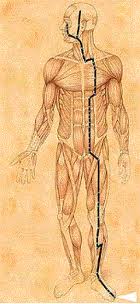
We haven't met an organ network this familiar to our collective unconscious since, well, the Large Intestine.  The resonance between the two of these unsubtle, materialistic organs is no accident, either; together the Stomach and L.I. make up a single hand-to-foot acupuncture channel called the Yang Ming meridian.  Yang Ming means 'bright Yang' or by extension 'bright sun,' and this meridian runs right down the frontmost part of the body.  It's where the sun do shine.  And think of this: the Stomach portion of the channel runs through or around all of the "sense doors"in the head (eyes, nose, mouth, ears), down the front through the nipples, down next to the genitals and the rest of the way down the anterior aspect of the legs.  It's as far forward as it could possibly be, and it takes in all of our sensory/pleasure centers.  It's no leap, then, to say the Stomach is the organ that draws us forward in the world.  This is the frequency of appetites of all kinds.  The Hexagram--number 43, Guai--even looks like a bucket that wants filling.


Nothing wrong with all this rushing and feeding.  We need strong instincts and appetites to keep us on top of the natural selection heap, or once did (now a little cash goes a long way).  But as with any of the organ frequencies, the trend of the Stomach can get out of control.  When the pursuit of sensory pleasures becomes the main purpose in life, the Stomach has usurped the imperial role of the Heart and put the gross (matter) above the subtle (spirit).  The Stomach's totem is the dragon, and it is the dragon's classic pathology to be greedy, hoarding material treasure.  Together with the Pericardium, then, the Stomach is the organ frequency most closely associated with addictions: the drive to get more of something that makes us feel good.  Neurologically, all addictions may be addictions to dopamine, the 'reward' chemical in our brains whose release our drugs (or activities) of choice stimulate.  Dopamine response is, on some level, a Stomach phenomenon.   This all is not to say that we should refrain from pleasures in general, or even that we should never let ourselves rush headlong into them.  But it's worth keeping in mind--and embodying--that the other half of the Stomach's rush is its ability to ruminate.  To chew on something for a long time; maybe even to follow the lead of our four-stomached friends and regurgitate it and chew some more.  After the rush comes the rest-and-digest.  A full belly allows us to move onto other, perhaps nobler pursuits.

Anyone who has ever fasted, even for a day, knows how much time there is all of a sudden when feeding falls off the agenda.  But this radical Stomach-centered therapy has its dangers: many of us are in need of firming up our connection to the material world, not weakening it.  Still, even simply skipping a meal once in a while can serve as a powerful reminder both that nourishment is precious and we are lucky to have such abundant access to it, and that there are other things were pursuing.

Back to the dragon: here we have a creature blessed with great strength, the gift of flight, and the ability to breathe fire.  A fierce fire-breather with a tender underbelly--what better symbol for the Stomach?  Although Chinese medicine does not refer to "digestive fire" the way Ayurveda does, the concept is implicit in the symbol of the dragon.  A healthy stomach means a healthy complement of fire, in the form of hydrochloric acid and digestive enzymes.  Of course we don't want this fire to come out; actually breathing fire is a sign of gastric distress.  But the ability to cook and transform what we take in is critical to digestive function.  The Stomach itself is responsible only for the first part--'cooking' and breaking down what we take in.  (The Spleen, as we shall see, takes over where the Stomach leaves off.)

Ayurveda may evocatively conceptualize the digestive process as one of fire--cooking and transforming--but Chinese thought takes another, equally interesting perspective.  The main digestive organs are classified as belonging mainly to the Earth element.  In the five element or five phase system, there are four directions with Earth in the center.  Earth is the stable point in the middle and so anchors the movement of the other elements.  As herbalist Paul Bergner points out, if we were plants, our roots would be the intestinal villi, and our digestive tract itself the soil out of which we grow.  Our food is our fertilizer, which these villi absorb.  Like Earth, nutrition is the very foundation of health.  Failure to digest well results in a variety of diseases, but one of the first signs of imbalance in the Earth element is what else but a feeling of ungroundedness.  When we lose our connection to Earth, "things fall apart, the center cannot hold," (thank you, Yeats) and our precarious embodied existence loses its foundation.

The theory's all well and good, but it's nice to have something to take home and chew on.  As an herb freak, I can't help but bring up ginger here.  Ginger is a simple but powerful medicine for the digestion: it somehow manages to be soothing and stimulating at the same time.  It calms nausea, relieves cramping, and generally tones the digestive fire, agni.  Of the two forms--fresh and dry--the dry stuff has a greater affinity for the Stomach (the fresh tends to go more towards the exterior of the body and cause sweating).  Perhaps because it can be drying, Chinese herbalism usually combines dry ginger with some licorice.  (Then again, Chinese herbalism combines almost everything with licorice.)  Ayurveda pulls a similar trick and often doles out pungent herbs with something sweet; perhaps the most convenient try-this-at-home approach is to use candied ginger.  Whatever form you use it in, though, ginger combines brings the fire back to the center and leaves the belly happy.


Credit: The bulk of this material was presented in the Chinese Cosmology course at NCNM that was originated by Heiner Fruehauf and taught this summer by Gregory Sax.  Thanks to them and my classmates for all the insights!


Sunday, August 14, 2011

Chinese Organ Networks: Large Intestine


^A youthful Ahh-nolt showing off his Large Intestine channel^

The main themes of the Large Intestine are relatively straightforward.  Take the associated time of day: 5-7 A.M.  This is when two things happen: the sun rises (reliably), and we get up and take a crap (ideally).  So you'll know what I mean when I say this organ is about manifestation in the material world.  The concept is about as subtle as a blazing orb appearing in the sky, or a pile of dung steaming in the morning light.

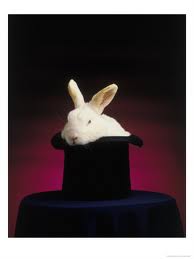
In the last position, that of the Lung, a sort of tense equilibrium reigned.  Yin and yang were in dynamic balance, and their interaction gave rise to a kind of pressure.  The spring of Spring was loaded, but not yet sprung.  Well, with the Large Intestine's move into manifestation, it springs.  Plants pop of the ground, leaves burst forth from buds, and bunnies (the Large Intestine animal) tumble out of hats.  And do the other thing that bunnies are famous for, thereby creating--more bunnies.  Material manifestation.

                                                Hexagram 34, Thunder over Heaven  >>

Though we tend to take it for franted, the Large Intestine's function is an essential one.  A couple days of constipation are enough to remind us: it's important to get rid of waste.  This holds true on various levels; having lived in Kathmandu during garbage collection strikes, I can attest that there's no faster way to shut down the normal working of a city and make it downright unlivable than to stop taking out the trash.

  << Portrait of a badly constipated city

Despite the seemingly lowly nature of this job, it's one to be held in high esteem.  The great ancient text of Chinese Medicine, the Huang Di Nei Jing, credits the Large Intestine with 'Conducting the Dao,' or 'Showing the Way.'  The Dao is the great ineffable, transcendent concept of ancient Chinese philosophy; of all the organs to be associated with the Dao, our feces-forming colon is perhaps not the first to come to mind.  I am still somewhat baffled by the Nei Jing's statement.  But perhaps a hint comes from the L.I.'s classification as a metal organ--metal being the phase element associated with purity and cleanliness.  This is the organ that can handle the waste and remain pure, that can roll up its sleeves and dive deep into the vicissitudes of the material world and come up sparkling clean.  The lesson of the Large Intestine may be about how to be "in the world but not of it."

In order to accomplish its all-important mission of taking out the trash, the Large Intestine has one major strategy, and one secondary one.  The major one is: push!  And the other: let go.  It's a decisive movement, this pushing and releasing--no pussyfooting around.  This is strong, directed action.  And it is characteristic of that Large Intestine archetype, the dictator.  A dictator is unafraid to show the way (to conduct the Dao, in the best case scenario) and use his Large Intestine channel index finger to point it out.  And he doesn't shy away from letting go of waste, either.  Indeed, it takes a bit of an asshole to make an effective dictator.  Nice, polite guys wouldn't get the job done.


Now it's an interesting congruence that Mao's symbol was the rising sun.  Gregory Sax's interpretation here is that Mao was a pathological force insofar as he was unwilling to let go of that moment of power.  A healthy L.I. moves beyond dictating the way forward; it releases and allows the qi to flow to the next organ, the Stomach.  To keep pushing without letting go is not a happy solution.  And what better illustration of this megalomaniacal constipation than the Three Gorges Dam project.  This brainchild of the Chairman's aimed to dictate the course of the Yangzi river, which was associated classically with the Large Intestine.  To the horror of environmental groups worldwide, in 2006 this world's largest dam across the biggest river in Asia was completed so that there might be "enough power to keep the lights on...forever."  This is Large Intestine thinking run amok, and China now risks a potentially fatal case of constipation.  Death, after all, begins in the colon.  It did for the Yangzi river dolphin, a "functionally extinct" species that once graced China's great Large Intestine channel like a majestic parasitic worm.


                                                                      ^ Farewell, sweet prince!

Finally, as an avid student of herbalism, I can't help but wonder if the Chinese herb Da Huang ("big yellow"), Turkey Rhubarb root, could have cured Mao of some of his pathological tendencies.  This is the major, formula-heading herb used classically for pathologies of the Yang Ming channel (Stomach and Large Intestine).  It is a laxative herb that drains heat and excess down and out.  In doing so it is said to clear out the old and generate the new.  But--and here's the beauty of classical Chinese thinking--Da Huang's use isn't limited to cases of constipation or heat build-up.  It is also indicated for certain kinds of delusional psychosis.  It may be that Mao, obsessed with the rising sun, the power of"light forever," and even swimming in the mighty, roiling Yangzi river, could have been prompted to let go of some of these ultimately destructive notions.  It may be that, as living Large Intestine archetype, Mao just needed to take a good shit.


Wednesday, August 10, 2011

Chinese Organ Networks: Lung


There's always a great temptation, when dealing with theories, to try and fit the world neatly into them.  Anyone who's stumbled onto a system and found it useful has experienced this; once you start thinking in terms of Meyers-Briggs personality types, or Ayurvedic doshas, or whatever framework you're into, the tendency is to apply them to everything.  Heck, it's fun, and it can be illuminating up to a point.  But ultimately, the theory never fits completely.  It's the old map and territory conundrum: to make a good enough map to really represent the lay of the land, we'd have to make it as big as the landscape we're mapping.  And that would be awkward.  And expensive.  Not very travel-friendly.

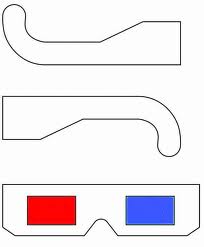
The systems of Chinese Medicine are many and subtle; there's yin-yang, the Five Elements (or, more accurately, Five Phases), the Six Conformations, and our topic of the moment, the 12 Organs or organ networks.  Twelve is a pretty big number when it comes to a system.  Twelve tones are enough for to generate all of Western music.  (And five enough for most of blues and rock.)  Twelve makes for a pretty fine-grained map.  But it's still a map.  So how to bend a linear, finite sort of system like the one at hand around an complex, infinite universe?  Clearly, for starters, one-to-one correspondences won't do.  That way we'd run out of symbols way before we ran out of things to map them onto.  One solution is to do something akin to what music does: multiple notes at a time.  Shadings, crescendos, trills, arpeggios.  Skillful combinations of the basic building blocks.  A wise, skillful classical medicine certainly must use its theories this way, with flexibility and artfulness.  Okay.  But there's still an issue of evoking something complex and alive using seemingly static symbols.  What my current Cosmology teacher Gregory Sax suggest--and I paraphrase very loosely here--is a sort of 3-D glasses effect.  Red alone isn't enough; nor is blue, but by their interaction they give rise to a third dimension, and the picture pops off the page.  It's the motion between contradictory elements that produces a third, fundamentally different phenomenon and brings the whole picture to life.

This has all been a very long-winded way of justifying the simultaneous-X-and-Y nature of the Lung.  Which we haven't even begun discussing.  Yikes.  But here goes.  Here's Story X.

As a metal organ in the Five Element classification, the Lung has to do with contraction, going inward, sinking down, cutting away.  Its emotion is grief, the pain we must feel in order to release our attachments and sink down to the lowest place (the Water phase), whence we will be able to rise again (Wood).  Its symbol is the tiger: the mythological White Tiger that represents the Fall.  And like that season of falling leaves, the lung moves down: it is called the "upper source of water," for it sits at the top of the thorax like a lid and condenses the steam gleaned from the Heart-Kidney axis and distributes this usable 'fresh water' form of qi down and outward.  As Metal is dry, so the Lung is susceptible to dryness and must be kept appropriately moist.  When the lung dries up, so does bodily nourishment and vitality; tuberculosis is a classic Lung pathology.  The spirit associated with the Lung is the Po, which unlike the Liver's wandering Hun stays in the body.  Like a tiger, Po has strong animal instincts and provided a connection to the earth.  Indeed, it is understood that after death the Po will sink back down into the ground.

Now this little story may sound like utter Greek to some, but to those familiar with Chinese medical theory it ought to be reasonably convincing: Metal, upper source of water, the Po--all the key talking points of the Lung. Now let's have a look at the other side.  Here's Story Y:

Within the calendrical framework, the Lung holds the year's first position.  The Chinese year traditionally began in very early Spring, and this is the month associated with the Lung.  The Gallbladder saw the subtle but powerful re-introduction of yang at the Winter solstice; the Liver continued the uphill journey back towards summer, and now the Lung takes the third and decisive step.  The yang energy is now as prevalent as the yin, and momentum is on yang's side.  All of nature is taking a breath and expanding: springtime.  Motion is upward and outward.  This is a moist time of year, what with the snowmelt, and the Lung is susceptible to this moisture.  Too damp and it quickly develops phlegmy congestion (isn't this how we tend to get sick?)  And as for the tiger, what better symbol for the fierceness and explosive power of the new yang of springtime...

And so forth.  For the average TCM student, this story, Story Y, may be less familiar.  But it's no less true to the symbols of Chinese cosmology; the Lung position is definitely the first month of Spring.  There's undeniably a Wood aspect to the Lung as well as a Metal one.  And Metal and Wood are opposites.  It's tempting to give in to frustration and walk away from the whole project, concluding that 'it just goes to show these symbols can be stretched to mean just about anything.' But before you join this camp, at least try on the fancy colored glasses.  With one eye on Metal and the other on Wood--one on X and the other on Y--a new perspective leaps off the page.  Call it Story Z:

The Lung has one foot in Metal, the other in Wood; it has a dual nature like the scales of Libra (the Western astrological sign that corresponds most closely to the Lung's month).  Its hexagram reveals this duality: It features three yang lines below three yin lines; heaven below earth.  Heaven wants to float up, earth to sink down, so this hexagram, called Tai, is a picture of a merging union.  But in the process of merging, these upward and downward forces create pressure between them.  This is the origin of the Lung's ability to "pressurize" the system and keep our vessels full of qi.  Therefore when the Lung is weak, our energy flags and we lose vitality.  A weak voice is a classic sign of Lung qi deficiency; there is not enough pressure in the system to power the vocal output.  This Lung pressure is born of a delicate balance between forces, and indeed the Lung is called the "delicate organ" because it demands balance.  Too damp or too dry and it suffers.  And the Lung's association with Spring is not actually about bursting forth; that will happen next month with the Large Intestine.  For now, yang has merely reached equilibrium with yin.  Yang cannot yet erupt visibly; the Lung's month of early spring is the time when the stage is set, the spring coiled, the system pressurized.  It's all potential energy, not yet actualized into kinetic motion.  The tiger--the crouching tiger of martial arts fame--symbolizes this: he's poised to pounce.  The Lung's poise, dynamic nature and proximity to the Heart make it uniquely well suited to its 12 Officials cabinet position of Prime Minister, the director of the other organs.  Everyone is willing to listen to someone so highly placed, well balanced, inspired and full of life.


And with such a beautiful coat.  Did I mention the Lung rules the surface of the body?

Next time on Chinese Organ Networks: the power of the rising sun, the manifestation of the grossly physical, and the Large Intestine.

Wednesday, June 22, 2011

Chinese Organ Networks: Liver

And so we come around to the Liver.  The Liver is a frickin' doozy.  Enough so that I'm actually procrastinating jumping into the meat of the matter, because I hardly know where to start.  This is an organ system rife with rich associations and layers of meaning that seem to shoot out in all directions like fresh green tendrils in springtime.  Stubbornly spreading up and out, against gravity, persevering against tough odds--namely the laws of physics, which luckily seem not to apply to living things.  Or rather, life finds the loopholes and bends said laws to its own benefit and makes of Newton and Descartes a gleeful mock.
                                                                          ^An ancient Etruscan bronze liver, probably used for divination instruction and practice

As usual, the macrocosmic position of the organ reveals much of its nature.  We saw how in a sense the Gallbladder marks the beginning of the new year, as yang (light, warmth) makes its return--as yet unfelt, perhaps, but influential all the same.  To the Liver falls the task of continuing the what the Gallbladder has initiated.  The Gallbladder's job was romantic--the spark in the dark, setting things off with a little explosion; the Liver's is decidedly less so.  The Liver doesn't take that critical first step back towards the light, but rather the equally critical second step.  It plods forward, against the flow, against gravity.  It perseveres.  Its animal symbol is the ox: the creature best suited to long, hard labor.  The ox wants and needs something to push against.

Labor...pushing...if this is all sounding suspiciously feminine, it's not a coincidence.  The Liver is the organ most closely associated with womanhood, most obviously through the blood, which the Liver is said to store.  "Women are blood, men are qi," goes a Chinese medicine saying.  But we are getting ahead of ourselves.  We aren't finished with the ox.  Could there be a more specific connection between oxen and women?  Here's a hint: take a look at a picture of an ox head or skull.  Georgia' O'Keeffe was on top of this one (though she chose a ram, the effect is much the same.)  The relation of head and horns is strikingly similar to that of womb and ovaries via the Fallopian tubes.  Women, in some sense, have the power of oxen: to push, to persevere, to plod forward and continue the endless work.  Masculine energy is more apt to come in bursts; men are often good initiators and warriors, hunters, whereas women keep the ball rolling.  Hormonally, women may be better suited to traditional "women's work"--not just the obvious maternal activities but such slow, methodical, careful work as weaving, spinning, seed-sorting, knitting.  It's not just a matter of culture.  Women are rich in blood, which in Chinese medicine also means certain hormones, and this hormonal reality shapes much of physical, psychological reality.

Of course it's not just women who benefit from the ability to push, to go against the flow.  This type of sustained work is at the heart of self-cultivation practices, from martial arts to meditation and everything in between (Tai Qi and Qi Gong and genuine Hatha Yoga tend to fall towards the center of this spectrum).  The Chinese sagely ideal is of wu wei, effortless action; but in order to achieve such a state of skill it is necessary to train intensively.  The archetypal Zen master who flows so artfully through life does not achieve their mastery except through rigorous training.

There's yet another feminine connection to be made.  The Liver's cosmological time is most of January and the beginning of February, a period which overlaps (even if it doesn't completely correspond) with the Western astrological sign of Aquarius.  At first glance the associations are disparate; the Liver with blood and femininity and Aquarius with water, creativity, prophetic change.  Symbols take us deeper, however.  The traditional shorthand for Aquarius is a double squiggle, like two letter M's nested on top of one another.  Now it is an interesting fact that the word for "mother" in virtually every language begins with or contains the "m" sound.  mother, mama, mom, mu, ma, aama, maman...there are probably exceptions, but I can't come up with any.  Infants seem hardwired to make the "m" sound in relation to their mothers.  The letter M even look like a couple of a pair of bent legs, spread, as in a reclining birthing position.  Aquarius is also classified as an air sign; we'll soon see how air or wind relates to the Liver.


That's two liver-blood-femininity strings of association so far.  We've momentarily come up for air; time now to dive down and pull up one more set.  The Liver stores the blood, has everything to do with this vital substance.  What is the blood, on the level of micro-macrocosmic correspondences?  It is our vital water, our veins and arteries like rivulets and streams and great rivers.  They all flow into the sea, our great reservoir of blood, the Liver.  Another way to look at it: evolutionarily we come from the ocean.  Primitive sea creatures need no closed circulatory systems, but when we crawled out of the watery depths, we needed a way to bring some of that ocean with us.  The blood, and especially the Liver's blood reservoir, is that oceanic remnant.  It's noteworthy, too, that we're not talking about fresh water here.  The ocean is salty, and so is the blood.  Nor is the saltiness of either composed of simple sodium chloride, though that is the most prominent component of ocean and blood salts by weight.  The ocean contains hundreds of trace minerals in solution, and so does our blood.  Though nutritional science hasn't uncovered a physiological need for every such mineral, more and more are being found to be essential to health.  This is why unrefined sea salt (including salt mined from ancient sea beds) are so critical to health.  Remove all those essential trace minerals, and you compromise the quality of your internal ocean.

Another conceptual leap: the Liver and blood relate directly to Wind and the nervous system.  The most basic connection is to be found in the trigram Xun, The Gentle or Wind or The Subtle.  It shows a single yin line penetrating up through two steadfast yang lines.  It is yin moving upwards, and represents the pervasiveness of subtle influence.  This is how a breeze operates: it is gentle, but if it maintains a consistent direction it can be powerful in the long run.  But Xun is also a symbol for Wood, the upward growth of springtime.  It is the yin aspect of Wood, just as the Liver is the yin Wood organ (and the Gallbladder yang Wood, as represented by the trigram Zhen, with one yang line thrusting up below two of yin).  Wind, the force of movement and communication, is related to springtime.  Spring is, after all, the time when things are shaken up, when the "winds of change" blow.  That, roughly, is how the physiological force of Wind or Air is related to the Liver.  (An interesting contrast with Ayurveda here; in that system, Wind or Vata is more associated with the large intestine, and while it is closely related to the nervous system, the concept of blood and the liver is largely separate.  At least as far as I understand it.)

So the Liver is responsible for Wind, for proper movement.  Movement of what?  Of qi, primarily.  Of subtle energy, including perhaps the electro-chemical impulses that are the language of our nervous system.  Now it may be less surprising that trace mineral deficiencies have been implicated in a number of growing disorders including ADD and ADHD.  These can be viewed in terms of Wind; hypermobility; an ungrounded and in some sense overactive nervous system.  When our blood is not well fortified with the natural ocean's mineral spectrum, our Wood and with it our Wind go out of whack.  In our terms, its a Liver problem.

We've yet to look at the Confucian 12 officials system.  In it the role of the Liver is clear cut: it is the general.  It commands, strategizes, schemes.  Physiologically, the little-L liver sorts out thousands or millions of chemical reaction pathways, sending this here and that there and generally ironing out an operating plan for the Gallbladder to execute.  The Liver is resourceful.  As a commander it wants to win; it strives to live.  See?  It's not just the Chinese language that contains plenty of forgotten symbolic resonance.  The liver is the only organ that is capable of fully regenerating itself from a small fraction.  It's that (re)generative power of Wood.

Finally, the herbal side of the story.  The herb that best represents the upward and outward exuberance of Wood is none other than the familiar cinnamon (Chinese Gui Zhi (twigs) or Rou Gui (bark)).  Cinnamon was anciently classified in the Tang Ye Jing as a "Wood within Wood" herb, meaning that it is the essence of Wood.  Although modern TCM likes to treat the liver in terms of suppressing flaring liver yang with cold herbs and smoothing out the liver qi with herbs like Bupleurum (Chai Hu), much modern Liver pathology has more to do with cold in the blood.  Here our internal ocean gets frozen over, leading to blood deficiency and stasis, with signs like cold extremities, menstrual cramps with clotty bleeding, and sexual frigidity.  Bulldozing through the ice with qi-moving herbs won't work; we have to melt the ice.  Cinnamon gets into the blood layer (Jue Yin) and does just that, especially when combined with the star blood herb Dang Gui (Chinese Angelica).

Sources: as always with the Chinese Organ Networks series, virtually all the material for this post comes from Dr. Heiner's Fruehauf's Chinese Cosmology lectures at NCNM.  Hail the chief!


Chinese Organ Networks: Gallbladder

If you’re like most people, you probably don’t know exactly where the gallbladder is, or what it does.  That’s the little-G gallbladder we’re talking about, as opposed to the big-G esoteric Chinese organ system.  But bear with me on this atypical anatomical aside.  The gallbladder happens to be a dark green sac tucked under the liver, where it stores and concentrates bile.  Bile is what our bodies use to emulsify fat.  This means breaking big globules of fat into tiny little droplets.  Bile works like soap: it ‘cuts’ grease, through a bit of chemical magic making it essentially water-soluble.  Because let's face it: our bodies wouldn't work very well or look very nice if we couldn't get oil and water to mix.  Thanks to the gallbladder and its bile, it becomes possible to absorb said fats via the villi of the intestines and put them to work everywhere from our cell membranes to our brains to our sex hormones.  Yes, fat is sadly underrated.  
So much for the gallbladder; unless you’re unusually interested in medicine, you’ll probably forget the little tidbit you just learned about this organ and be none the worse for it.  And yet you may know more than you think you do about the Gallbladder, big-G.  The Chinese functional, cosmological, symbolical organ network.  Dubious?  Well, chances are you’re familiar with the saying that someone “has a lot of gall.”  Maybe you’re apt to say it yourself when the someone pisses you off, does something cheeky, bold, possibly transgressive.  (Granted, you might just as often hear that s/he has balls, or a lot of nerve, but gall is really the most accurate.) The saying indicates that, even if as a cultural we’ve forgotten, we used to think in embodied terms.  Like other traditional cultures, our ancestors recognized that emotional and physiological realities aren’t distinct and separate realms.  It is possible to eat your heart out, or, even worse, to screw your brains out.  (That's jing, essence, you're squandering!  Or so the Daoist sages tell us.)   
As the saying about “a lot of gall” indicates, the Gallbladder is for courage.  It is the commander of the battle, leading the troops by example, charging out first into the fray.  As such, it must be able to act decisively and intuitively.  Gallbladder types have no trouble deciding and acting, even if it sometimes seems they act and then decide. 
The Gallbladder holds a very special position in the macrocosmic organ clock.  In the last position we had the Triple Warmer, stationed at the most yin time of year, roughly early December.  Light--yang qi--was at its weakest then; the days were about to be as short as they get.  With the Gallbladder, we take the first step back towards the light.  This is the position of midnight, of winter solstice.  In some sense this is the yinnest time; in another, it is the most yang.  It is here in the dead of night, in the depths of winter, that we witness the rebirth of the light.  Christmas, after all, was originally a pagan festival, and it is no coincidence that it falls around the solstice and involves lots of candles and lights.  December 23rd may not seem to contain much more daylight than the 22nd, but the decisive first step has been taken.  The long climb back towards June 22nd and the summer solstice, and the Gallbladder’s clock partner the Heart, has begun.  
Of course, unless you’re truly observant and unusually sensitive, you won’t notice that the days are getting longer for some time.  You certainly won’t feel any increase in warmth, not for months yet; at bottom, this is because matter follows energy with a lag of 90 degrees (1/2 pi radians, a quarter turn of a circle).  The upward movement is already present on the day after the shortest day of the year; the shift has occurred, but it will take a while to manifest physically.  The energy of yang returning is subtle but powerful.  In the Gallbladder time, even if we don’t notice it, this decisive shift occurs.  In the hexagram corresponding to this organ position, one yang line shoves up beneath five yin lines.  The yang is back, it has been reborn, but it is small, and as yet hidden beneath the ground, like an unfurling plant that has not yet broken through the surface.  
This image of a plant shooting upwards is actually an ideal symbol for the Gallbladder; this is the first organ of the Wood phase element.  In 5 Element theory, Wood is the springtime, the force of upward and outward growth, exuberant new life, that comes after the dormancy of Water (winter).  The motion of wood is strongly upward, counter to gravity.  And, fittingly, the Gallbladder is responsible for uprightness.  A military commander stands up straight and expects the same of his troops.  There is strength in this kind of perpendicular straightness.  A flood of symbols come to mind: a flagpole, a skyscraper...perhaps an erect phallus.  The Gallbladder is an overwhelmingly masculine archetype.  Returning for a moment to anatomy and physiology of the corresponding bodily organ, it is the fat that the gallbladder helps break down that nourishes our endocrine and reproductive systems.  If we can’t digest fats, our courage and our libidos both start to break down.  
A bit of food for thought for the herbalists out there: could Spikenard, Aralia racemosa (and A. californica), be considered a Gallbladder remedy?  It is, after all, an herb that aids in the digestion and metabolism of fat, nourishing them endocrine system, and has been  said to lend courage and confidence that we can handle what comes.  Ah, beautiful Spikenard!
We’ve already alluded a couple of times to a theme that quickly emerges with the Gallbladder: taking the first step.  Initiating action.  A good image for the Gallbladder is a spark plug, a device that provides the initial impetus to get a powerful cycle moving again.  And like a combustion engine’s, this organ network’s energy can be explosive.  The Gallbladder can express a lot of anger; this is healthy, but if it comes out suddenly and violently, it is pathological.  The transition back into the light half of the year should be barely noticeable; it is happening underground, after all.  
The Gallbladder channel runs down the sides of the body.  Actually it doesn’t so much run as it does zig-zag its way down just lateral to the eyes to the little toe.  It has a back-and-forth energy to it.  Gallbladder pathologies often have something of this back-and-forth, "half-in, half-out" nature.  The Gallbladder swings open and shut, acting like a door hinge.  Pathologies that affect the Gallbladder's Shao Yang layer are neither here nor there: Malaria is the archetypal example.  Its characteristic fever is the "intermittent" fever that comes and goes every few days, coursing through predictable cycles.  Alternating chills and fever are a hallmark of Shaoyang (Gallbladder-Triple Warmer) disorders, and the herbs that treat them tend to be exceedingly bitter.  In the Chinese system, there's Chai Hu, Bupleurum; in the New World herbal tradition, we have boneset, Eupatorium perfoliatum.  Not coincidentally, bitter is the flavor that stimulates bile flow, in effect opening the hinge and letting whatever is out.  


The Gallbladder animal totem is the humble mouse, or more properly the rat.  In Chinese mythology, the rat rides on the ox (the symbol for the liver, as the next post will discuss) across the river and hops off first upon reaching the other side.  Thus the rat wins the race; the Gallbladder is always first.  Rats are courageous, often disgustingly so; and interestingly, rats are one of the few mammals not to have a gallbladder.  That's probably a good enough head-scratcher to end on...
As usual with these organ posts, all credit due to Heiner Fruehauf and his Cosmology lectures. 

Tuesday, May 10, 2011

Chinese Organ Networks: Triple Warmer


While living in Kathmandu, I would get a cold almost every month.  Normally I get a sniffle once or twice a year and figured it was the ever-present smog of Nepal’s fast expanding capital that made the difference.  Of course, the heavy, hazy air didn’t exactly encourage me to get outside much for exercise, so I had that working against me as well.  Eventually I noticed a third factor that seemed to be the decisive one.  I lived near a popular ex-pat restaurant that served some of the city’s more palatable pizza.  When I got tired of the ubiquitous daal-bhaat (rice and soupy lentils with just enough vegetables and chutneys to lend each hand-scooped mouthful some flavor) I would sometimes treat myself at the pizza place (the Roadhouse Cafe in Bhatbhateni).  What struck me after a few months was that my head colds would come on reliably the day after the pizza.  This shouldn’t have come as a huge surprise, given that I was in Nepal to study Ayurvedic medicine, and it is elementary in Ayurveda that cheese is a phlegm-forming, kapha sort of food that will tend to cause colds, cough, and congestion.  This knowledge may have slowed me down, but it didn’t stop me; I ate at the roadhouse quite a few times over the course of my tenure in Nepal, and while I didn’t get sick every time, it happened at least once or twice more.  (I did at least get smarter about it make sure to antidote the yak cheese with plenty of black pepper and other pungent digestives).  
What this little anecdote points to, besides the minor perils of ex-pat living, is the role of the lymph in immunity.  The lymph ducts form a sort of subterranean waterway that parallels the more familiar blood vessels, shadowing them through the streets and avenues of our bodies like a network of sewer tunnels.  Their job is to transport fats and oils (which are absorbed through a different mechanism from protein and carbs) as well as the white blood cells that constitute the various branches of our immune army.  Unlike blood vessels, they don’t have a heart to pump their contents along, but rely on the movement of our bodies to keep them from stagnating.  My little Kathmandu vignette is a perfect example of how to gum up the lymph: not much exercise, immune burden from environmental toxins, and then the kicker, a sudden load of fat.  When my lymph vessels filled with sticky cheese metabolites, the already under-siege immune cells got stuck in the muck.  The resulting colds can be seen not just as viral issue due in part to low immunity but also as the body’s way of clearing out the excess kapha--the dense, damp, phlegmatic humor--by melting it.  The fact that I felt like the dead for a couple days was a small price for my system to pay for clearing out the traffic jam in the immune highway system.  
And now for the ever-so-smooth transition to Chinese Medicine...
Like sewers, the lymphatic ducts work best when they’re empty.  The Daoist tradition is well aware of the value of this kind of emptiness: what else makes a cup useful, or a room?  This kind of strategic emptiness allows for another quality that is closely associated with the Dao: flow.  If we stay unimpeded, keeping our vessels empty, we make room for flow to happen.  Here philosophy and its sister, medicine, are imitating nature; those in pursuit of flow or Dao (“the way”) have long looked to water as a model.  Water is that whose movement is effortless--always flowing by the path of least resistance--and completely efficient; moving water is focused, relentless, and ultimately able to overpower harder substances such as rock.  Water embodies wu wei, the Daoist ideal of non-action.  According to this teaching, the highest form of action comes from a still place of masterful non-effort.  Wu wei is exhibited by the martial artist who turns an opponent’s attack against him and sends him flying with a barely perceptible motion, or an athlete “in the zone” whose every movement becomes fluid, instinctual, and highly effective.  Being “in the zone” means being in the flow of things, in other words, being like water.  
All this watery talk so far, and still no mention of any Chinese organ!  I have, I admit, been putting off introducing the unlikely-sounding Triple Warmer (or Triple Heater, or Three Burners), it being an “organ” that requires some explanation.  Unlike the Spleen, the Bladder, or even the Pericardium, the Triple Warmer has no clear anatomical correlate.  Its name refers to the three” “burning spaces” in the body, the zones of metabolic fire that causes our bodily water to circulate.  This probably isn’t a bad way to sum up the Triple Warmer’s function: the fire in the water.  Some more on the water half of this equation, before we delve into the more firey side.  
Another remarkable quality of water is that it connects things.  We even define geographic areas in terms of their watersheds, a watershed being that area which is drained by a given river system.  In theory, every drop of water that falls in a particular watershed ends up in the associated river.  Seen more organically, the river with its branching tributaries reaches out to every bit of land around it, so that no patch of ground is far from a stream or rivulet.  In the body, we see the arteries branching smaller and smaller in capillaries, until every cell is within spitting distance of life-giving blood supply (lymph works in a similar way).  Water is that which connects things, binds them together; there’s no separating my water from your water, which is why the tribe downstream from the river-crappers goes to war every time.  If the Triple Warmer has everything to do with flow in the system and with connection, we have good reason to look to beyond the lymph to the nervous system and, even more etherically, the endocrine system.  These de-centralized networks govern the communication and the flow of information, through electrochemical impulses and hormones, respectively; they affect everything that impacts our other systems and affects them back in turn.  
Before I lose you or get lost myself in a thicket of anatomical jargon, let me return to the thread.  By way--naturally--of a digression.  Our last organ system was the Pericardium, which corresponded to the autumnal equinox, when the darkness overpowers the light.  With this shift we are now in the dark half of the yearly cycle, the realm of yin.  And although the Triple Warmer’s month (the 10th month of the Chinese lunar calendar, if you’re counting) is not yet at the darkest time of year, it can be said to be the most yin month of all.  It is the time when nature dies back, life returns into the earth to rest.  It is the stillest hour of night, before even the faintest stirrings of dawn.  The next month will be even darker, deeper into the winter and the night, and yet it is that darkest month that contains the seed of light.  On December 22nd, the light is already returning, and on Christmas we unknowing pagans still celebrate this return with candles and feasting.  But here in Triple Warmer time we aren’t yet there.  Accordingly, the Yi Jing (I Ching) ‘tidal’ hexagram for this month consists of all yin lines.  This fits in very well with all our talk of wateriness.  Yin yields, is dark and cool, like water.  Finally, now, we’re ready to bring fire into the fold.  For just as extreme yin contains the seed of yang at winter solstice, we can see stillness as the greatest strength.  It’s wu wei again.  In vigorous movement, energy is active, at the surface.  Usually, too, it’s in the process of being spent: we speak of burning calories, and burning is exactly what we’re doing.  (The other side of this is that we’re burning something, and that ‘something’ may not be as replaceable as we tend to assume).  In stillness, on the other hand, that same energy is latent.  In this view, darkness is simply hiding light, or the potential for light.  A store of concentrated fuel.  If this sounds awfully familiar, it may be because this was the focus of the Kidney article a couple of months ago: the Kidney as battery.  The Triple Warmer overlaps with the Kidney here as an organ responsible for husbanding bodily reserve fuel and parceling it out as appropriate.  
Late to make her entrance, our representative animal this time is the pig.  The humble pig, so intelligent and clean--or is it dumb and dirty?  So...naked.  So oddly human-like; our bodies will often accept pig parts in transplants.  And, above all, so good at doing so little.  The pig is a symbol of wu wei: doing so little, and doing it so well.  Out of this porcine lassitude comes tremendous abundance: litter after litter of chubby little squealers, while the mama sow herself grows hugely fat.  This is perhaps the greatest talent of pig-kind: they make fat from almost anything.  In a world where fat was not so abundant as it is now (at least to the privileged classes, including more and more Chinese, with their prodigious appetite for pork), this ability must have seemed to verge on the miraculous.  It helps explain the pig’s status in China as a symbol of prosperity and plenty.  In this light, the following tidbit from the 16th Century herbal compilation Ben Cao Gang Mu may make more sense: “for skinniness disease...the fat of the pig’s kidneys.”  The fat of the kidneys is nothing other than leaf lard, which until the ill-omened dawn of the Crisco era was the preferred fat for making pastry here in America.  This fat from around the pig’s kidneys surely contains the adrenal gland itself; when we have leaf-lard pie crust, we are feasting on an aspect of the wu wei organ of the wu wei animal.  Provided that the pigs in question are allowed to do nothing in their inimitable way, outdoors, wallowing and rooting and doing that nothing that pigs love to do.  Factory pig fat doesn't have the magic.  So slow down, get in the flow--and get to baking with yon leaf lard.  Your Triple Warmer will thank you.  

Sunday, April 24, 2011

Chinese Organ Networks: Pericardium


The twelve organs of Chinese medicine are a way of dividing the world--the world as seen through human eyes--into twelve sections.  Everything in the world, then, falls into one of these sections, just as every cherry in a pie will end up in one slice or another, unless of course it gets cut in half and ends up straddling two slices.  That happens with the organs, too--in fact many phenomena have multiple organ affinities--but we'll leave aside such complications for now.  The point is that the twelve organs are a convenient and powerful lens through which to view things, and not least medical things.  We already have a two-fold division (yin and yang, night and day, male and female, etc.) and a three-fold one (heavenly, human, and earthly realms), a five-fold one (the 5 "phase elements" of wood, fire, earth, metal, water), and even a six-fold one (the six levels or conformations).  Each of these lenses has its utility; with the leap up to twelve, we have the most specific, fine-grained lens of all.  It encompasses all of the levels before it, for each organ is associated with yin or yang, with one of the three realms, with a phase element (or multiple elements, if we look closer), and with a conformation.  Twelve allow for complexity without going off the deep end.

Yet despite the universal appeal of the number twelve, early Chinese medical texts speak of the "five zang (solid organs) and six fu (hollow organs)."  The focus of this article, the Pericardium, was conspicuously absent from this picture.  And indeed, if you had to choose 11 or 12 organs to represent the entirety of the human universe, the membranous sac around that surrounds the heart would not likely be one of them.  There are so many...more substantial structures to choose.  So it's fair to ask: what's the deal with the Pericardium?

Actually its status as the added-on organ is key to its nature.  The Pericardium was brought into the picture, in a sense, to keep the lonely sixth fu organ company.  This is a clue to what the Pericardium is all about: relationship, intimacy, vulnerability.  Qi Gong teacher Bill Frazier explains the late arrival of the Pericardium in another way: this "heart protector" (a common translation of the PC) only became necessary when humans began living in such dense proximity that we no longer knew all our neighbors. When we lost the deep communal connection synonymous with tribal or small-scale pastoral living, we began to need to guard ourselves in a new way.  Suddenly it was dangerous to share our innermost selves; amongst strangers who knows who might take advantage of such open-heartedness?  In this little myth, along came the Pericardium to guard the gates of the Heart.

It's not hard to recognize the necessity of a Heart Protector, a body guard or watchdog to mind the Heart-emperor, who's too busy tuning in to the heavenly mandate to look after his or her own damn self.  But in modern Traditional Chinese Medicine, this guardian role of the PC may be over-emphasized.  The flip side of the Pericardium's role is to open the Heart, like the dog who allows trusted people entry to meet his master.  We all need protection, safety, security, but too much of these things cuts us off from other people, from potential fellowship and communion.  We need walls around our Hearts, but we also need gates that can open.  The Pericardium is this gate, and it might just as well be called the Heart Opener.

On the calendrical scale, the PC is associated with post-equinox autumn, and in the context of the day, with the post-sunset hours or approximately 7-9 PM.  These are times of darkness overpowering light, of inward-turning.  And also of intimacy.  As Heiner Fruehauf, my source for virtually all of this cosmology, points out, who goes out on a romantic lunch date?  The dinner hour is the intimate one, the one charged with romantic potential.  Looking at the larger yearly cycle, it may be less obvious how the dark, chilly month of (roughly) November carries such sexy connotations.  It is, no doubt, also a season of death: nature dies back, and following her lead, humans course through the woods to hunt.  Yet this was once the traditional wedding season in China.  It is after all the time when the leaves fall: the forests are undressing to reveal the mountains, the bare breasts of nature.

It will come as no surprise, then, that the anatomy most closely associated with the Pericardium is this region of the chest.  One Chinese name for the Pericardium is Xin Bao, "heart wrapper;" another is Dan Zhong, "chest center."  The quintessential pericardium point is, more specifically, the midpoint between the nipples.  This is a vulnerable area of the body, no doubt, and an intimate one.  To whom do we bare our chests, our breasts?  Well, to a lot of people, maybe.  But out culture's schizophrenic relationship to nudity and sex can be seen as symptomatic of a larger Pericardium pathology.

As discussed, the Pericardium controls how open our hearts are at any given time.  In love, the Pericardium relaxes and dilates, we let our guard down, and are able to share ourselves completely with another person.  Part of the potential of love is to take this openness out to the world; to come from a place of safety in vulnerability and expand outwards to face everyone and everything in our lives with open hearts.  Of course there is the risk that when our open hearts are betrayed or wounded, the Pericardium sits bolt upright like a bodyguard that had been snoozing and battens down the hatches.  We shut down emotionally, put up barriers, simultaneously protecting ourselves and cutting ourselves off.  Back now to modern PC pathology: though we need to open and close our hearts appropriately, most people are stuck too far to one end of the spectrum.  There are those who, through trauma, have their Pericardia on permanent lock-down mode--scared, nervous guard-dogs who don't recognize friends.  Though it's rarer, some people fall into the opposite category: they are too open-hearted, have trouble delineating boundaries for themselves, and get into trouble because of it.  Perhaps more common than this is the confused Pericardium: we may be too open on the outside and shut down or exhausted within.  A healthier model might be the reverse of this: a reserved, moderate exterior containing a passionate heart.

This whole time our model for the Pericardium has been the dog: guardian, yes, but also faithful companion, playful puppy, tireless servant.  In fine symbolic fashion, the best and worst of the Pericardium are summed up here.  Our source of joy, innocence, and playfulness can also translate to a lack of seriousness, as in a puppy who only wants to have fun.  The antidote to this, perhaps, is the training that turns a pup into a mature, loyal and selfless companion.  Represented here is the channeling of heart energy towards away from simple pursuit of pleasure and towards a higher calling; the act of sacrifice.

(<-- Not a puppy, I realize, but an equally heart-opening furry thing)