Wednesday, August 10, 2011

Chinese Organ Networks: Lung


There's always a great temptation, when dealing with theories, to try and fit the world neatly into them.  Anyone who's stumbled onto a system and found it useful has experienced this; once you start thinking in terms of Meyers-Briggs personality types, or Ayurvedic doshas, or whatever framework you're into, the tendency is to apply them to everything.  Heck, it's fun, and it can be illuminating up to a point.  But ultimately, the theory never fits completely.  It's the old map and territory conundrum: to make a good enough map to really represent the lay of the land, we'd have to make it as big as the landscape we're mapping.  And that would be awkward.  And expensive.  Not very travel-friendly.

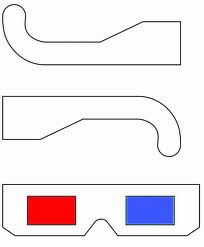
The systems of Chinese Medicine are many and subtle; there's yin-yang, the Five Elements (or, more accurately, Five Phases), the Six Conformations, and our topic of the moment, the 12 Organs or organ networks.  Twelve is a pretty big number when it comes to a system.  Twelve tones are enough for to generate all of Western music.  (And five enough for most of blues and rock.)  Twelve makes for a pretty fine-grained map.  But it's still a map.  So how to bend a linear, finite sort of system like the one at hand around an complex, infinite universe?  Clearly, for starters, one-to-one correspondences won't do.  That way we'd run out of symbols way before we ran out of things to map them onto.  One solution is to do something akin to what music does: multiple notes at a time.  Shadings, crescendos, trills, arpeggios.  Skillful combinations of the basic building blocks.  A wise, skillful classical medicine certainly must use its theories this way, with flexibility and artfulness.  Okay.  But there's still an issue of evoking something complex and alive using seemingly static symbols.  What my current Cosmology teacher Gregory Sax suggest--and I paraphrase very loosely here--is a sort of 3-D glasses effect.  Red alone isn't enough; nor is blue, but by their interaction they give rise to a third dimension, and the picture pops off the page.  It's the motion between contradictory elements that produces a third, fundamentally different phenomenon and brings the whole picture to life.

This has all been a very long-winded way of justifying the simultaneous-X-and-Y nature of the Lung.  Which we haven't even begun discussing.  Yikes.  But here goes.  Here's Story X.

As a metal organ in the Five Element classification, the Lung has to do with contraction, going inward, sinking down, cutting away.  Its emotion is grief, the pain we must feel in order to release our attachments and sink down to the lowest place (the Water phase), whence we will be able to rise again (Wood).  Its symbol is the tiger: the mythological White Tiger that represents the Fall.  And like that season of falling leaves, the lung moves down: it is called the "upper source of water," for it sits at the top of the thorax like a lid and condenses the steam gleaned from the Heart-Kidney axis and distributes this usable 'fresh water' form of qi down and outward.  As Metal is dry, so the Lung is susceptible to dryness and must be kept appropriately moist.  When the lung dries up, so does bodily nourishment and vitality; tuberculosis is a classic Lung pathology.  The spirit associated with the Lung is the Po, which unlike the Liver's wandering Hun stays in the body.  Like a tiger, Po has strong animal instincts and provided a connection to the earth.  Indeed, it is understood that after death the Po will sink back down into the ground.

Now this little story may sound like utter Greek to some, but to those familiar with Chinese medical theory it ought to be reasonably convincing: Metal, upper source of water, the Po--all the key talking points of the Lung. Now let's have a look at the other side.  Here's Story Y:

Within the calendrical framework, the Lung holds the year's first position.  The Chinese year traditionally began in very early Spring, and this is the month associated with the Lung.  The Gallbladder saw the subtle but powerful re-introduction of yang at the Winter solstice; the Liver continued the uphill journey back towards summer, and now the Lung takes the third and decisive step.  The yang energy is now as prevalent as the yin, and momentum is on yang's side.  All of nature is taking a breath and expanding: springtime.  Motion is upward and outward.  This is a moist time of year, what with the snowmelt, and the Lung is susceptible to this moisture.  Too damp and it quickly develops phlegmy congestion (isn't this how we tend to get sick?)  And as for the tiger, what better symbol for the fierceness and explosive power of the new yang of springtime...

And so forth.  For the average TCM student, this story, Story Y, may be less familiar.  But it's no less true to the symbols of Chinese cosmology; the Lung position is definitely the first month of Spring.  There's undeniably a Wood aspect to the Lung as well as a Metal one.  And Metal and Wood are opposites.  It's tempting to give in to frustration and walk away from the whole project, concluding that 'it just goes to show these symbols can be stretched to mean just about anything.' But before you join this camp, at least try on the fancy colored glasses.  With one eye on Metal and the other on Wood--one on X and the other on Y--a new perspective leaps off the page.  Call it Story Z:

The Lung has one foot in Metal, the other in Wood; it has a dual nature like the scales of Libra (the Western astrological sign that corresponds most closely to the Lung's month).  Its hexagram reveals this duality: It features three yang lines below three yin lines; heaven below earth.  Heaven wants to float up, earth to sink down, so this hexagram, called Tai, is a picture of a merging union.  But in the process of merging, these upward and downward forces create pressure between them.  This is the origin of the Lung's ability to "pressurize" the system and keep our vessels full of qi.  Therefore when the Lung is weak, our energy flags and we lose vitality.  A weak voice is a classic sign of Lung qi deficiency; there is not enough pressure in the system to power the vocal output.  This Lung pressure is born of a delicate balance between forces, and indeed the Lung is called the "delicate organ" because it demands balance.  Too damp or too dry and it suffers.  And the Lung's association with Spring is not actually about bursting forth; that will happen next month with the Large Intestine.  For now, yang has merely reached equilibrium with yin.  Yang cannot yet erupt visibly; the Lung's month of early spring is the time when the stage is set, the spring coiled, the system pressurized.  It's all potential energy, not yet actualized into kinetic motion.  The tiger--the crouching tiger of martial arts fame--symbolizes this: he's poised to pounce.  The Lung's poise, dynamic nature and proximity to the Heart make it uniquely well suited to its 12 Officials cabinet position of Prime Minister, the director of the other organs.  Everyone is willing to listen to someone so highly placed, well balanced, inspired and full of life.


And with such a beautiful coat.  Did I mention the Lung rules the surface of the body?

Next time on Chinese Organ Networks: the power of the rising sun, the manifestation of the grossly physical, and the Large Intestine.

Friday, August 5, 2011

Orach and Seabeans: The Taste of the Territory


A mid-summer Sunday in the Northwest, the day of a long-awaited trip to the San Juan Islands.  It's been bright and sunny for days now, and I've let myself believe that the fabled Northwest summer has finally set in: endless perfect days stretch on well into October in my mind's eye.  Visions of riverbank laziness, a tan, enough vitamin D to see me through the winter.  Come Sunday, T and I wake amidst mammoth cedar woods just outside of Bellingham to the light pitter-patter of drizzle on the tent fly.  It's overcast, the air still.  It's actually chilly, honestly quite undistinguishable from many a March day in Portland.  But I make a point of not making or breaking plans based on the weather, and this day is no exception.  We've got a daypack already packed, and all that's left is to load the bikes into the back of T's grandparents' old red pickup and drive to catch the 9:30 ferry to Lopez Island.

A little underslept, a little chilly, we huddle in the waiting area at the station, me eyeing the 90's era arcade machine before turning to my breakfast of eggs, toast, some leftover salmon.  The ferry ride is uneventful, uninspiring: we arrive feeling as blah as the weather continues to be, then pedal uphill towards the island's eponymous village.  Grey skies, farmland, gently rolling blacktop through the fields.  Some petty arguing.  There are days like this.  Times you've looked forward to, but whose pleasure is elusive in the moment.  Times of melancholy, light funk, when it's frankly hard to remember why you were so excited about this [fill in the blank].  Overwhelmingly tempting at such times to blame the nearest target, and at a brief pit stop to shed some layers T and I do just that: squabble at each other, throw minor, restrained, adult-grade tantrums. A part of me watching the childishness as if at a distance, yet is unable shift the other part of me into a more satisfactory pattern.  A third part is amused at this little drama and my frustrated awareness of it.

We keep pedaling, coasting down a steep hill into the village itself.  What's the big deal?  Some tourist shops, coffee places, a used bookstore, an overpriced looking restaurant.  An unremarkable looking rocky beach peopled by a pair of French tourists.  Desultorily, we walk around, looking for a quiet place to perform out respective practices; T is back from a meditation retreat, me from a weekend of intensive Qi Gong retreat, and we're both trying to keep the up the practices daily.  We stumble upon a little wetland nature trail and drag our feet along it.  The air is thick, brighter now but still grey.  We stop at the feathery frond of some wild asparagus, too big now to eat, but below and around the single stalk is a wild black currant bush.  It's got vicious, caltrop-like spikes that serve only to make the small dark fruits more desirable.  There are hundreds of these hidden amongst the barbs, and we both slip into a sort of forager's trance.  Fingers and mouths stained, we amble on along the path.  Still lethargic, still a little grumpy, but now with the taste of the territory in us.  T notices a yearling fawn in the high grass.

The path peters out at a weathered wooden platform.  After a final moment of resistance, there's nothing else to do: we said we would do it, and we both know it's probably what we need.  T sits cross-legged on the bench, and I take up my horse stance, doing my best to straddle the heads of the nails sticking up from the faded planks.  I bring my awareness as best I can into my body and begin to move: a series of warm-up motions learned from my Qi Gong teacher Bill Frazier.  Stretching and loosening the tendons.  Then comes the shaking, a core practice of the Jin Jing Gong lineage: it must look to the deer like I'm having a spasmodic episode as my whole body vibrates and twitches.  I let myself sound and feel the vibrations penetrate deeper into my tissues.  There's a sense of relief in this, of opening to the inevitable.  As usual my mind wanders, and once I notice it's done so I drag it back into the world of sensation: the feel of various organs, tissue layers, anatomical regions as I move through my body piece by piece and shake it open.  Letting out what's stuck, melting what's solid.  After a while, I bring the frequency up until the shaking is so subtle it's gone.  I plant my feet a little wider than shoulder width, feet rooting down, weight on the outside edges as the inside arches contract to draw up the yin of the earth.  Spine stretched straight, an axis mundi.  Head floating as if drawn up by a string from its crown.  Arms stretched round in front as if embracing an evergreen tree.  Breath slow, deep, into the lower abdomen.  Sensing the palms, rooting the feet, drawing up, stretching the spine.  Breathing into the belly.  Relaxing into it.  Shoulders down.  Spine long.  Feet gripping.  Relaxing.  The verbal cues bounce around my head, along with the visualizations and the intermittent sensory awareness, all in what I hope is a productively dynamic tension.  I begin the form.

Forty or so minutes I later I'm hot and sweaty and refreshed.  Not refreshed, maybe, so much as reborn.  Reborn in a tiny way, but one no less miraculous for that: the day is beginning again.  The sun is blazing overhead in a clear sky, mirroring my mood.  It was a good practice today.  I gave it everything I could summon up, and I feel the change in me without a doubt.  They're rare, these days of immediately fruitful effort, and I bask in the feeling as well as the sun.  And now comes the tricky moment that follows any such practice.  How to re-enter the day without losing presence and groundedness?  On this day, I am keenly aware of this moment, and awake to the fact that I don't have to follow old patterns.  I'm in a new place.  No agenda.  I look over at Thandiwe, and see her stretched out on the bench, fast asleep.  The first impulse is to wake her, but why, I think?  Instead I walk slowly over to the faded placards some conservation organization has installed on the edge of the platform.  I learn a little of the history of land use in this tide-washed area and get tipped off to the presence of a few local plants.  Apparently one is a parasitic, non-chlorophyll producing kind of dodder.  I scan the area and notice alarming orange patches amidst the green.  Still barefoot, I step off the platform and move out into a blue-green area carpeted in a soft, rubbery ground cover.  I bend down: it's sea beans!  Am intensely salty, succulent edible that I've seen for $5 a pint at Portland farmers' markets.  In places the sea bean forest in miniature is overrun by what looks like yards of tangled orange dental floss.  This must be the dodder.  I've never seen anything like it.  Tiny tendrils twine around the little sea bean shoots at the edges of the tangles.  Then, as if two new plants weren't reward enough, I soon spy something that looks like pigweed growing nearby.  It's leaves are meaty-tasting, salty but not so much so as the salty-as-olives sea beans (a.k.a. pickleweed).  Unmistakably an edible in the chenopodium (goosefoot) family, a sort of wild amaranth: this one's Atriplex prostrata, a species of Orach, I later learn.

T is stirring, rubbing her eyes, and I call to her to come check out the bounty.  Before long we've filled a plastic bag each of sea beans and orach, and it's time to find some shelter from the sun.  She too has mostly shaken the morning's funk; the day's opened like a flower.


Sunday, July 10, 2011

Rooftop Cosmonauts (A Crash Course in Divination)


The coin flipping began back in high school, when Jonny Quiktune and his legendary partner, Oscar Ramirez, would prowl the streets of the Upper West Side by night.  Jonny in his seventies motorcycle jacket, Oscar in his big chrome ‘iron specs.’  The normal course of our weekend ranging encompassed certain choice city rooftops (where the water towers on surrounding roofs looked to our starry eyes like rockets about to blast off), the Jerusalem falafel joint (where fez-clad Muhammed let us crack open a bottle of cheap bubbly in the restaurant’s gloriously grimy environs one memorable New Years, before he disappeared back to Syria) and Sal and Carmine’s Pizza (still the best slice in the world, R.I.P. Sal!), and down to the Village to Small’s jazz club, back when it was B.Y.O. booze and jazz cigarettes.  Indian Row on East 6th was a favorite haunt; we’d let the touts vie for our business for a while, gleefully bargaining down the price of the already dirt cheap dinner special and enquiring as to the contents of their Mulligatawny soup, before settling inevitably on whichever identical little christmas light-lit, mirror-ceilinged restaurant was featuring live sitar and tabla music that night.  Then we’d stop into the corner store and buy an absurd amount of beer to quench the fire.
Fact is we had it pretty good as teens in the city.  But sometimes all of Manhattan’s parks, pizza places, rooftops, jazz clubs and blind-eye-turning bars weren’t enough to occupy us.  Sometimes a certain restlessness would take hold, and all the familiar pleasures of the city would seem stale.  This, I imagine, is how the coin-flipping began.  
Picture, if you will, our two protagonists, on a windswept city corner, a gleam in their eyes and a devilish itch in their minds.  What to do on such a Saturday or Tuesday night?  Jericurl James is grounded; Doktor Milkbar is lost to the world in the mythical land of Staten Island; Andrew the Sleepy Pinwheel’s phone has been dead for days and Dead Dave seems actually to have perished this time.  We are two, and two is trouble.  We could roam the zoo of St. Mark’s Place, browse the record shops, get weird and then get some Belgian fries--or rent out a dingy rehearsal room at Funkadelic Studios for a couple hours and make some noise--but such schemes smack of the ordinary, the tried and true.  We crave excitement, adventure...are these not our alter-egos we’re wearing?  Is this strange city not our oyster?  
At such a moment, one of us reaches into a corduroyed pocket and extracts a shiny quarter.  Heads we head East.  Tails West.  (Tacit agreement as to the sacrality of the act, later we’ll spell out explicitly that such fate is not to be trifled with; coin flips are final).  A moment’s suspense, and we have our answer.  The coin has spoken.  We’re headed to Brooklyn (or the park, or the coffeeshop, or the waterfront).  The coin has spoken.    
Simple 50-50, heads-tails flips provided for countless nights of unexpected adventures, for once you start flipping coins for trivialities there’s no logical stopping point.  A particular sequence of heads and tails might land us at someone’s apartment having Turkish coffee or on an unexplored rooftop having a smoke, fourteen stories above the city’s twinkling lights.  I’m sure I ended up miserably seasick on an all night fishing boat out of Sheepshead Bay once because of the divination god’s sense of humor.
If flipping coins was something of a novelty for a while, though, it soon receded to another tool in the kit.  It wasn’t an end in itself but an expedient.  It became, for me at least, a way of acknowledging that I don’t know what’s going to happen anyway no matter what I decide or plan to do.  A way of creatively and explicitly inviting chance to play, rather than pretending control over the millions of variables present in every moment.  It became, at various times and to various degrees, a point of pride, a lifestyle choice, a handicap, and an inspiration.  
When the time came to decide which college to attend, after some consideration I finally turned to the trusty quarter.  Heads, I email University X and play their game, telling them I am committing to their program so please go ahead and let me in off the wait list.  Tails, I tell them to screw their wait list and accept the offer at Small Liberal Arts College Y.  The coin god spoke, and I went to Swarthmore.  In retrospect, it was the right choice, though I’d never have been able to suss out why in advance. Perhaps the big, stuffy Ivy League school would have somehow set me on my path as well. Maybe there are no wrong choices, only more and less interesting ones. In any case, I’ve never yet had cause to regret a coin flip.
A particuarly memorable flip occurred a year or two later, when Oscar and Dave (back from the dead) and I converged during Winter break for a New Years road trip.  Canada was our destination; this required no divination (why flip a coin for something so obvious?).  We were also assuming that we would head to Montreal, but upon consulting a map we realized that Toronto was equidistant from our Upstate New York locale.  A moment of deliberation; then a flip. Tails: to Toronto we go, by way of the Finger Lakes.  What followed was an unreasonably joyous expedition, as revealed in the photos: the three of us beaming in the spray at Niagara Falls, spontaneously playing a song at an open-mic that seemed straight out of 1994, and, on New Years Eve, sharing champagne with some extremely random Japanese tourists.  On the first day of the New Year, we flew back across the border so fast in my green Honda (no tickets in Canada! it seemed) that we got a hefty, buzz-killing ticket almost immediately after crossing back into NY State.  
In my old age I’ve cooled it a bit with the coin flipping.  This is not to say that I don’t indulge, just that I tend to go for modest tosses.  Where to go for dinner, say, or which river to head to on a hot day.  My divinatory spirit is alive and well, however; for complex or intractable issues, I’ve learned to consult the grand-daddy of coin flips: the I Ching (or Yi Jing).  The ancient Chinese oracle, and quite likely the oldest book on Earth, is akin to a sixty-four sided coin.  And though the traditional method of consulting this oracle involves yarrow stalks, it can be done with six coins.  Each of the oracle’s symbols consists of a solid line (yang) or a broken one (yin), and yang lines can be in the process of changing to yin and vice versa.  That gives four types of lines.  Call these 6, 7, 8, and 9: 6 is yin changing to yang, 7 is simple yang, 8 simple yin, and 9 yang changing to yin.  Then assign heads a value of 3, tails of 2, and flip a coin three times for each line (starting with the bottom one and working up).  Tails-tails-heads means 2 + 2 + 3 = 7, a yang line.  Three flips for each of the six lines yields up the Hexagram, which is keyed to a number of further symbols and statements in the text of the Yi Jing.  If you haven’t encountered it before, welcome to your latest obsession.  
Still, for simple binary questions--yes/no, left/right--the simple coin flip remains king.  Asking the Yi Jing whether you should turn East or West on a New York street corner is like breaking out the sextant and compass to figure out which way the sun sets, or looking up “crunk” in the Oxford English Dictionary: massive overkill, and not likely to succeed.  The Yi Jing sings in 64 tones, each a shade of grey; a coin flip is and always will be nice and black and white.  Anyway, the Yi Jing is heady stuff, powerful and often confusing; coin flipping has a way of seasoning one for the work of serious divination, if only by developing faith in the power and wisdom of chance, or fate, or whatever you prefer to call it.  
Another reason never to spend the last quarter in your pocket...

Wednesday, June 22, 2011

Chinese Organ Networks: Liver

And so we come around to the Liver.  The Liver is a frickin' doozy.  Enough so that I'm actually procrastinating jumping into the meat of the matter, because I hardly know where to start.  This is an organ system rife with rich associations and layers of meaning that seem to shoot out in all directions like fresh green tendrils in springtime.  Stubbornly spreading up and out, against gravity, persevering against tough odds--namely the laws of physics, which luckily seem not to apply to living things.  Or rather, life finds the loopholes and bends said laws to its own benefit and makes of Newton and Descartes a gleeful mock.
                                                                          ^An ancient Etruscan bronze liver, probably used for divination instruction and practice

As usual, the macrocosmic position of the organ reveals much of its nature.  We saw how in a sense the Gallbladder marks the beginning of the new year, as yang (light, warmth) makes its return--as yet unfelt, perhaps, but influential all the same.  To the Liver falls the task of continuing the what the Gallbladder has initiated.  The Gallbladder's job was romantic--the spark in the dark, setting things off with a little explosion; the Liver's is decidedly less so.  The Liver doesn't take that critical first step back towards the light, but rather the equally critical second step.  It plods forward, against the flow, against gravity.  It perseveres.  Its animal symbol is the ox: the creature best suited to long, hard labor.  The ox wants and needs something to push against.

Labor...pushing...if this is all sounding suspiciously feminine, it's not a coincidence.  The Liver is the organ most closely associated with womanhood, most obviously through the blood, which the Liver is said to store.  "Women are blood, men are qi," goes a Chinese medicine saying.  But we are getting ahead of ourselves.  We aren't finished with the ox.  Could there be a more specific connection between oxen and women?  Here's a hint: take a look at a picture of an ox head or skull.  Georgia' O'Keeffe was on top of this one (though she chose a ram, the effect is much the same.)  The relation of head and horns is strikingly similar to that of womb and ovaries via the Fallopian tubes.  Women, in some sense, have the power of oxen: to push, to persevere, to plod forward and continue the endless work.  Masculine energy is more apt to come in bursts; men are often good initiators and warriors, hunters, whereas women keep the ball rolling.  Hormonally, women may be better suited to traditional "women's work"--not just the obvious maternal activities but such slow, methodical, careful work as weaving, spinning, seed-sorting, knitting.  It's not just a matter of culture.  Women are rich in blood, which in Chinese medicine also means certain hormones, and this hormonal reality shapes much of physical, psychological reality.

Of course it's not just women who benefit from the ability to push, to go against the flow.  This type of sustained work is at the heart of self-cultivation practices, from martial arts to meditation and everything in between (Tai Qi and Qi Gong and genuine Hatha Yoga tend to fall towards the center of this spectrum).  The Chinese sagely ideal is of wu wei, effortless action; but in order to achieve such a state of skill it is necessary to train intensively.  The archetypal Zen master who flows so artfully through life does not achieve their mastery except through rigorous training.

There's yet another feminine connection to be made.  The Liver's cosmological time is most of January and the beginning of February, a period which overlaps (even if it doesn't completely correspond) with the Western astrological sign of Aquarius.  At first glance the associations are disparate; the Liver with blood and femininity and Aquarius with water, creativity, prophetic change.  Symbols take us deeper, however.  The traditional shorthand for Aquarius is a double squiggle, like two letter M's nested on top of one another.  Now it is an interesting fact that the word for "mother" in virtually every language begins with or contains the "m" sound.  mother, mama, mom, mu, ma, aama, maman...there are probably exceptions, but I can't come up with any.  Infants seem hardwired to make the "m" sound in relation to their mothers.  The letter M even look like a couple of a pair of bent legs, spread, as in a reclining birthing position.  Aquarius is also classified as an air sign; we'll soon see how air or wind relates to the Liver.


That's two liver-blood-femininity strings of association so far.  We've momentarily come up for air; time now to dive down and pull up one more set.  The Liver stores the blood, has everything to do with this vital substance.  What is the blood, on the level of micro-macrocosmic correspondences?  It is our vital water, our veins and arteries like rivulets and streams and great rivers.  They all flow into the sea, our great reservoir of blood, the Liver.  Another way to look at it: evolutionarily we come from the ocean.  Primitive sea creatures need no closed circulatory systems, but when we crawled out of the watery depths, we needed a way to bring some of that ocean with us.  The blood, and especially the Liver's blood reservoir, is that oceanic remnant.  It's noteworthy, too, that we're not talking about fresh water here.  The ocean is salty, and so is the blood.  Nor is the saltiness of either composed of simple sodium chloride, though that is the most prominent component of ocean and blood salts by weight.  The ocean contains hundreds of trace minerals in solution, and so does our blood.  Though nutritional science hasn't uncovered a physiological need for every such mineral, more and more are being found to be essential to health.  This is why unrefined sea salt (including salt mined from ancient sea beds) are so critical to health.  Remove all those essential trace minerals, and you compromise the quality of your internal ocean.

Another conceptual leap: the Liver and blood relate directly to Wind and the nervous system.  The most basic connection is to be found in the trigram Xun, The Gentle or Wind or The Subtle.  It shows a single yin line penetrating up through two steadfast yang lines.  It is yin moving upwards, and represents the pervasiveness of subtle influence.  This is how a breeze operates: it is gentle, but if it maintains a consistent direction it can be powerful in the long run.  But Xun is also a symbol for Wood, the upward growth of springtime.  It is the yin aspect of Wood, just as the Liver is the yin Wood organ (and the Gallbladder yang Wood, as represented by the trigram Zhen, with one yang line thrusting up below two of yin).  Wind, the force of movement and communication, is related to springtime.  Spring is, after all, the time when things are shaken up, when the "winds of change" blow.  That, roughly, is how the physiological force of Wind or Air is related to the Liver.  (An interesting contrast with Ayurveda here; in that system, Wind or Vata is more associated with the large intestine, and while it is closely related to the nervous system, the concept of blood and the liver is largely separate.  At least as far as I understand it.)

So the Liver is responsible for Wind, for proper movement.  Movement of what?  Of qi, primarily.  Of subtle energy, including perhaps the electro-chemical impulses that are the language of our nervous system.  Now it may be less surprising that trace mineral deficiencies have been implicated in a number of growing disorders including ADD and ADHD.  These can be viewed in terms of Wind; hypermobility; an ungrounded and in some sense overactive nervous system.  When our blood is not well fortified with the natural ocean's mineral spectrum, our Wood and with it our Wind go out of whack.  In our terms, its a Liver problem.

We've yet to look at the Confucian 12 officials system.  In it the role of the Liver is clear cut: it is the general.  It commands, strategizes, schemes.  Physiologically, the little-L liver sorts out thousands or millions of chemical reaction pathways, sending this here and that there and generally ironing out an operating plan for the Gallbladder to execute.  The Liver is resourceful.  As a commander it wants to win; it strives to live.  See?  It's not just the Chinese language that contains plenty of forgotten symbolic resonance.  The liver is the only organ that is capable of fully regenerating itself from a small fraction.  It's that (re)generative power of Wood.

Finally, the herbal side of the story.  The herb that best represents the upward and outward exuberance of Wood is none other than the familiar cinnamon (Chinese Gui Zhi (twigs) or Rou Gui (bark)).  Cinnamon was anciently classified in the Tang Ye Jing as a "Wood within Wood" herb, meaning that it is the essence of Wood.  Although modern TCM likes to treat the liver in terms of suppressing flaring liver yang with cold herbs and smoothing out the liver qi with herbs like Bupleurum (Chai Hu), much modern Liver pathology has more to do with cold in the blood.  Here our internal ocean gets frozen over, leading to blood deficiency and stasis, with signs like cold extremities, menstrual cramps with clotty bleeding, and sexual frigidity.  Bulldozing through the ice with qi-moving herbs won't work; we have to melt the ice.  Cinnamon gets into the blood layer (Jue Yin) and does just that, especially when combined with the star blood herb Dang Gui (Chinese Angelica).

Sources: as always with the Chinese Organ Networks series, virtually all the material for this post comes from Dr. Heiner's Fruehauf's Chinese Cosmology lectures at NCNM.  Hail the chief!


Chinese Organ Networks: Gallbladder

If you’re like most people, you probably don’t know exactly where the gallbladder is, or what it does.  That’s the little-G gallbladder we’re talking about, as opposed to the big-G esoteric Chinese organ system.  But bear with me on this atypical anatomical aside.  The gallbladder happens to be a dark green sac tucked under the liver, where it stores and concentrates bile.  Bile is what our bodies use to emulsify fat.  This means breaking big globules of fat into tiny little droplets.  Bile works like soap: it ‘cuts’ grease, through a bit of chemical magic making it essentially water-soluble.  Because let's face it: our bodies wouldn't work very well or look very nice if we couldn't get oil and water to mix.  Thanks to the gallbladder and its bile, it becomes possible to absorb said fats via the villi of the intestines and put them to work everywhere from our cell membranes to our brains to our sex hormones.  Yes, fat is sadly underrated.  
So much for the gallbladder; unless you’re unusually interested in medicine, you’ll probably forget the little tidbit you just learned about this organ and be none the worse for it.  And yet you may know more than you think you do about the Gallbladder, big-G.  The Chinese functional, cosmological, symbolical organ network.  Dubious?  Well, chances are you’re familiar with the saying that someone “has a lot of gall.”  Maybe you’re apt to say it yourself when the someone pisses you off, does something cheeky, bold, possibly transgressive.  (Granted, you might just as often hear that s/he has balls, or a lot of nerve, but gall is really the most accurate.) The saying indicates that, even if as a cultural we’ve forgotten, we used to think in embodied terms.  Like other traditional cultures, our ancestors recognized that emotional and physiological realities aren’t distinct and separate realms.  It is possible to eat your heart out, or, even worse, to screw your brains out.  (That's jing, essence, you're squandering!  Or so the Daoist sages tell us.)   
As the saying about “a lot of gall” indicates, the Gallbladder is for courage.  It is the commander of the battle, leading the troops by example, charging out first into the fray.  As such, it must be able to act decisively and intuitively.  Gallbladder types have no trouble deciding and acting, even if it sometimes seems they act and then decide. 
The Gallbladder holds a very special position in the macrocosmic organ clock.  In the last position we had the Triple Warmer, stationed at the most yin time of year, roughly early December.  Light--yang qi--was at its weakest then; the days were about to be as short as they get.  With the Gallbladder, we take the first step back towards the light.  This is the position of midnight, of winter solstice.  In some sense this is the yinnest time; in another, it is the most yang.  It is here in the dead of night, in the depths of winter, that we witness the rebirth of the light.  Christmas, after all, was originally a pagan festival, and it is no coincidence that it falls around the solstice and involves lots of candles and lights.  December 23rd may not seem to contain much more daylight than the 22nd, but the decisive first step has been taken.  The long climb back towards June 22nd and the summer solstice, and the Gallbladder’s clock partner the Heart, has begun.  
Of course, unless you’re truly observant and unusually sensitive, you won’t notice that the days are getting longer for some time.  You certainly won’t feel any increase in warmth, not for months yet; at bottom, this is because matter follows energy with a lag of 90 degrees (1/2 pi radians, a quarter turn of a circle).  The upward movement is already present on the day after the shortest day of the year; the shift has occurred, but it will take a while to manifest physically.  The energy of yang returning is subtle but powerful.  In the Gallbladder time, even if we don’t notice it, this decisive shift occurs.  In the hexagram corresponding to this organ position, one yang line shoves up beneath five yin lines.  The yang is back, it has been reborn, but it is small, and as yet hidden beneath the ground, like an unfurling plant that has not yet broken through the surface.  
This image of a plant shooting upwards is actually an ideal symbol for the Gallbladder; this is the first organ of the Wood phase element.  In 5 Element theory, Wood is the springtime, the force of upward and outward growth, exuberant new life, that comes after the dormancy of Water (winter).  The motion of wood is strongly upward, counter to gravity.  And, fittingly, the Gallbladder is responsible for uprightness.  A military commander stands up straight and expects the same of his troops.  There is strength in this kind of perpendicular straightness.  A flood of symbols come to mind: a flagpole, a skyscraper...perhaps an erect phallus.  The Gallbladder is an overwhelmingly masculine archetype.  Returning for a moment to anatomy and physiology of the corresponding bodily organ, it is the fat that the gallbladder helps break down that nourishes our endocrine and reproductive systems.  If we can’t digest fats, our courage and our libidos both start to break down.  
A bit of food for thought for the herbalists out there: could Spikenard, Aralia racemosa (and A. californica), be considered a Gallbladder remedy?  It is, after all, an herb that aids in the digestion and metabolism of fat, nourishing them endocrine system, and has been  said to lend courage and confidence that we can handle what comes.  Ah, beautiful Spikenard!
We’ve already alluded a couple of times to a theme that quickly emerges with the Gallbladder: taking the first step.  Initiating action.  A good image for the Gallbladder is a spark plug, a device that provides the initial impetus to get a powerful cycle moving again.  And like a combustion engine’s, this organ network’s energy can be explosive.  The Gallbladder can express a lot of anger; this is healthy, but if it comes out suddenly and violently, it is pathological.  The transition back into the light half of the year should be barely noticeable; it is happening underground, after all.  
The Gallbladder channel runs down the sides of the body.  Actually it doesn’t so much run as it does zig-zag its way down just lateral to the eyes to the little toe.  It has a back-and-forth energy to it.  Gallbladder pathologies often have something of this back-and-forth, "half-in, half-out" nature.  The Gallbladder swings open and shut, acting like a door hinge.  Pathologies that affect the Gallbladder's Shao Yang layer are neither here nor there: Malaria is the archetypal example.  Its characteristic fever is the "intermittent" fever that comes and goes every few days, coursing through predictable cycles.  Alternating chills and fever are a hallmark of Shaoyang (Gallbladder-Triple Warmer) disorders, and the herbs that treat them tend to be exceedingly bitter.  In the Chinese system, there's Chai Hu, Bupleurum; in the New World herbal tradition, we have boneset, Eupatorium perfoliatum.  Not coincidentally, bitter is the flavor that stimulates bile flow, in effect opening the hinge and letting whatever is out.  


The Gallbladder animal totem is the humble mouse, or more properly the rat.  In Chinese mythology, the rat rides on the ox (the symbol for the liver, as the next post will discuss) across the river and hops off first upon reaching the other side.  Thus the rat wins the race; the Gallbladder is always first.  Rats are courageous, often disgustingly so; and interestingly, rats are one of the few mammals not to have a gallbladder.  That's probably a good enough head-scratcher to end on...
As usual with these organ posts, all credit due to Heiner Fruehauf and his Cosmology lectures. 

Ways of Knowing Plants


I thought I knew my plants, or some of them: a fair sprinkling of native Northeastern herbs and trees, some Rocky Mountain and desert species of the Southwest, and a cross-section of the flora of the Himalayan foothills.  Cultivated crops (sounds simple, but not everyone can recognize a potato leaf or the overgrown thistle that bears artichokes) and the naturalized European species that are more familiar than half our native plants.  I can take a walk down a Vermont back road and recognize Wild Sarsaparilla and Blue Cohosh and Dolls Eyes and Bloodroot; in Nepal I kept an eye peeled for Nirgundi and Chutro and Amala.  I knew them by name in three or four languages; I knew their traditional classification and uses and some of their constituents.  I often knew something about when and how to harvest them, how to prepare them for medicine, how to combine them with other plants to bring out certain facets of their personalities.  I knew, I knew, I knew--though I knew there's always more to learn, I thought I knew quite a lot.
But what is knowing?
This is a question at the heart of most of the debates surrounding so-called alternative medicine.  What is so challenging, so alternate, in traditional-style herbalism, or Chinese medicine?  It isn’t so much the techniques we employ, but the reasons we employ them.  It’s the fact that we rely on subjective instruments, on qualities over quantities.  The feel of a pulse and the look of a tongue instead of the clean lines of an ECG or the starkness of an X-ray.  It’s our subjective ways of knowing, our trust in intuition and in the power of the human instrument, that set us apart.  
Likewise when it comes to medicinal plants.  With them, there’s knowing and knowing.  I can recognize a species, know its names, its chemical constituents, its traditional classification according to one or another materia medica, and still not really know it, no more than memorizing the stats on Cal Ripken’s rookie baseball card makes me know the man as a person or even as a player.  The facts are signposts, fingers pointing at the moon; they are springboards, points of departure.
When asked who her own favorite teachers and sources of knowledge were, one of my herbal teachers replied “the plants themselves.”  At the time (not much more than a year ago) this struck me as a bold and perhaps outlandish response.  Direct communication with plants was something limited to those gifted in shamanistic journeying and plant spirit medicine, I thought.  Sure, chatting with the soul of Burdock or Queen Anne’s Lace was nice work if you could get it, but we mere mortals had to make do with study and accumulated experience.  
I don’t mean to say I hadn’t had any direct experience of the herbs I was coming to love.  There were inklings.  The sense of nourishment and groundedness I began to notice when taking a spoonful of ashwagandha after meals; the almost palpable fire-in-the-belly feeling that ginger can provide.  With these experiences, I started to realize that part of the work of becoming an herbalist is refining the senses; I suppose I’ve come a ways in that regard, since these days a sip of coffee sends an impulse through my system that I feel before any of the caffeine could have entered my bloodstream.  
But the ashwagandha and ginger were herbs I needed; what about coming to know the scores of others I had no personal use for?  The madders and yarrows, the docks and daisies?  I wasn’t going to take these for days and weeks to get a sense of them.  And I wasn’t subtle enough in my perception to get to know them from one or two encounters.  
Or maybe I was.  The key was sitting in plain sight all along.  It was deceptively simple: simply tasting the plants, usually in tincture form, and sitting with them in meditation to observe their effects.  I was introduced to this technique of plant meditation in my first session with the School of Traditional Western Herbalism, and it was a revelation.  

We tasted yarrow that first time.  When the little brown bottle--like something out of Alice in Wonderland--came around, I didn’t recognize the herb by taste, so my experience was unbiased by preconception.  On the tongue I noted spiciness, resin, pungency; bitterness too.  As the initial taste sensations faded, I noticed feeling of upward and outward pushing.  I became more aware of my skin, my surface, and of the back of my neck.  I don’t recall every nuance of that sitting, but as we went around the circle and shared our experiences, I was blown away.  Few of us had recognized the plant (it turned out to be tinctured from a high-altitude, unusually potent specimen), and though we all had varying experiences with the plant, a vivid and coherent portrait emerged. In my mind I’d had yarrow categorized as a blood herb, helping to move or astringe the blood (stopping bleeding) as necessary, and indicated (according to my teacher Matt Wood’s instruction) by a red and blue complexion; also as a specific remedy in certain kinds of fevers.  Now I began understand why and how the plant might have such effects.  More than that, I began to see the personality of the plant, its particular energy and presence.  It was not so much a blood herb as a surface herb: the skin-deep sensations I’d been noticing reflected its ability to govern the blood flow to the surface.  A number of us felt a warmth within that then diffused to the surface; this is how yarrow helps in fevers, by bringing out a sweat.  Neurons fired; connections were made; my intellectual understanding of the plant came face to face with the direct experience of it, and each helped inform the other.  I’ll never be able to forget what yarrow does, because I have at least a first level of knowing who or what yarrow is.  

There’s more to be said about trusting our senses, not just our vision but our smell and taste and the landscape of inner sensations I was first introduced to in Vipassana meditation.  I want to ramble about the value and power of the subjective.  And I want to describe all the plant meditations I’ve done since that first one, the plants I’ve started to get to know in a way that makes me feel like I’m starting my education all over again.  I’m sure I will write more about certain herbs as time goes on (especially if I pick up on any reader interest in that area--any herbal folk reading this?).  But my experience, conveyed in words, dies as it crystallizes once more into run-of-the-mill knowledge.  Maybe all I’m really trying to say is, ‘There’s a whole living world out there. Go taste it!’  


Thursday, June 16, 2011

A Little Eye Candy

I'm awful wordy on these pages, so as I sit here in the Portland airport all sentimental I thought I'd reward the faithful with some eye candy: various favorite shots from Nepal and North India, 2008-10.  Shout out to Thandiwe Gobledale, Alden Towler and his Aunt Ninny for photo credits.  


Goat sacrifice at a rice mill to in honor of the goddess Durga.  Millions of animals are sacrificed every year at the culmination of this Dashain festival.  Tamang village of Borjyang, Kabhre district, Nepal.  


The annual Newar tradition Mha Puja (honoring one's own body) at a home in Patan, Nepal


At a rang waali's (color vendor's) stall in Kolkata, 2009


Getting the full treatment on Holi, the festival of colors.  Pedong, Darjeeling district, Spring 2009


Sadhus lounging at Pashupatinath, Kathmandu


A prayer flag in lower Mustang on the Annapurna circuit


Sorting coriander seeds on the porch of a village house on the outskirts of the KTM valley.  When asked how old she was, this woman shrugged and said in Nepali 'who knows, my eyes don't work, can't hardly get around, it's about time to die already'


One of a million little roadside shrines in Kathmandu


Bel juice vendor in Kolkata


3-tier sleeper class, baby


Where's Waldo material.  I'd be scowling too if I were buried in vinyl handbags in 95 degree heat...Bhubaneshwar, 2010


Near the fabled Jagganath temple in Puri, Orissa

Sunday, May 22, 2011

Saturn Returns! (And Brings the Pain You Crave)


I sent a link to this blog to a friend recently, and his response was this: "damn boy, don't you know the attention span of this generation is about a 30 second clip on you tube?"  I've never intended to go the route of mass appeal here--wouldn't know how to begin--but perhaps 1,800 words on the esoteric aspects of a metaphorical and/or metaphysical Chinese 'organ' was a bit much.  I plan on continuing with the organ posts, if only to satisfy my own obsessive-compulsive tendencies, but I'm gonna try to balance out each of those with something more personal, funny, or spontaneous.  Starting...now.  Right.  Um.  Seems I'm out of practice.  But seeing as how this blog started out as an open journal of sorts, I s'pose I'll talk about, well, me.  Or, rather, myself and most every other late twenty something I know.  Yes, here are the inklings of a topic coalescing out of the stew of thoughts--the Predicament of Generation Something.  Or is it the Predicament of Ze Modern Age (supply French accent here). 


Today I was talking with Alex--old friend and current room-mate and chief co-conspirator--and we realized that our culture tells us that we should have the best of everything.  Not just cars and gadgets but less tangible and mass-producible things (like relationships) ought to be new and shiny, the latest model.  With my gourmet tendencies, I'm pretty well embroiled in this paradigm: I am impelled to sample everything, it seems, and pick out the rarest, the tastiest, the most refined.  Our (the 'we' being privileged white folks, mostly) precious liberal arts colleges present smorgasbords: a little econ, a little bio, a bit of ethnomusicology.  Sample it all!  I don't entirely miss the point of a Well-Rounded Education, but it's a problem when it's so round as to be hollow.  When there's nothing at the heart of it to make it all cohere and mean something, dammit.  So that it's not considered abnormal to reach the age of twenty-two with little idea of one's place in the world, one's role.  I mean, I know 15 year olds in Nepal who are much more mature in many ways than a lot of the 25 year olds I've met, myself included.  And these kids may not have so much as a tenth grade education.  Education is an incredible privilege, I realize, and it's given me the time and space to stumble upon what I see as my own path.  I can't complain too much.  But it seems very much that my stumbling onto whatever it is I stumbled onto here happened between the cracks of my education.  I mean, looking back on my college years, with the notable exception of a few specific classes and the pivotal semester in Darjeeling, it was the walks in the woods and the homebrewing and the hours spent cooking in my off-campus apartment that had more to do with setting my feet on the path than the actual studies did.      


Good golly, this is getting out of hand already.  Higher education is not really my intended target.  Contain yourself, Jonny.  Be reasonable.  Be nice.  At least be concise.  I was getting around, somehow, to this predicament of ours, and I hadn't gotten so far as deigning to say just what the predicament might be.  It's an elaborate confection, composed of some combination of aimlessness, jadedness, laziness and malaise.  It comes in a million different permutations and varying degrees, but it's a pretty common factor amongst the youf dese days.  You know.  The youf.  From where I sit, it has a lot to do with the lack of an orienting perspective on the world.  We have too much data coming in and not enough of a framework to make sense of it.  We have too much in general.  Too much knowledge, too many choices.   Confronted with a million different models of how to live life, we're caught like in the "paradox of choice" as if we were standing in aisle twelve, staring down a wall of breakfast cereal choices (Props to psychologist Barry Schwartz, who has researched and named this phenomenon).  Tugged in one direction of another by inclination, accident, passion and necessity, we're each in a different boat, we young whippersnappers.  We all have inklings of how we might want to live when we grow up, probably even convictions about some things.  But we're often duped into thinking we can have it all, and end up with none of it.  The grass is greener on the other side, so we run panting from one yard to another like the Pericardium puppy (remember him?).  And when we sense that this is a lie, that green is good enough, greener a trap, and greenest an illusion, we find we haven't been given and haven't developed the tools we need to start doing the Work, whatever that may be.  In my experience, that's where a lot of 27 year olds are at.  Starting to realize that we can't have it all, so we'd better have a little bit of something rather than a tiny taste of everything, since ultimately that amounts to a big fat nothing.  To dip into English's rich cache of cliches, this is the time when we recognize we have to fish or cut bait, shit or get off the pot, go aboard who's going aboard.  All this requires some difficult to come by traits, though, such as commitment and faith.   Sound old-fashioned, don't they?  I am not aware of any new and improved substitute for them, however.  


Those who resonate with astrology's particular symbolic language like to talk about the years from roughly 27-30 as the "Saturn return."  It's when Saturn, the slowest moving of the planets, returns to his natal position and closes off a major life cycle.  Masses of anecdotal evidence suggest that ask someone in their thirties about what it was like to be 29 and you'll usually get a big exhalation or a shake of the head and a "well, let me tell you..." Now in general Saturn is not the most well-loved of the planets, being associated with the drying up of all that is juicy.  He's harsh, it is true, and seems to like to punish.   But Saturn is badly misunderstood.  He's the responsible older brother, or OK, the responsible but weird, reclusive foreign uncle, but either way he just wants what's best for you.  Really.  He wants you to stop messing around and do the hard work to fulfill your potential, and he'll pull out all the stops to jumpstart this process--usually at around age 27, if one hasn't gotten with the Saturnian program already.  In Southasia, where astrology is generally much better studied and better integrated into the culture than here, Saturn (known as Shani, the slow mover) is greatly and widely feared and respected.  He is understood as the force that ripens one's stock of old karma, generally difficult old karma, thus bringing the challenges and hardships out of which strength and direction--and maybe even faith and commitment--are born.  He's recognized as great, the greatest of the planetary archetypes.  There's an excellent little book translated and annotated by Ayurvedic luminary Robert Svoboda called The Greatness of Saturn which pretty much sums it up.  


My experience of Saturn has been fairly considerable ever since the age of 20 or so and is only intensifying as the Saturn return looms.  Saturn has brought a drying up and a focusing in for which I am deeply thankful, though it hasn't always been fun.  I have him to thank for whatever direction, focus, and commitment I've managed to consolidate thus far; and while it's only a start, at least it's a start.  What I have learned about Saturn in the process can be summed up as follows: do the work, or get worked.  Saturn wants nothing more than for you to get busy with your life's work, and the further you are from there, the more it's going to take to put you on track.  But you can avoid some of the more devastating manifestations of Saturn energy by exercising focus and discipline in your day-to-day.  It starts with letting go of the greener grass and getting real familiar with the hue of your local flora.  It continues with putting most if not all your eggs in the one basket (the one you've been weaving in Underwater Basket Weaving 201).  Making the sacrifice of everything else you could be doing in that time and cultivating something in you every day, whether it's perfecting your basket-weaving or playing the baritone kazoo.  Where it goes from there I don't know.  Hopefully in the eventual direction of mastery, satisfaction, and success.  A leap of faith here.  Well, let's all keep each other posted as we bump along the road.