Wednesday, April 6, 2011

You Might Be a Closet Herbalist If...

Teacher, carpenter, blacksmith; these are venerable trades as essential now as they were in antiquity.  Alright; being a blacksmith may no longer carry the social cache that practicing law or being an advertising executive does, but it's still a recognized vocation.  Other once-honorable trades haven't fared so well in post-modernity--and at the risk of spoiling my punch line too soon--herbalism is one of them.  After nearly a century of censure by the (still only fairly recently) dominant biomedical establishment, the status of "herb doctors" has plummeted to the point where it doesn't even register on most people's radar.  There are signs that this is changing, though, as part of the widespread resurgence of interest in sustainability, in local economies, in do-it-yourself self-reliance, and simply in health.  Though herbalism is a loose, diverse, and sometimes contentious catch-all category, it's on the rise however you slice it.  More and more people are claiming herb lore as a valuable part of humanity's heritage, whether through Chinese or American Indian traditions or from what their own grandmother passed along in the kitchen and woodlot.

Herbs are our original and (some of us believe) our best medicine.  No matter where you live, at least a few essential medicine plants--and there aren't any plants that aren't useful as medicine--are readily available and free; I would estimate that all the medicine most people need grows within a few mile radius of their homes.  This holds even for inner city neighborhoods: look at Detroit, which has half-reverted to wild fields and young forests, or New York City--I could spend a whole season foraging in Central Park.  Herbs are right under our noses, if only we knew where to look.

In the spirit of fanning the flames of the wholistic medical renaissance, this post is intended to root out potential herbalists amongst you, my readers.  This is not an evangelical mission--convert, convert!--but a gentle prod in the direction of asking yourself an oft-overlooked question: are you a closet herbalist?  Whether as a folksie kitchen concocter or a white-jacketed integrative clinic practitioner, would using plants as medicines fulfill you and benefit others? So:

You might just be an herbalist at heart if...

-You like plants, have always liked them, felt drawn to them, wanted to draw them, identify them, smell and taste them.  Or, perhaps, been intimidated or scared of them.  But either way, noticed their presence, took walks in the woods for no reason other than to gather some mushrooms, sit under your favorite oak tree, see if the basswood was blooming yet.

-You like to help people.  Again, maybe like me you're sort of scared of people, not entirely at ease in social situations with strangers.  But you feel the flow of fulfillment when you're able to help ease someone's mind, answer a question, solve a problem.

-You're at home in the kitchen; you love to cook, brew, concoct.  This is not an absolutely essential characteristic of an herbalist, since some practitioners use crude herbs exclusively or practice shamanistic "plant spirit medicine."  But, historically, herbalism falls under the twin domains of outdoors and kitchen.  Add to that, "laboratory."

-You're interested in ways of knowing beyond the standard, modern scientific paradigm.  Reductionist science is a valid and useful epistemological model, but its microscopic tunnel vision often misses the forest for the trees.  Trying to understand herbs through pharmacology alone is practically impossible, as a single plant can contain hundreds of "active" compounds.  Traditional ways of knowing, from shamanistic to intuitive to "energetic," fill out the big picture view.  If you are interested in these "alternative" models but don't feel you have an inroad, plants can provide the bridge.

I'm sure there are other characteristics that predispose one towards working with plants to heal, but this is what I've come up with here off the top of my head.  Let me know what I've missed!

While we're honoring the humble herbal vocation, here's a small gallery of herbalists from near and far, people I've had the opportunity to learn from in one way or another.


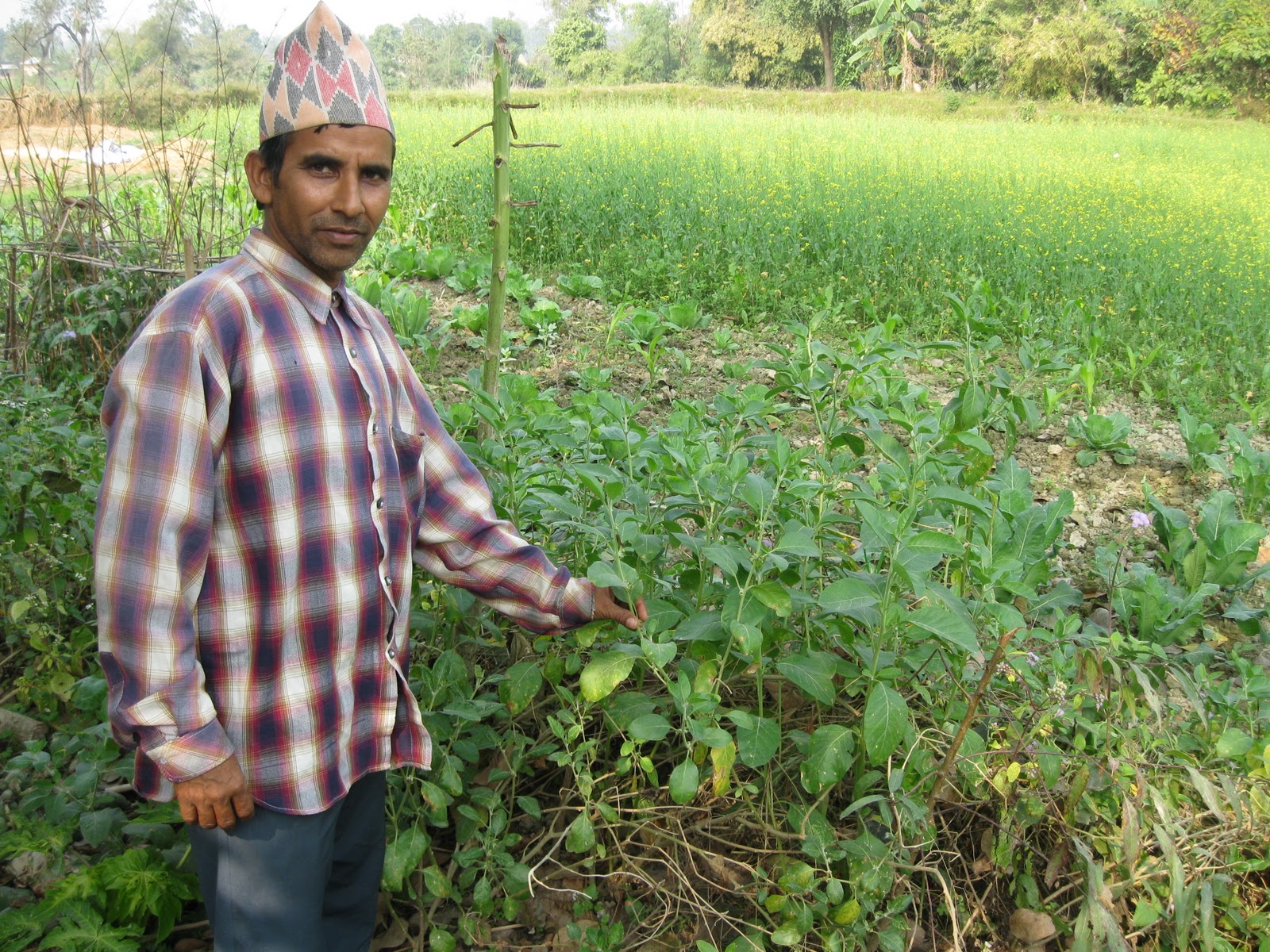
A Vaidya (Ayurvedic practitioner) in Kapilvastu district, Nepal, pointing out some Ashwagandha (Withania somnifera)

Bishunath Karmacharya, a Newari vaidya and alchemist, at his home in Banepa, Nepal, with some of the sought-after medicinal Yarshagumba (Cordyceps).

A father and son team at the family clinic in Naradevi, Kathmandu.  

A tantric jharphuke vaidya practicing his "brushing and blowing" ritual technique in combination with herbal medicine in Bhaktapur, Nepal.  

Matthew Wood, author of The Earthwise Herbal and The Book of Herbal Wisdom and my primary teacher at The School of Traditional Western Herbalism.

Gail Faith Edwards, founder of Blessed Maine herb farm, author, and teacher.  

Dr. Heiner Fruehauf, Classical Chinese Medicine luminary, founder of the CCM program at National College of Natural Medicine, and creator of the Classical Pearls formula line.  

Sunday, March 27, 2011

Chinese Organ Networks: The Bladder


This is the final installment of the first set of four articles on Chinese organ networks.  I have posted these in quick succession, so if you are interested in reading them all and are not caught up, I recommend going back to the article on the Heart and working your way through the Small Intestine and the Kidney before tackling the Bladder.  (If that sounds like an improbable route through the body, you’ll trust have to take my word for it that you’ll arrive eventually.)  
The Bladder is the counterpart to the Kidney, but whereas the Kidney was all about storing essence, the Bladder is about moving it around and transforming it.  First, though, a little bit on nomenclature.  As with all of the organ networks, the Bladder network refers to the anatomical bladder but is not limited to that structure.  The Chinese concept of the Bladder can be said to include the prostate (and perhaps the uterus) and the perineum, that muscular space between anus and genitalia.   
Each organ network is associated with a hexagram, that is a set of six stacked horizontal lines, each of which is either whole or broken.  Hexagrams are the language of the I Ching (Yi Jing in the Pinyin system of romanization), the famous oracle and symbolic alphabet--and one of the oldest books in the world.  Each of its 64 hexagrams is composed of two trigrams.  Each trigram has three lines,each of which can be either whole (yang) or broken (yin); 2 times 2 times 2 gives 8 different trigrams.  8 times 8 gives the 64 hexagrams.  To start understanding a hexagram and begin conversing with this fascinating and boundless cosmological sourcebook, it is only really necessary to have a basic sense of the nature of the 8 trigrams.  The simplest are named Qian and Kun, and are composed of three yang lines and three yin lines, respectively.  Thus Qian is the most yang trigram and represents the sky or heaven, while Kun is the most yin and represents the earth.  In this basic polarity, the sky is light, clear, masculine, while the earth is dark, opaque, feminine.  Sky rises; earth sinks.  This is really all you need to know about the I Ching to understand the hexagram called Pi, the key to the Bladder network.  
Pi is composed of Qian (the sky trigram) on top and Kun (the earth trigram) below.  Since sky wants to ascend and earth descend, this is a picture of separation: different things going different ways.  If sky were below and earth above, the tendency would be for them to unite in joyous union.  But that is not the case here.  A common translation for Pi is, indeed, “separation;” when consulting the I Ching as an oracle, Pi is considered “the biggest ‘no’ you can get” (according to Dr. Fruehauf).  How is this the key to the Bladder?  Well, the bladder is all about saying “no.”  This plays out in two different ways.
The first has to do with the surface of the body.  Our surface--our skin--is what separates us from the outside world, and our first line of defense against invading pathogens.  In the Small Intestine article we talked about the inner boundary; here, we are dealing with the outer one.  Strange as it may seem, this is the realm of the Bladder (if not the bladder).  It is the Bladder’s job to keep the surface sealed tight, telling invading bugs and unwelcome climatic influences a resounding “no” and slamming the door in their face.  
The second way that the Bladder says “no” is in regard to the watery essence discussed below, in the Kidney section.  The Kidney stored that essence, and now the Bladder has to utilize it.  This means, first of all, not squandering it.  The Bladder is the stopper that keeps jing from leaking out; in the somewhat male-centric world of classical Chinese medicine, the Bladder “just says no” to--amongst other things--ejaculation.  In women, the corresponding action would be to limit the menstrual flow and preserve juicy essence that way.  In both sexes, this is accomplished through strengthening and making use of the perineal muscles to tone and control sexual activity.  In Taoist sexual yoga (for lack of a better term; some have called it “sexual kung fu”), this practice of restraint is the foundation.  The second step, and the other major role of the Bladder, is to sent this essence up the spine and to the head.  This sounds exceedingly odd to most Western ears, but the idea of transmuting sexual energy to enhance the quality of consciousness and promote longevity is one common to other Asian cultures.  (Does anyone know if there are other traditions that advocate similar methods of sexual control and transmutation?  Anything native American?) The idea is closely related to the Indian one of Kundalini energy that lives coiled like a snake at the base of the spine and can be awoken and ascended through the various chakras to the cranium.  Indeed, the Bladder is associated with the spine and with straightness (or, yes, with erectness).  
So our picture of the Bladder is quite specific and limited in scope: it is the organ network that seals the surface, preventing invasion from without and essence leakage from within, and pressurizes or pumps a form of that essence up the spine and out to the surface.  Its action is one of cold squeezing.  With the emphasis on the spine and the surface and the obvious association with urine, who but the monkey should be the representative animal here.  Half erect (seemingly halfway between animals and human); known for playing with their pee; absurd in their half dignity or ridiculous in their playfulness.  Monkeys are a virtual symbol of immaturity: not fully evolved into human, but partway there.  And maturity--sexual and spiritual--has much to do with the Bladder.  
In terms of the sacred geography of ancient China, it is the border lands that go with the Bladder network.  During the Warring States period, these areas were ruled by semi-independent vassals who, like “monkey kings,” ran things the way they wanted to in exchange for supporting the central power in times of need.  
This wraps up the first set of four organ networks.  I shouldn’t neglect to mention that these four--Heart, Small Intestine, Bladder, and Kidney--are the four associated with the Heavenly realm, as best understood in the fire organs.  In the coming few months, I will be tackling the organs of the Human realm: Pericardium, Triple Burner, Liver and Gallbladder.  Stay tuned!  As always, questions and comments are most welcome.  

Chinese organ networks: The Kidney


Welcome to the next installment of Chinese organ networks.  Just to be extremely clear in giving credit where credit is due, virtually all the material in this post and in the whole series on each of the 12 organs comes from Dr. Heiner Fruehauf’s Chinese cosmology class at NCNM.  This series is in part a project for that class, a way for me to integrate the material by presenting it to the public eye.  The other things I have chosen to do for the project is a large-scale rendition of the “organ clock,” a 12 sectioned wheel that lays out the organs along with various symbols associated with them.  It is a multivalent calendar and a reference sheet for the organ networks.  It will also look extremely cool when I am finally finished putting in all the hexagrams, animals, Chinese characters and other symbols.  I will upload a photo as it develops.
In preparing this batch of organ network posts, I had do decide whether to proceed in the order of the organ clock or to switch it up slightly.  It made sense to present the Heart first (although it is actually associated with the fifth month of the Chinese character) and the Small Intestine afterwards because of their relationship, but this is also the order on the clock.  With the next two organs, the Bladder and Kidney, I am reversing the clock order and discussing the Kidney first because it is the more essential organ, the archetype of its water phase-element, and the Bladder is best understood in the context of water in general and the Kidney in particular.  So here we go: the Kidney.
At the heart of the Kidney network is a string of associations that I will simply spout out here and unpack as we go along: kidney-water-storage-lowness-north-winter-black-essence-sticky.  We could add more: humility-fear-awe; bones-ears-lower body; determination-memory.  Chinese medicine, like other traditional medicines of the world, works this way, through interlocking resonances.  This makes it hard to explain one part without the whole, but then, once the whole is sketched out, all the parts fit in beautifully.  Once fully fleshed-out, such a system gives rise to great explanatory and, ultimately, clinical power.
The kidney is the organ most closely associated with winter.  The phase-element (one of 5 stages in cycle of nature, which proceeds from water to wood to fire to earth to metal and back to water) of winter is water.  Not the water that courses and rushes, overwhelms, or even refreshes on a sunny day, but the deep, salty, source water we come from.  The ocean.  This water is what we rest in, what connects us to vastness, to the past of our ancestors and, through our own bodily “waters” to our genetic futures.  The key qualities of water in this sense--let’s call it Water--are its depth and lowness.  It seeks always the lowest place and quietly fills it up.  Winter is Water season because of this inward, downward turning.  In yin-yang terms, yang has long since peaked (at midsummer) and declined (during autumn) and now yin rules: the passive, dark, quiet, interior side of nature.  Summer was fire; winter is water.  What nature is doing at this time may be passive, but it is not nothing: rather, she is biding her time and stowing away her resources, for out of the stillness and depth of winter’s Water will spring the new year’s woody growth.  But in order for this to happen, Water must fulfill its function of storage.  At this time of year, the upper parts of plants have died off, and their life force descends into their roots or lies waiting in seeds.  Humans mirror this activity in taking the fruits of our agricultural labors, gathering them up, and preserving them.  It makes sense, then, that the scent associated with Water would be that of fermentation; I picture crocks of kim chee ripening underground, or barrels of miso quietly bubbling in a dank basement.  This is storage, holding the seed of new (yang) growth in the root cellar until the time is ripe. 
People would be well advised to heed this rhythm of nature, to honor the winter season by slowing down, conserving their energy, resting and recharging.  But we also need to do so on a smaller time-scale: nighttime is our daily winter, the time when yang (fire) descends into the embrace of yin (water).  Our society’s epidemic of insomnia and anxiety is one reflection of a deep imbalance here: our stores are depleted.  Without a healthy amount of water down below, there’s nothing to keep the fire of the heart-mind (the Kidney’s partner in the Shaoyin layer, from the perspective of the 6 layers/conformations model) from flaring out of control.  So our minds race, hearts palpitate.  But the relationship between fire and water is not quite what it sounds like.  It isn’t that the Kidney’s water somehow quenches the fire; rather, and somewhat counterintuitively, the water of the Kidney feeds the fire.  Water is not the right word to express this aspect of the kidney’s substance; fat or oil is more like it, or wax.  A candle flame sputters and flares when the wax has burned low; our consciousness reacts similarly when our energy reserves are depleted.  In order to keep the flame steady, we need to assure it that there is adequate fuel waiting in the tank.  
In naturopathic medicine there is much talk of adrenal depletion; the adrenal glands are situated directly on top of the kidneys, and their function is very much part of the sphere of the Chinese Kidney.  The adrenals can shift us into and out of the fight-or-flight adrenaline/cortisol response, i.e. they dictate whether it is appropriate to rev up the afterburners, to “burn the candle at both ends,” as it is sometimes necessary to do in order to overcome a challenge.  With the stresses of modern life, however, many of us are stuck in this sympathetic nervous system/adrenal stress response mode most of the time.  Our waxy, watery reserves are in jeopardy as we fuel the fire with endless cups of coffee, late nights, adrenaline-junkie behavior.  The antidote is as simple as “nourish, rest and relax,” but who has time for that?  Indeed, who even really knows how to get out of the careening, adrenaline-fueled vehicle that thrills us even as it hurtles us towards the cliff of burnout, nervous breakdown, thyroid crash?


Perhaps the most apt modern metaphor for the Kidney is a battery.  Throughout life we run off both the “post-natal” energy we derive from food and drink and from the air, and the “pre-natal” energy stored in the Kidney.  Even without taxing lifestyles, the Kidney energy slows drains as we age.  This is reflected in some of the common ailments of old age: back pain, knee pain, hearing loss, greying of hair, thinning of bones.  All of these aspects of anatomy and physiology are associated with the Kidney: the lower parts of the body, the bones and teeth, the luster and color of head hair, the ears.  And perhaps the most essential of all: the gonads.  The Chinese word for kidney, “shen,” also means testicle, and to a great extent the sexual functions (of males especially) fall under the realm of the Kidney network.  Semen, the very water of life, sticky, fatty, precious, is the quintessential kidney substance, the closest physical correlate of kidney essence, jing.  There is no quicker way for men to deplete our jing, the very essence of kidney water, than by overindulging in ejaculatory sex.  Nutritionally, we can understand this when we consider that semen contains large amounts of precious nutrients like zinc and omega-3 fatty acids.  It is the final, distilled end product of nutrition, a form of energy so concentrated that it has condensed into a physical substance.  Taoist longevity practices teach techniques for conserving semen, while using kidney-tonifying substances to supplement the jing.  Following the logic of our string of associations, such substances are sticky, dark or black (the color of water and winter), heavy.  Steamed Rehmannia root, an extremely dense and sticky sweet black root, is the classic example from the Chinese pharmacopeia; Ayurvedic tradition uses different terminology but could be said to tonify the Kidney using Shilajit, a highly revered, black, tarry substance that oozes from cracks in the Himalayas during the summer.  The origins of Shilajit are uncertain; it may actually be an extremely condensed form of decomposed plant matter.  It resonates with the Kidney by this fact of its being rotted down, concentrated, as well as by its blackness, stickiness, and heaviness.  Good quality Shilajit is even said to smell like cow urine; it also bears a certain resemblance to crude oil.  A partial list of ailments Shilajit treats: weak bones and fractures, diabetes, infertility, impotence.  Kidneys indeed.

              ^^ Kidney territory: Shilajit bubbling away quietly in the basement.  According to Ayurveda, Shilajit needs to be processed with triphala.  Singh Durbar Vaidyakhana, Kathmandu.  

The Kidney’s animal totem is a bird, either a chicken or an owl.  The chicken is a “slave bird,” as humble as they come, who stays low to the ground selflessly provides eggs.  The more mysterious owl’s night vision is symbolic for the mystical ability of the Kidney to “see in the dark.”
Emotionally, the healthy Kidney ought to manifest humility and awe, and the watery ability to “go with the flow.”  Pathologically, then, arrogance and rigidity can be seen as Kidney pathology.  The Kidney’s chief virtue is said to be zhi, determination or will power.  Kidney people (people who strongly express the positive qualities of the Kidney) include shamans, diviners, physicians, and artisans.  All of these paths carry a certain risk of arrogance, but it is only in making themselves low like water can true mastery be achieved in any of them.  

Saturday, March 26, 2011

Chinese Organ Networks: The Small Intestine


Last time, while updating essays I’d originally written for class and adapting them for blogging purposes, I found myself digressing at some length about the heart.  Not the heart, as in the four-chambered muscular blood pump, but the Heart, the emperor of the organs, the one that receives the divine mandate and provides sacred connection to the source.  The Heart is one of four organ networks that we covered this term in Dr. Fruehauf’s Chinese Cosmology course.  Our final project for the quarter is an open-ended integration of the material.  I didn’t even realize it at the time, but it makes perfect sense for me to use this blog for that assignment, and that assignment for this blog.  I’ve already covered the Heart; today’s topic is the Small Intestine, and in the next few days I will be posting on the Bladder and Kidney as well.  Next quarter I’ll tackle the organs we’re learning about one by one, rather than saving them all for finals week.  By summer’s end, if all goes according to plan, I will have covered all 12 organ networks and completed the cycle. 

The Small Intestine
In the organ clock/calendar, the Small Intestine follow on the heels of the Heart.  Within the body, the SI is the Heart’s zang-fu partner, meaning that it is the hollow organ paired with the solid Heart.  While the zang, solid organs, are full of essence but empty of contents, the fu organs are the reverse: they serve as conduits for physical matter--in this case, digesting food--but they don’t store essential things like blood or shen (spirit/consciousness) or the sticky, concentrated life-stuff of the kidneys, called jing.  What unites the Heart and Small Intestine, then?  Both are fire organs, imperial fire organs to be specific (as the fire element is split into two sub-types, at least partly so that the 6 organ pairs can be neatly matched with the 5 basic phase elements).  Fire is code for the immaterial realm, for spirit; it is the most exalted of the elements.  We discussed the Heart’s firiness; the Small Intestine’s is of a complementary sort.  What the Heart decrees, the Small Intestine carries out.  The Heart-emperor is ever sequestered in his royal chambers, secreted away in the innermost part of the palace, and she must depend on his cabinet of ministers to accomplish anything material.  Closest to her physically is the Pericardium or Heart Protector, but it is the Small Intestine who is most aligned in function.  For the Small Intestine is the High Priest, the minister in charge of sacrifice: that is, of receiving and then giving away.  This is, after all, its physiological function, to “sort” through the half-digested mass it receives, pluck the nutritive pearls from the muck, and let the rest go.  This function operates on the symbolic realm as well as the physical, digestive one, so that it is the Small Intestine’s duty to discriminate between what is useful to the us--to the Heart’s mandate--and what is useless.  It is a gatekeeper of sorts, since it determines what will be allowed to enter the body and what will stay on the outside.  It is important to keep in mind that the digestive tract is not actually part of the body’s interior, but rather a convoluted extension of the outside world that stretches between mouth and anus.  This fact is recognized in the Chinese system by the fact that the Small Intestine is paired with the Bladder in yet another class of pairing to form the Tai Yang layer.  This is the outermost level of physiology, that of our boundary.  The Bladder has to do with the more obvious boundary, the skin surface, while the Small Intestine governs the inner boundary.  It is essential to health that the Small Intestine maintain its tight seal between interior and exterior, otherwise particles that the body does not know how to handle will seep in.  This phenomenon is called “leaky gut syndrome” and has become a widespread problem within the last generation or two; it leads to a cascade of auto-immune reactions triggered by unrecognizable, not-fully-broken-down molecules that ought to have been stopped at the border.  
I mentioned the archetype of the High Priest; it is the Small Intestine’s role to maintain ritual propriety, a healthy sense of the sacred.  Yet within this seriousness should be a certain levity, the humor that makes the guru’s harsh instruction not only bearable but wonderful.  Founder of modern 5 Element acupuncture J.R. Worsley must have intuited this aspect of the Small Intestine, since he speaks about the “court jester” in relation to the S.I.  Here we have the flipside of the High Priest: instead of levity within seriousness, we have a certain sacredness within jesting.  Either way--whether as holy fool or twinkly-eyed priest--this is healthy Small Intestine territory.  Conversely, Small Intestine pathology can take the form of a lack of propriety, as in someone who doesn’t know when to stop joking or for whom nothing is sacred.  

(photo: Small Intestine symbolism run amok?)

Every organ is associated with a feature of ancient China’s geography.  The Small Intestine’s correlative is Mount Song, an appropriately sacred mountain in the heart of China that is best known in the West as the site of the Shaolin temple of kung fu movie fame.  It is also one of the five mountains most revered by Taoists.  Getting closer to the real significance of this geography, however, is the fact that Mount Song is the mythical point of entrance to the underworld.  Somewhere on the mountain, a tunnel leads away from the bright light (tai yang) of the outside world, down into the dark, into hidden places where who knows what all monsters may lurk.  In the body, the Small Intestine is indeed a difficult region to know; as with the Mines of Moria, it’s a long way from either opening to this winding and narrow passageway.  As such, it’s a good place indeed for monsters to lurk: this is prime terrain for parasites who would prefer not to be ousted by the simple expedient of a laxative or emetic.  Undiagnosed parasitic infections may represent a major slice of the causal pie for patients of chronic disease, especially those who suffer from difficult to diagnose, harder to treat problems involving “brain fog,” chronic fatigue, fibromyalgia, and a host of other murky symptoms.  Dr. Fruehauf has done a good deal of work in this area and has re-introduced the concept of Gu syndrome, parasitic illness in which the pathogen has established itself so well in the body that it is like oil that’s seeped into a sack of flour.  And yet there may be another dimension to parasites, those feared and reviled little (and not-so-little) gut-dwelling fiends.  We have evolved alongside parasites, and while they may not be our friends exactly, it is possible that the relationship is sometimes more symbiotic than we would like to admit.  Ironically, while systemic infections like candidiasis are associated with leaky-gut syndrome and auto-immune havoc, other parasites may have the opposite effect on our immune systems.  By giving our defenses something to react to, they set a baseline of comparison.  Basically, when they are filled with squirming wormlets, our intestines are less likely to freak out at the bits of protein that more and more people are allergic to.
The animal representing the Small Intestine is the sheep or goat (oddly, the Chinese term doesn’t distinguish between the two).  It makes sense to imagine here the wild ancestor of both of these ruminants, something like the Bharal that Peter Matthiessen describes in The Snow Leopard.  This is a hardy creature that depends for survival on its digestive capacity.  Goats can eat almost anything, as anyone who’s ever spent time around them learns when they feel a tell-tale tug at their shirttail or leather shoe.  Their small intestines are extremely well-developed, and it seems to me they carry themselves with just the right blend of humor and dignity, too.  

Tuesday, March 22, 2011

Double Whammy! Yin Yang Theory and the Chinese Heart


OK, I'll admit right off the bat that this post involves some pretty heavy recycling of school assignments.  But then, what I write for school and what I write outside of it (or would given the time) are tending to converge.  I take this as a good sign.  
Without further ado then, here are a couple of short pieces on foundational aspects of Chinese medicine.  Oh, and I should say that the second piece owes a great deal to Dr. Heiner Fruehauf, whose life's work has centered around excavating and reviving the classical Chinese medical cosmology in all its glory.  

On Yin and Yang

Yin and Yang represent opposites--cold and hot, dark and bright, moist and dry, female and male, water and fire--and yet they are not opposing forces per se.  As with the sexes, they only make sense in terms of each other.  The Book of Genesis notwithstanding, would we be talking about ‘male’ if they weren’t a contrasting category, ‘female?’  Without cold we know no hot; light exists only in contrast to darkness.  These pairs are poles, defining a world between them.
 The characters for yin and yang contain the radical for ‘hill,’ so that Yin is the shady and Yang the sunny side of the same hill.  And clearly, the idea of a one-sided hill is absurd.  Yin and Yang define each other, need each other, and--more than this--they create each other, as the night births the day and the day the night, onwards in the eternal cycle of expansion and contraction.  The seasons and their five phases are a precise elaboration of this process, and everything in nature reflects reflects Yin and Yang through its organoleptic qualities.  New shoots in springtime are charged with yang emerging from the watery, yin stillness of winter.  Taproots gather and store yin, preparing for a future growth cycle (yang).  Bright colors, pungent taste, spikes--these outward, unsubtle qualities smack of the force of yang; softness, sweetness or blandness, downy leaves are all manifestations of yin.  As the Dao De Jing Chapter 39 tells us, “the humble is the root of the noble/the low is the foundation of the high.”  And lest the high should become proud, it must recall that it will lower itself again in time.  The tallest stone guard tower eventually becomes sand for children to shape into castles of their own, for the tide to fold into its embrace, for oysters to coat with pearly layers.  Pearls to royal necklaces, to be interred and dissolved back into the soil.    

On the Nature of Traditional Medicine: The Example of the Heart

We may argue over whether it is more of an art or a science, but medicine is certainly not a subject that stands in isolation.  Rather, a given culture’s medicine is a reflection of that culture’s ontology--their (often implicit) assumptions about the nature of reality--and their epistemology--their ideas about what constitutes knowledge and how that knowledge can be gleaned.  While modern biomedicine may claim for itself the status of “objective,” it is subject to all the limitations of its parent sciences of biology, chemistry, physics, etc., most notably their reductionist and materialist biases.  Actually, as modern medicine is an applied as opposed to a pure science, it tends to lag behind the scientific cutting edge by a generation or more, so that even events as distant as the quantum mechanical and relativistic revolution in physics in the early 20th Century have still not been thoroughly absorbed into the medical fold.  Rather, most of modern medicine operates on Newtonian assumptions about the nature of matter and its “laws.”  
The various strands of Chinese medicine no more stand alone than do their modern, biomedical counterparts.  In the worldview of ancient China, medicine was on a continuum with philosophy, part of an intellectual-spiritual complex that also includes astrology, feng shui, and the harmonizing, meaning-fixing practices that we tend to separate out from the rest of life and label “religion.”  This is to say that, as in most traditional cultures, there was in classical China no firm division between religion and philosophy, art and science, or science and religion.  All these disciplines, if it even makes sense to speak of them as distinct entities, shared a common cosmological understanding and used a symbolic language based in a system of associations or resonances linking microcosm and macrocosm.  In this system, the world bounded by the human skin is as a reflection of the world outside of it.  Humanity is not so much a part of nature as she is a distillation or crystallization of the universe, as in Blake’s “world in a grain of sand.”  Thus our organs each correspond to a network of constellations (the celestial level) and features of China’s geography (the terrestrial level) as well as to specific animals, sounds, and a whole host of other elements of reality as the ancients experienced it.  Every aspect of the medicine is informed by this rich network of correspondences and by the metaphorical language it gives rise to; nothing is merely what we measure it to be but rather an information-dense chunk of the universe whose nature can be inferred from its qualities and characteristics.  
                                         (Another metaphor for the heart ? >>)

To take an example, the Chinese conception of the heart includes all of 
these layers of context and resonant associations.   To begin with, a Chinese classical text states that “the heart is the human heart.”  We are dealing, then, with the organ that separates us from the beasts, that provides a home for our shen (spirit, consciousness).  The heart, as a zang or solid organ, is indeed an organ of storage, and as such is represented by a vessel.  However, he heart stores the immaterial spirit and not any physical substance; indeed, filling our hearts with material things gives rise to a pathological condition in which there is no room left for what matters.  So the heart is represented by an upside down vessel (as depicted in its I Ching hexagram).  This design for our innermost, essential organ allows it to shun what is material and fill up with immaterial shen as with a gas.  It is this shen that shines forth from its seat in the heart, radiating out in the face, with the light of consciousness.  This is the heart as life’s lamp.  The association of heart and face makes sense to us; we instinctively judge the state of someone’s spirit (or simply mood) based on what we see in their face.

As a complex composite formed over millennia, Chinese medicine includes layers of influences from different traditions, notably Daoism and Confucianism.  Daoism provides the esoteric and shamanistic parts; Confucianism lends it a pragmatically social dimension.  In the medicine, Confucianism is perhaps most visible in the theory of the 12 ministers.  Each organ is conceptualized as having a role in the government (the phrase "body politic" seems especially apt).  The heart, as will come as no surprise, is the emperor.  But unlike worldly emperors who seek power and prestige, the heart is the perfect spiritual leader, the one responsible for receiving the Mandate of Heaven.  The emperor, in classical China, is just such a one who the divine and human realms.  S/he need not actually do very much in the world, besides providing this all-important orientation and setting the example.  So with the heart.  If the heart is strong, the person's mission will be clear, and the other organs will naturally settle into their own, more worldly roles.  In case of a weak heart--and though we are talking about the Chinese heart, this also includes the physical organ--the other ministers may try and usurp its function.  The stomach, which mirrors the heart in certain respects, often attempts this, with the result that the affected person will follow his appetite around blindly and seek only to fill the vessel with the savors of material life.  
The heart’s elemental association is with fire.  In Chinese cosmology, the five phases or elements are not conceived of as substances per se, but rather as stages of a continuously-unfolding process.  They relate directly to the seasons of the year.  Briefly, water relates to winter, the time of inwardness and storage.  Wood, the energy of new growth springing forth, follows water and bursts forth out of its stillness with the advent of springtime.  Wood, new yang rising, matures into fire, the stage of flourishing and maturity.  Fire’s time is midsummer, when the world is alive with color and heat and the yang has reached its full manifestation.  At just this moment (summer solstice), as yang climaxes, there begins the return of the yin; the days start to get imperceptibly shorter.  Now is the time of the earth phase, when (in the climate of Northern China, at least, as in New England) nature seems to hang still for a moment and the golden perfection of late summer reigns.  In addition to this late summer time of stillness and peace, Earth also represents the center, if each other element is associated with a cardinal direction, and the transitional time between the seasons.  Finally, the year’s expansion collects and condenses back inward in the autumn.  This is the time of the metal phase, the harvest, the time of reaping what is valuable and letting the rest go.  Metal’s purity and sharpness is well represented by the crisp, clear, brilliant days of fall.  Metal, new yin, matures into water, yin at its fullest, and we are back in the realm of winter.  

But here, with the heart, we are in the fire phase.  Even more key here than the flourishing of yang is the idea of the return of yin: at the peak of outward expression the seeds of an inward turning germinate.  The heart, in all its sacred firyness, is just as much about forsaking the upward climb and looking in, down, towards the source.  In terms of the day it is high noon, the point when the long descent to nightfall begins though much light and warmth remain.  
The animal associated with the heart is the horse: noble, beautiful, powerful and graceful; yet proud, needing to be controlled, dangerous.  The message implicit here is that we must master the horses of our hearts, to direct them and not be run around by our desires and ego.  At its best, the horse is a symbol of sacrifice, as in mythical horses who ride themselves to death for their masters.  In Chinese myth, the perfect picture of the heart is the horse so devoted that she gallops until she sweats blood: the very fluid of the heart oozing from her pores.  
The symbolism of this organ, one of twelve in the Chinese system, spreads deep and wide.  There are meaningful associations with the geography of ancient China, with I Ching hexagrams and stellar constellation, as well as a great deal of medical theory.  But it is in the nature of this kind of holographic system that every part contains the whole, so that the simple image of an empty earthen vessel shining like a lamp, of a blood-sweating horse, or of the moment of summer solstice convey the meaning of the organ.

Wednesday, February 23, 2011

A Song, Sung

Human relationships: is there any greater test of wisdom, compassion, sanity than this?  Ayurvedic doctor Vasant Lad speaks of "the mirror of relationship:" for what we are doing in relating intimately to another is confronting our own deep-seated patterns, insecurities, karmic tendencies.  Some relationships fall prey to overbearing expectations, some to doubt; some to fear of failure, some perhaps to fear of success.  Some trundle along for years in second gear, belching foul exhaust and jolting all those in the vehicle, out of inertia, fear of being alone, fear of change.  Change.  Yes, change, the great constant, the elephant in the room, the skeleton in the closet and the monkey on your back.  [Anitya, anitya, intones Goenka-ji's voice: impermanence, impermanence...]

As if one person's issues weren't already difficult enough, the partner brings with them a complementary set.  In relationship, I figure one is doing pretty well if s/he can determine whose issues are at play in a given scenario, or even start to get a handle on how both partners are contributing to the conflict.  It's endless work, and there's no telling where it leads.  And yet we do it, almost all of us: we form bonds, share visions and dreams, interlock our bodies and mingle our fluids, generate new life so the process can repeat itself.  We have our highest highs and our lowest lows in relation to others, to an Other, another.  If I weren't so caught up in the cycle myself I might find it amusing, the predictable quality of it, like watching a cartoon mouse go around and around in a washing machine.  Here at the end of the spin cycle, I'm a little less tickled, but more aware if anything of the powerful gifts we receive in relationship, and the profound teachings.

In this blog I often keep personal content between the lines.  I can rarely resist the journaling impulse entirely--Illwind started out as "an open journal of my time in Nepal," after all--but have tended of late to keep this aspect subdued, secondary.  Not today.  I and Thandiwe--my partner of the past 20 months and co-pilot on so many of the interior and exterior adventures detailed on this site--are splitting up.  I want to acknowledge in this pseudo-public way the relationship we've shared, the incredible journey we've taken each other on, and mark its end consciously.

"Break-up," we call it, suggesting the jagged edges and suddenly disjunct pieces that are an all-too-common part of parting.  I am lucky today in that this parting of ways feels unbroken.  Our love's vessel has not been smashed on the ground in anger or jealous rage.  And yet, however neatly, it is splitting, and even a neatly split vessel spills its contents.  Memories, dreams, visions, plans, all become visible again, more so than ever, before gradually being absorbed into the earth.

In theory, in the quiet of pre-dawn on a sleepless night, in between the times of anguish, it's so uncomplicated.  Legendary hellraiser and songwriter Townes Van Zandt: "we had our day/and now it's over/we had our song/and now it's sung/we had our stroll/through summer's clover/summer's gone now/our walking's done."  Moments of such simple lucidity are a gift in these times, and yet it's never quite as simple as that.  The song continues "so tell me gently/who'll be your lover/who'll be your lover/after I'm gone."  Interlaced with endings are new beginnings, and it's hard to face up to beginnings we aren't a part of.  A rephrasing of impermanence: to everything its season.  Buds, leaves, flowers; pollination, fruit setting, swelling; ripening, sweetening, falling from the branch.  Rinse, repeat.

Relationships are complicated--that's one generalization I'll permit myself.  In casting them in words, we risk freezing them into one pose, capturing only one aspect.  Our words tell stories that carry grains of truth, but none of them can support the full weight of our lived experience.  Words, however, are what we humans have uniquely got, and we need our bits of story, no matter how inadequate they may be.

This past weekend was Thandiwe's and my last together as a couple--or so we must tell ourselves, not knowing what the future holds.  It was a beautiful and bittersweet few days, a stolen time out of time, filled with love and tears and, inevitably, with words.  Between bouts of loving and crying we struggled with how to tell our story, not just to others but to ourselves.  Were we simply "in two different places?" physically and metaphorically?  Was it a question of expectations, or one of our own challenges of doubt and insecurity?  A story we liked best goes "we loved each other so much we had to let each other go."  Catchy, dramatic, romantic--what's not to like?  It's as true as any of them, and it may be what we need to believe.
  
What remains is to honor the relationship, which in its less than two years has been an overwhelmingly positive and formative force in my life.  I want to set in stone, here on the aether, an expression of my love and respect for Thandiwe.  Thandiwe--Zulu for "beloved"--has given me so much: without trying, she has drawn me out of my shell, pulling me again and again into immediate relation with others.  She's opened my heart, helping me to live with compassion and see the best in people.  She's taught me, quite literally, how to smile.  I go forward carrying so much of her with me, as she carries so much me.  (We spoke of how I've gifted her with physicality, a sense of living in and increased awareness of the body; I taught her to love food, and how to cook it.)

And there is still one more story.  This one is about a beginning.

*     *     *

Thandiwe came back into my life two Springs ago, in Kathmandu.  I had known her from our study abroad program back in 2005, when we'd been friends and had stayed loosely in touch.  Now she was crashing at the Fulbright apartment I shared with my friend Alden.  It was a funny, funky place--pink cement walls, tacky Western-style furniture, a toilet that never flushed properly--and small by expat standards, just one bedroom.  I slept on a pallet I rolled out every night on the living room floor in a routine I'd originally intended to last me only until I found a place of my own.  I was in and out of the Kathmandu Valley doing my Ayurvedic research, and Thandiwe was on her own volunteer's schedule of field visits to rural parts of Eastern Nepal, so we passed like ships in the night for the first month or two of her stay.  Finally in May, as it was getting uncomfortably hot in the Valley, we both settled into the apartment in Bhatbhateni and started to spend more time together.  She'd sleep on the couch in the living room, not far from my pallet, and we got into the habit of reading aloud to each other before bedtime: Tolkien is what I remember.  I was in a tenuous long-distance relationship at the time and wasn't sure how to feel about the response the sight of Jyoti (Thandiwe's Nepali name, meaning "light," and the name I then knew her best by) with her radiant smile, in her well-worn green T-shirt and thin, faded cotton pyjama pants elicited in me.  Thandiwe claims not to have noticed at this point, but from my point of view there was some definite tension crackling in the muggy air.  There were also starting to be a lot of mosquitoes, and the window screens seemed only to keep them in.  In what turned out to be a fateful move, I bought a mosquito net in the bazar.  It was sea foam green (the old Crayola marker color) and hung from the ceiling, making my little nest into a canopy bed of sorts.  For a few nights Thandiwe must have stoicly slapped herself awake or suffered the incessant whine of skeeters in her ears while I lay under my sea foam shield.  Realizing this, and with a motivation I convinced myself was pure, I invited her to share the net with me.  After some hesitation and assurances on my part that it was OK, she accepted, and under the net's drape we read together.  I remember not being able to get any sleep that night, hyper-aware as I was of the compact, taut, fragrant body and glowing spirit next to me; she remembers me inching myself closer and closer and deciding, eventually, that she liked the feeling.  Innocently, we began to make contact, to cuddle, and soon were sleeping in each others' arms.  With my status as decidedly not single, we drew the line at that: kissing was strictly off limits.  This code of conduct, arbitrary though it was, put my mind at ease, and we indulged night after night in this sensual ritual, the tension waxing.  It reached a breaking point soon enough, I dashed off a conflicted but all-too-clear email to the States--Waverly wasn't reachable by phone--and the next night gave Thandiwe a quick and annunciatory kiss.  Enough was enough; there was no holding back the flood now.  Still, we took things slow, savoring getting to know each others' bodies.  Our worlds focused in on the confines of that mosquito net: the moonlight on our bodies, the intoxicating scent of huge, white, trumpet-shaped Datura blossoms drifting in through the window screens.  For almost a month, it seems, we hardly slept.  We walked dreamlike through our days and, after telling each other we would get some sleep that night, would lie awake 'til until dawn.  Then some days I'd walk her partway to the office where she worked, or we'd stop at the favorite expat breakfast joint for some pancakes.  (I remember feeding the rail-thin cat there a dish of milk and butter under the table.)  It was a charmed time, the most absurdly, unequivocally happy one I've known.  Free of analysis, planning, logistics, anything but moonlight and folds of pale netting and new love, our relationship gradually took shape, and we realized it wasn't going to remain confined to Nepal.  It eventually brought Thandiwe to Vermont, both of out to the West Coast, me to Chicago, and the two of us back to Nepal and India, all in the past 20 months.  But that's another story.


Sunday, February 6, 2011

Springtime Stirrings

It's been a long time, here at your random word generation device--over a month, I guess--and I apologize.  I try not to let more than two or three weeks go by between posts.  But I been busy with moving in, adjusting to school life, and getting my head and belly fully into the game of my studies in Chinese medicine and traditional Western herbalism.  I'm a month into my four year program in the former, and about to start a 9-month long course in the latter at the School of Traditional Western Herbalism with renowned herbalist Matthew Wood and some bad-ass local teachers to boot.  I'm probably slightly insane to be taking all of it on at once, but I'm awful thirsty.  More on the herbal stuff later, as it gets rolling.  Today (in honor of the advent of the Year of the Rabbit, perhaps?) I want to focus on the Chinese end of things.

Underlying the bustle of a busy new school schedule and tying together my seemingly disparate set of classes at the Classical Chinese Medicine program at NCNM is the real work: becoming intimately familiar with the conceptual framework of pre-modern China.  I may be spending a lot of time learning Chinese characters, probing auricular acupoints and practicing pulse and tongue diagnosis, but the fundamental task of this first year is getting grounded in another worldview.  This process involves a certain amount of culture shock, as when the "organs" of Chinese medicine turn out not to correspond too terribly closely to their anatomical namesakes, or even to anatomy at all.  In the CCM program luminary Dr. Heiner Fruehauf's cosmology course, we explore the esoteric resonances of each of the 12 "organ networks" one at a time, spending weeks on each one as we examine the hidden layers of depth that will ultimately serve to unlock the medical system but that modern "traditional Chinese medicine" (TCM) too often misses completely in its drive to root itself in modern scientific objectivity.  Thus TCM usually dismisses the association of the Lung (capitalization indicating that it is the Chinese organ in question) with the Tiger as mere superstition, when in fact this connection is one of the keys to understanding the function of the Lung both in terms of healthy function and pathology of that organ network.  Check out Dr. Fruehauf's work for in-depth exploration of these rich and fascinating correspondences; here is a good place to start.  

Medical systems based on traditional worldviews, while themselves scientific and empirical, defy both the reductionist and the materialist assumptions of modern science; when these complex and ungainly pegs are forced to fit into the straight and narrow hole that currently prevails (but whose days, quoth the red one, are numbered), most of that brilliant complexity is shorn off.  I saw this happening in Nepal while studying Ayurveda, and I gradually came to understand that traditional Southasian medicine has been deforming in response to colonial pressures since the days of the East India Company.  Is it still Ayurvedic practice when local herbs like Guduchi (Tinospora cordifolia) are prescribed by doctors on the basis of their anti-inflammatory properties instead of based on their rasa, virya, vipak, and prabhav, on the prakrti and vikrti (constitution and current state of im/balance) of the patient, and on other factors like kala and avastha?  Likewise, Goldenseal may be a passable substitute for anti-microbial drugs, but in all honesty, why not just go straight for the Amoxicillin?  It'll probably work a lot better, and the principle is the same.  Really traditional medicine looks beyond the external manifestations of disease to the deeper, subtler, more internal realities that lie behind them.  What pattern resulted in the inflammation or the fever?  What is the state of the tissue, that it was unable to stave off the viruses or bacteria?  In wholistic medical thinking, the internal factors are at least as important as the external ones.  What sane farmer blames the weed seeds in his soil when, in mid-July, his crops are being smothered?  Of course there are weed seeds; of course there are viruses and bacteria out there; our job as stewards of the land or of the body is to cultivate properly and practice preventatively when possible, and in times of acute need to make the appropriate intervention.  There may be times for herbicides and antibiotics; to use them indiscriminately is irresponsible and ultimately detrimental to health.

The beauty and difficulty of medicine--any intelligent, sensitive, medicine, no matter what tools and intellectual tradition it comes out of--is that treatment depends always on particulars.  In traditional (as opposed to conventional) medicine, these particulars include such subjective factors as whether the patient feels hot or cold; some fevers call for "cold" herbs like Goldenseal, others for "warm" ones like ginger or even "hot" ones like prepared Aconite.  Of course this "energetic" understanding is much more nuanced than a simple spectrum measuring pseudo-temperature; herbs have many qualities, each with its own spectrum, and multiple dimensions beyond such considerations.  It's all beautifully knotted up into the fabric of traditional understandings not only of herbs, medicine, and bodies (the microcosm) but of the world, the universe (the macrocosm).  This is why it's a year before we even start learning herbs and points in our Chinese medicine program.  There's a couple millennia's worth of groundwork to cover.


This is one of those posts where I've come to a stopping place without ever getting to what I set out to cover, namely the rudiments of the Chinese system, the 5 elements or phases.  In truth, my plan was to paste in (and dress up and contextualize) an essay I just wrote for one of my classes on the phases and their relationship to the 5 flavors recognized in Chinese medicine.  Evidently I had some venting to do first.  This is what happens when I stay away for too long!  And, if I look at the historical trend, what happens to me at the early stirrings of Spring.  Hinting ahead to the next post's material for a moment here, it's relevant that the liver and the element of wood--think green growth, not dead lumber--govern this season.  Out of the abundant stillness of winter's water burst the new green shoots, up and out.  It's a time of shaking up, bursting out, and as I've just experienced, dredging stale remnants of resentment or frustration and doing a little good, old-fashioned ranting.  May the new shoots soon bear more palatable fruit!