Tuesday, September 27, 2011

Drinking Straight From the Hydrant

The title phrase fairly well describes my experience of studying Chinese medicine at NCNM these days.  I'm by turns pummeled, exhilarated, soaked, and gorged on the high-velocity stream.  And when I pause for air, it's a little dismaying to see gallons of precious fluid spilling out into the street every second.  At least I can't complain of being dehydrated.

The preliminaries of the first year are out of the way and we're getting into the meat now: herbs, acu-moxa points, pathology, case studies, and clinical observation, in addition to such juicy morsels as immunology and clinical physical diagnosis.  Presenting this smorgasbord of material is a particularly brilliant array of faculty, each with a wildly individual style: Paul Kalnins' free-wheeling integration of biomedicine with the Chinese framework and Anthroposophical medicine; Brandt Stickley's penetrating psychological approach; David Berkshire's practical mix of TCM and Worsley Five Element, just to name a few.  It's enough to make me--usually ever thirsty for more--want to slow down, to take a breather to process and assimilate the wealth of information.  But every new day brings a different class with a different instructor and different set of expectations.  By the time a week goes by and the next session of any one class comes around again, there's been so much presented in the meantime that I'm twenty or thirty pages ahead in my all-in-one little spiral notebook.  By year's end I envision a stack of such raggedy things lining my bookshelves, which are already sagging from the weight of acupuncture and herbal tomes, a Chinese dictionary or two, ancient classics like the Nei Jing, three versions of the I Ching, and western herbals from Matthew Wood and Michael Moore...

Signs of my single-minded caduceal pursuit have in fact taken over my room completely: my big poster-sized Chinese organ clock is installed on the wall above the computer I'm typing on; next to the overstuffed bookshelf are arrayed three separate bookcases of tinctures and bulk herbs.  There's a small area reserved for sleeping, I'll admit, and a picture of some loved ones, two photo montages from my Southasian travels, and two hanging houseplants (whose medicinal properties I have not explored--yet).  There's a small dresser, and a mirror, and other such mundanery. But the overall impression is overwhelmingly of an herbalist's inner sanctum.  Things are going to get worse before they get better--and "better" only means the medicinary will outgrow my little room altogether and initiate a hostile takeover of the apartment at large.

Yes, I've finally done it: immersed myself completely and quite irrevocably in a world of my own obsessions. (Passions, to put it in more appropriately positive light.) It's not such a strange thing to do, really; in this place, at this time, it feels almost normal.  This ain't Kansas anymore.  Nor Manhattan.  No, this is the beginning of the future, and the future is the beginning of the end.  But let's not talk about that.  For the time being, I'm just thankful to be here in Portland, in 2011.  I mean, it may be the egocentrism of youth, but this place and time feels like what I imagine Greenwich Village felt like in the early sixties.  I refer not so much to Portland's bohemian side, though that is substantial, but to the bubble and ferment of creative energy that's evident all over the city.  The sense of being a bubble on the vanguard wave--part of an as yet undefined movement.  From my own vantage point amidst the rollicking motion, it's hard to see what the movement shares, besides ideals of simpler, more natural living, real food, self-expression, low-impact modes of transportation.  Maybe I need to watch Portlandia and get in better touch with the stereotype.  I think there's a deeper valuing of tradition--or a valuing of deeper traditions--than the hippie generation tended to exhibit.  This must have something to do with the sense of imminent planetary peril (a sense that, I admit, is nothing new), not to say doom, that's in the air.

Every time may very well be a pivotal one, but this really feels like the neck of the hourglass.  I'm not much interested in theories of 2012, but the mathematician in me senses the inflection point on the societal curve--that almost imperceptible moment when acceleration starts to slow down, when convex becomes concave.  Interesting times!


Monday, September 19, 2011

Introducing RootsofNourishment.com!


Longtime readers of Ill Wind may have noticed a drift in the subject matter of the blog over the years.  It's always been about whatever catches my fancy, but more and more my fancy has been caught up in certain themes that are probably, by now, familiar: traditional worldviews informed by close observation of nature, for one, and systems of healing that aim to harmonize the individual (microcosm) with the greater world (macrocosm).  More and more, my aim both in my writing and in my life in general is to apply my evolving understanding of these traditional perspectives--whether gleaned from East or South Asia, European or American Indian traditions--to help myself and others find balance, health and fulfillment.  It's enough work for many lifetimes, and being young and enthusiastic, I've been busy. My second year at NCNM's four year Classical Chinese Medicine program (towards a Masters and acupuncture licensure) has me delving into the meat and potatoes of Chinese medicine, with classes in pathology, herbs, acupuncture points and techniques, and clinical observation.  Meanwhile, my studies in Traditional Western Herbalism with Matthew Wood, in combination with my previous experience in Ayurveda and wholistic nutrition, have given me tools I am able put to work right away.  And slowly, out of the beautiful jumble of teachings I am being exposed to, my own individual style is starting to emerge.  Not surprisingly, it is grounded in deep nutrition, balancing the internal terrain (hot/cold, damp/dry) and empowering people to their own healing through practicing embodied awareness. 

Ill Wind has served as a remarkably flexible forum for my polyvalent interests and indulgences.  Now, as those interests narrow, deepen, and come into sharper focus, they need a new internet home.  It occurred to me over the summer that my recent sequence of Chinese Organ Network posts isn't necessarily everyone's cup of tea, and that I may risk alienating people who would otherwise be interested in the blog.  At the same time, I began recognizing the need for another, more professionally-focused website.  A forum to discuss Chinese medicine, Ayurveda, nutrition and herbs, as well as a storehouse of resources, articles and links for patients and fellow students alike.  I began scheming on the site in July, and two months many hours of toil later (thanks to web designer Nate Parsons!) it's become a reality--at least, the basic layout and some preliminary content have.  But there's enough meat on those bones already that I'm excited to go ahead and introduce RootsofNourishment.com!

Please take a few minutes to check out the various pages (accessed by clicking the sliding images at the top of the main page) and to browse through the blog postings there.  You may recognize some of them; I picked out the eight or so most relevant Ill Wind posts, patched them up a bit, and transfered them over to the new site.  Much more, original content is forthcoming, including a series of 'herbal allies' posts beginning with my trusty, deep-rooted friend Spikenard.  The Herbalism, Cosmology, and Cultivation pages are all slated to be worked up in the coming weeks; those for Ayurveda and Deep Nutrition are in place already.  Go on, have a gander! 

What does this bode for Ill Wind?  Well, the plan is to keep both sites alive and kicking, with the more technical, herb-geeky material going to Roots of Nourishment.  That should leave Ill Wind as a catch-all for the detritus of my restless mind--in other words, back where it started.  Over the next couple months, though, activity here at Ill Wind may be sluggish as I work away on content writing for Roots of Nourishment.  Then again, who knows...there's plenty brewing in the weird places of my mind.  So be it!  And selah.   

Wednesday, August 31, 2011

Chinese Organ Networks: Spleen


Once upon a time in ancient China, the land was plagued by floods.  Throughout the countryside, crops were ruined, people homes were destroyed, and disease ran rampant.  In short, life was hard for the ancestral Han people--hard and soggy.  Enter a man named Gun.  Charged with controlling the floods, he labored for nine years building dikes and dams.  But all to no avail.  At the end of his life's work, the floodwaters swept it all away.  The fields continued to flood, and water snakes slithered through the stagnant waters.  Times were hard.  Enter Gun's son, Yu.  Yu took it upon himself to pick up where his father left off, and though only four days married, he heard the call to work and left home one day to control the floods.  Day after day he worked, sleeping and eating with the common people as he joined in with and organized their labor.  Instead of building dikes and dams, Yu dug drainage ditches, diverting the run-off from the great river into the fields.  Rice thrived in the carefully-irrigated paddies.  One day the course of his work took him past his house, where he could not fail to notice that his wife was in labor.  He called through the doorway on his way past: "I'm sorry, honey, the flood's out of control, I can't stop to rest now." On he labored, digging, diverting, directing.  Months passed and years; one day he passed by his house again and heard his son calling his name.  "Not now," replied. "There's too much work to be done!"  On and on he went, slowly transforming the soggy terrain of China's heartland into a fertile, productive, and flood-free cradle of civilization.  One final time he passed his home, and heard his son's voice again: it had changed, and its deep tone reminded him of his uncle's.  Tirelessly, he kept working.  By the tie the floods were finally managed once and for all, he had been at it for thirteen years.

                                                         *     *     *

The myth of Yu the Great, as he came to be known, is an archetypal one in Chinese culture.  It is a parable that teaches the value of hard work and dedication, to be sure.  But hidden amongst the symbols of the story is the essence of an organ system.  For the story of the Great Yu is the story of the Spleen.  Working tirelessly to dry the pernicious waters, making the ground fertile.  This is the Spleen's role* on a  physical level.  It must regulate the waters to make nourishment possible.  But, just as Yu slowly but surely changed the flood-plagued terrain into a productive home for the Chinese people, the Spleen is also about radical change.  Like a snake shedding its skin, the Spleen goes largely unnoticed while doing the most miraculous work of all: that of radical transformation.

On the level of the digestion, the physiological process most closely associated with the Spleen, we accomplish a small scale version of this miracle all the time.  The Stomach may break down what we eat into small particles, but it falls to the Spleen to release the energy latent in the matter.  To the Spleen, whose hexagram is made up of six yang lines and that therefore represents pure yang energy, food is just crystallized sunlight; whatever the nature of the original food, the healthy Spleen--and a correspondingly healthy digestion--will find the essence of it and use it as fuel for transformation.

This transformation is a sort of patterning: the Spleen is responsible for maintaining the basic pattern of who we are, holding everything in place and in right relation; when someone suffers from so-called Spleen qi deficiency, prolapsed organs is one possible result.  So the Spleen provides our basic patterning, but it also allows for periodic re-patterning.  Take another feature of the Snake: its sinuousness.  Snakes move by oscillating their bodies in a sort of sine wave, and indeed leave such patterns in their wake.  There is a clue here to the Spleen's affinity for resonance, the power of vibration and sound to shape matter.  The Jin Jing school of Qi Gong makes use of this principle in one of its core practices, that of shaking.  Vibrating the body and tuning into different physical and energetic levels or 'frequencies' allows the shaker to generate heat, literally loosening the bonds between molecules. What's solid moves towards liquid, liquid towards gas.  After twenty minutes or so of focused, directed shaking, the body is primed for transformation.

Another illustration of the patterning power of vibration comes from music.  We have probably all experienced music's power to transform our mood and state of mind or to transport us, even.  A still more dramatic use of sound waves is to literally reshape matter, as happens in the field of cymatics--the study of the effects of sound on matter.  The image below (from the work of Hans Jenny and other pioneering cymaticists as described at http://www.world-mysteries.com/sci_cymatics.htm) shows patterns created in sand by simple sound waves.

Sometimes--most of the time--subtle is more powerful than gross.  Like Yu the Great, the Spleen may not take much credit, but as the driving energetic force behind the transformation of matter, it sure gets a lot done behind the scenes.

In its richness and generosity, Chinese Cosmology gives another equally fertile symbol for the Spleen.  Our animal friend this time is the snake, among the most fascinating of animal symbols, for it represents both unity/eternity--as depicted in the uroboros, the snake swallowing its own tail--and of duality.  You've heard of the forked tongue; did you know about the forked penis?  Indeed.  Snakes are well known to be dual, duplicitous.  In genesis it is the snake that turns Adam and Eve onto the knowledge of twoness and condemns them to mortality.  There is no going back from twoness to undifferentiated unity.  A deeply ambivalent frequency; a scary one.  Change.  Transformation.  Who can say they are truly comfortable with it?

                                                          *     *     *

As this is the final organ network article, it's a good time to take a step back and consider the Spleen in the context of the organ clock as a whole.  The Spleen's is the position on the clock that must get us from the Stomach (all material) to the Heart (all spirit).  The Stomach's hexagram was a picture of a bucket sitting right side up.  The Heart's is an upside down bucket or empty vessel.  So the Spleen must be the position where the bucket flips and prepares to empty.  It does so through the power of warmth and light (how else are we to dry the damp?); the hexagram here, which has nothing to do with a bucket at all, is Qian (heaven), also pronounced Gan (dry).  It's one of two the bottlenecks (along with the Triple Warmer) in the journey through the organ positions, and as we'll see, there's a lot that can go wrong here.  But if all goes smoothly, the Spleen is able to make the transition from filling to emptying, matter to energy, as quietly as a snake slipping out of its skin.


 The soon-to-be-completed organ clock poster, complete with all your favorite hexagrams, critters and obscure symbols!  Coming soon to an NCNM bookstore near you.  (I'm awful proud of this one.)


Actually, the entire cycle represented by the organ clock can be seen as a progression of the hexagram 'bucket' filling up and emptying back out.  The cycle represented by the clock is happening all the time, on different scales: the hours of the day (two hours to each organ), the month of the year, and also a longer time-scale that assigns each organ a few year block.  Through this lens, we can view life's journey as two or three trips around the clock.  It's a pretty major trip, and there's a lot that goes on.  But a lot of it has to do with our friend the bucket.  Early in life we fill up the bucket, gaining resources, grounding into the material world, but eventually we have to make the transition from material to higher pursuits, not getting stuck here at the pivot point or bottleneck of the Spleen.  If we make it through, we then use the resources we've marshaled as fuel to soar.  Eventually we're out of gas, as it were, and must travel back through the bottleneck (with this aspect of the transition being represented by the Triple Warmer) and return to the material realm.  Around and around we go, and where we stop, nobody knows.  What we do know is the Spleen represents a key point, where the full bucket must flip upside down so it can start emptying again.  It is a journey through the looking glass, from the gross into the subtle world, from matter to energy (sounds waves, again).

Most people have some trouble here, feeling their way into a world our culture values no more than it acknowledges, and yet we all eventually feel incomplete if we don't find our way through the looking glass of the Spleen.  Ultimately, we must transform if we are not to stagnate; if we aren't willing to becomes butterflies, we have to remain worms.  OK, caterpillars.  But still.  Spleen work is subtle and profound in the way of metamorphoses, but it is also mundane--patterns are about what we do every day, like the Great Yu.  And appropriately enough, Yu holds the keys to the transformation we seek.  Like him, we must dry the damp.

Physically, a damp spleen is a flooded field that can't provide nourishment and can't provide a ground for transformation.  It's also (along with Liver Qi stagnation), one of the most common diagnoses in Chinese Medicine.  In this time and place, at least, Spleen dampness is a nearly ubiquitous ailment.  Partly the problem comes from the Stomach side: in our rush to feed, we literally don't slow down and chew carefully.  We're not snakes who can digest things whole.  Partly it comes from the other side, that of the unsure heights of spirit: we fear leaving the material realm.  We may bog ourselves down with dampness as a way of hedging our bets, storing ballast against the crazy balloon flight up to the realm of the Heart.

I don't know.  It's a theory!

*Footnote to the second paragraph: unlike the other organ networks, which at least have something do with the Western, anatomical organs' physiology, the Spleen is almost a total anomaly.  If anything it would seem to be the pancreas that best corresponds to the Chinese Spleen's function of digestive transformation.  Some indeed translate Pi as "spleen-pancreas" to cover their bases.  From a Western perspective, though, the Spleen does hold large amount of red blood cells and platelets in reserve; as platelets are responsible for blood clotting, it may indeed by the Western spleen that's responsible for the Chinese Spleen's function of "holding the blood in the vessels."  And as Gregory Sax points out, the unrecognized, under-appreciated but tirelessly laboring nature of the spleen fits right in with the Chinese concept!  Ultimately, though, the question of the physical organ doesn't much matter; Chinese medicine is more interested in function than in structure.  And in a very real sense, the Spleen function is one that occurs everywhere in the body (and out of it).


Monday, August 29, 2011

Chinese Organ Networks: Stomach


Agni, the Vedic god of fire.  Agnih Ayuh - fire is life.

If the twelve organ networks are 'frequencies' that we tune into like radio stations, the Stomach is our culture's Hot 97.  Is Hot 97 still around?  Am I dating myself hopelessly here?  In New York when I was growing up, at least, that particular vein of mainstream Hip-Hop and R & B was everywhere.  And the themes of most rap lyrics ("Ice Cream," anyone?) fit right into the Stomach paradigm: oftentimes they're about chasing sensory pleasures and material success.  About the rush forward to feast the senses.  The Stomach, in short, is about appetites.  

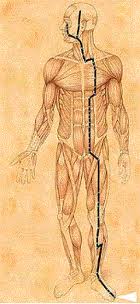
We haven't met an organ network this familiar to our collective unconscious since, well, the Large Intestine.  The resonance between the two of these unsubtle, materialistic organs is no accident, either; together the Stomach and L.I. make up a single hand-to-foot acupuncture channel called the Yang Ming meridian.  Yang Ming means 'bright Yang' or by extension 'bright sun,' and this meridian runs right down the frontmost part of the body.  It's where the sun do shine.  And think of this: the Stomach portion of the channel runs through or around all of the "sense doors"in the head (eyes, nose, mouth, ears), down the front through the nipples, down next to the genitals and the rest of the way down the anterior aspect of the legs.  It's as far forward as it could possibly be, and it takes in all of our sensory/pleasure centers.  It's no leap, then, to say the Stomach is the organ that draws us forward in the world.  This is the frequency of appetites of all kinds.  The Hexagram--number 43, Guai--even looks like a bucket that wants filling.


Nothing wrong with all this rushing and feeding.  We need strong instincts and appetites to keep us on top of the natural selection heap, or once did (now a little cash goes a long way).  But as with any of the organ frequencies, the trend of the Stomach can get out of control.  When the pursuit of sensory pleasures becomes the main purpose in life, the Stomach has usurped the imperial role of the Heart and put the gross (matter) above the subtle (spirit).  The Stomach's totem is the dragon, and it is the dragon's classic pathology to be greedy, hoarding material treasure.  Together with the Pericardium, then, the Stomach is the organ frequency most closely associated with addictions: the drive to get more of something that makes us feel good.  Neurologically, all addictions may be addictions to dopamine, the 'reward' chemical in our brains whose release our drugs (or activities) of choice stimulate.  Dopamine response is, on some level, a Stomach phenomenon.   This all is not to say that we should refrain from pleasures in general, or even that we should never let ourselves rush headlong into them.  But it's worth keeping in mind--and embodying--that the other half of the Stomach's rush is its ability to ruminate.  To chew on something for a long time; maybe even to follow the lead of our four-stomached friends and regurgitate it and chew some more.  After the rush comes the rest-and-digest.  A full belly allows us to move onto other, perhaps nobler pursuits.

Anyone who has ever fasted, even for a day, knows how much time there is all of a sudden when feeding falls off the agenda.  But this radical Stomach-centered therapy has its dangers: many of us are in need of firming up our connection to the material world, not weakening it.  Still, even simply skipping a meal once in a while can serve as a powerful reminder both that nourishment is precious and we are lucky to have such abundant access to it, and that there are other things were pursuing.

Back to the dragon: here we have a creature blessed with great strength, the gift of flight, and the ability to breathe fire.  A fierce fire-breather with a tender underbelly--what better symbol for the Stomach?  Although Chinese medicine does not refer to "digestive fire" the way Ayurveda does, the concept is implicit in the symbol of the dragon.  A healthy stomach means a healthy complement of fire, in the form of hydrochloric acid and digestive enzymes.  Of course we don't want this fire to come out; actually breathing fire is a sign of gastric distress.  But the ability to cook and transform what we take in is critical to digestive function.  The Stomach itself is responsible only for the first part--'cooking' and breaking down what we take in.  (The Spleen, as we shall see, takes over where the Stomach leaves off.)

Ayurveda may evocatively conceptualize the digestive process as one of fire--cooking and transforming--but Chinese thought takes another, equally interesting perspective.  The main digestive organs are classified as belonging mainly to the Earth element.  In the five element or five phase system, there are four directions with Earth in the center.  Earth is the stable point in the middle and so anchors the movement of the other elements.  As herbalist Paul Bergner points out, if we were plants, our roots would be the intestinal villi, and our digestive tract itself the soil out of which we grow.  Our food is our fertilizer, which these villi absorb.  Like Earth, nutrition is the very foundation of health.  Failure to digest well results in a variety of diseases, but one of the first signs of imbalance in the Earth element is what else but a feeling of ungroundedness.  When we lose our connection to Earth, "things fall apart, the center cannot hold," (thank you, Yeats) and our precarious embodied existence loses its foundation.

The theory's all well and good, but it's nice to have something to take home and chew on.  As an herb freak, I can't help but bring up ginger here.  Ginger is a simple but powerful medicine for the digestion: it somehow manages to be soothing and stimulating at the same time.  It calms nausea, relieves cramping, and generally tones the digestive fire, agni.  Of the two forms--fresh and dry--the dry stuff has a greater affinity for the Stomach (the fresh tends to go more towards the exterior of the body and cause sweating).  Perhaps because it can be drying, Chinese herbalism usually combines dry ginger with some licorice.  (Then again, Chinese herbalism combines almost everything with licorice.)  Ayurveda pulls a similar trick and often doles out pungent herbs with something sweet; perhaps the most convenient try-this-at-home approach is to use candied ginger.  Whatever form you use it in, though, ginger combines brings the fire back to the center and leaves the belly happy.


Credit: The bulk of this material was presented in the Chinese Cosmology course at NCNM that was originated by Heiner Fruehauf and taught this summer by Gregory Sax.  Thanks to them and my classmates for all the insights!


Sunday, August 14, 2011

Chinese Organ Networks: Large Intestine


^A youthful Ahh-nolt showing off his Large Intestine channel^

The main themes of the Large Intestine are relatively straightforward.  Take the associated time of day: 5-7 A.M.  This is when two things happen: the sun rises (reliably), and we get up and take a crap (ideally).  So you'll know what I mean when I say this organ is about manifestation in the material world.  The concept is about as subtle as a blazing orb appearing in the sky, or a pile of dung steaming in the morning light.

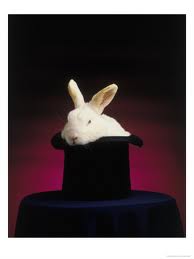
In the last position, that of the Lung, a sort of tense equilibrium reigned.  Yin and yang were in dynamic balance, and their interaction gave rise to a kind of pressure.  The spring of Spring was loaded, but not yet sprung.  Well, with the Large Intestine's move into manifestation, it springs.  Plants pop of the ground, leaves burst forth from buds, and bunnies (the Large Intestine animal) tumble out of hats.  And do the other thing that bunnies are famous for, thereby creating--more bunnies.  Material manifestation.

                                                Hexagram 34, Thunder over Heaven  >>

Though we tend to take it for franted, the Large Intestine's function is an essential one.  A couple days of constipation are enough to remind us: it's important to get rid of waste.  This holds true on various levels; having lived in Kathmandu during garbage collection strikes, I can attest that there's no faster way to shut down the normal working of a city and make it downright unlivable than to stop taking out the trash.

  << Portrait of a badly constipated city

Despite the seemingly lowly nature of this job, it's one to be held in high esteem.  The great ancient text of Chinese Medicine, the Huang Di Nei Jing, credits the Large Intestine with 'Conducting the Dao,' or 'Showing the Way.'  The Dao is the great ineffable, transcendent concept of ancient Chinese philosophy; of all the organs to be associated with the Dao, our feces-forming colon is perhaps not the first to come to mind.  I am still somewhat baffled by the Nei Jing's statement.  But perhaps a hint comes from the L.I.'s classification as a metal organ--metal being the phase element associated with purity and cleanliness.  This is the organ that can handle the waste and remain pure, that can roll up its sleeves and dive deep into the vicissitudes of the material world and come up sparkling clean.  The lesson of the Large Intestine may be about how to be "in the world but not of it."

In order to accomplish its all-important mission of taking out the trash, the Large Intestine has one major strategy, and one secondary one.  The major one is: push!  And the other: let go.  It's a decisive movement, this pushing and releasing--no pussyfooting around.  This is strong, directed action.  And it is characteristic of that Large Intestine archetype, the dictator.  A dictator is unafraid to show the way (to conduct the Dao, in the best case scenario) and use his Large Intestine channel index finger to point it out.  And he doesn't shy away from letting go of waste, either.  Indeed, it takes a bit of an asshole to make an effective dictator.  Nice, polite guys wouldn't get the job done.


Now it's an interesting congruence that Mao's symbol was the rising sun.  Gregory Sax's interpretation here is that Mao was a pathological force insofar as he was unwilling to let go of that moment of power.  A healthy L.I. moves beyond dictating the way forward; it releases and allows the qi to flow to the next organ, the Stomach.  To keep pushing without letting go is not a happy solution.  And what better illustration of this megalomaniacal constipation than the Three Gorges Dam project.  This brainchild of the Chairman's aimed to dictate the course of the Yangzi river, which was associated classically with the Large Intestine.  To the horror of environmental groups worldwide, in 2006 this world's largest dam across the biggest river in Asia was completed so that there might be "enough power to keep the lights on...forever."  This is Large Intestine thinking run amok, and China now risks a potentially fatal case of constipation.  Death, after all, begins in the colon.  It did for the Yangzi river dolphin, a "functionally extinct" species that once graced China's great Large Intestine channel like a majestic parasitic worm.


                                                                      ^ Farewell, sweet prince!

Finally, as an avid student of herbalism, I can't help but wonder if the Chinese herb Da Huang ("big yellow"), Turkey Rhubarb root, could have cured Mao of some of his pathological tendencies.  This is the major, formula-heading herb used classically for pathologies of the Yang Ming channel (Stomach and Large Intestine).  It is a laxative herb that drains heat and excess down and out.  In doing so it is said to clear out the old and generate the new.  But--and here's the beauty of classical Chinese thinking--Da Huang's use isn't limited to cases of constipation or heat build-up.  It is also indicated for certain kinds of delusional psychosis.  It may be that Mao, obsessed with the rising sun, the power of"light forever," and even swimming in the mighty, roiling Yangzi river, could have been prompted to let go of some of these ultimately destructive notions.  It may be that, as living Large Intestine archetype, Mao just needed to take a good shit.


Wednesday, August 10, 2011

Chinese Organ Networks: Lung


There's always a great temptation, when dealing with theories, to try and fit the world neatly into them.  Anyone who's stumbled onto a system and found it useful has experienced this; once you start thinking in terms of Meyers-Briggs personality types, or Ayurvedic doshas, or whatever framework you're into, the tendency is to apply them to everything.  Heck, it's fun, and it can be illuminating up to a point.  But ultimately, the theory never fits completely.  It's the old map and territory conundrum: to make a good enough map to really represent the lay of the land, we'd have to make it as big as the landscape we're mapping.  And that would be awkward.  And expensive.  Not very travel-friendly.

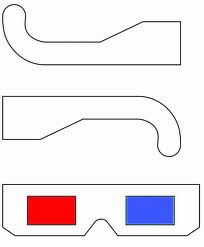
The systems of Chinese Medicine are many and subtle; there's yin-yang, the Five Elements (or, more accurately, Five Phases), the Six Conformations, and our topic of the moment, the 12 Organs or organ networks.  Twelve is a pretty big number when it comes to a system.  Twelve tones are enough for to generate all of Western music.  (And five enough for most of blues and rock.)  Twelve makes for a pretty fine-grained map.  But it's still a map.  So how to bend a linear, finite sort of system like the one at hand around an complex, infinite universe?  Clearly, for starters, one-to-one correspondences won't do.  That way we'd run out of symbols way before we ran out of things to map them onto.  One solution is to do something akin to what music does: multiple notes at a time.  Shadings, crescendos, trills, arpeggios.  Skillful combinations of the basic building blocks.  A wise, skillful classical medicine certainly must use its theories this way, with flexibility and artfulness.  Okay.  But there's still an issue of evoking something complex and alive using seemingly static symbols.  What my current Cosmology teacher Gregory Sax suggest--and I paraphrase very loosely here--is a sort of 3-D glasses effect.  Red alone isn't enough; nor is blue, but by their interaction they give rise to a third dimension, and the picture pops off the page.  It's the motion between contradictory elements that produces a third, fundamentally different phenomenon and brings the whole picture to life.

This has all been a very long-winded way of justifying the simultaneous-X-and-Y nature of the Lung.  Which we haven't even begun discussing.  Yikes.  But here goes.  Here's Story X.

As a metal organ in the Five Element classification, the Lung has to do with contraction, going inward, sinking down, cutting away.  Its emotion is grief, the pain we must feel in order to release our attachments and sink down to the lowest place (the Water phase), whence we will be able to rise again (Wood).  Its symbol is the tiger: the mythological White Tiger that represents the Fall.  And like that season of falling leaves, the lung moves down: it is called the "upper source of water," for it sits at the top of the thorax like a lid and condenses the steam gleaned from the Heart-Kidney axis and distributes this usable 'fresh water' form of qi down and outward.  As Metal is dry, so the Lung is susceptible to dryness and must be kept appropriately moist.  When the lung dries up, so does bodily nourishment and vitality; tuberculosis is a classic Lung pathology.  The spirit associated with the Lung is the Po, which unlike the Liver's wandering Hun stays in the body.  Like a tiger, Po has strong animal instincts and provided a connection to the earth.  Indeed, it is understood that after death the Po will sink back down into the ground.

Now this little story may sound like utter Greek to some, but to those familiar with Chinese medical theory it ought to be reasonably convincing: Metal, upper source of water, the Po--all the key talking points of the Lung. Now let's have a look at the other side.  Here's Story Y:

Within the calendrical framework, the Lung holds the year's first position.  The Chinese year traditionally began in very early Spring, and this is the month associated with the Lung.  The Gallbladder saw the subtle but powerful re-introduction of yang at the Winter solstice; the Liver continued the uphill journey back towards summer, and now the Lung takes the third and decisive step.  The yang energy is now as prevalent as the yin, and momentum is on yang's side.  All of nature is taking a breath and expanding: springtime.  Motion is upward and outward.  This is a moist time of year, what with the snowmelt, and the Lung is susceptible to this moisture.  Too damp and it quickly develops phlegmy congestion (isn't this how we tend to get sick?)  And as for the tiger, what better symbol for the fierceness and explosive power of the new yang of springtime...

And so forth.  For the average TCM student, this story, Story Y, may be less familiar.  But it's no less true to the symbols of Chinese cosmology; the Lung position is definitely the first month of Spring.  There's undeniably a Wood aspect to the Lung as well as a Metal one.  And Metal and Wood are opposites.  It's tempting to give in to frustration and walk away from the whole project, concluding that 'it just goes to show these symbols can be stretched to mean just about anything.' But before you join this camp, at least try on the fancy colored glasses.  With one eye on Metal and the other on Wood--one on X and the other on Y--a new perspective leaps off the page.  Call it Story Z:

The Lung has one foot in Metal, the other in Wood; it has a dual nature like the scales of Libra (the Western astrological sign that corresponds most closely to the Lung's month).  Its hexagram reveals this duality: It features three yang lines below three yin lines; heaven below earth.  Heaven wants to float up, earth to sink down, so this hexagram, called Tai, is a picture of a merging union.  But in the process of merging, these upward and downward forces create pressure between them.  This is the origin of the Lung's ability to "pressurize" the system and keep our vessels full of qi.  Therefore when the Lung is weak, our energy flags and we lose vitality.  A weak voice is a classic sign of Lung qi deficiency; there is not enough pressure in the system to power the vocal output.  This Lung pressure is born of a delicate balance between forces, and indeed the Lung is called the "delicate organ" because it demands balance.  Too damp or too dry and it suffers.  And the Lung's association with Spring is not actually about bursting forth; that will happen next month with the Large Intestine.  For now, yang has merely reached equilibrium with yin.  Yang cannot yet erupt visibly; the Lung's month of early spring is the time when the stage is set, the spring coiled, the system pressurized.  It's all potential energy, not yet actualized into kinetic motion.  The tiger--the crouching tiger of martial arts fame--symbolizes this: he's poised to pounce.  The Lung's poise, dynamic nature and proximity to the Heart make it uniquely well suited to its 12 Officials cabinet position of Prime Minister, the director of the other organs.  Everyone is willing to listen to someone so highly placed, well balanced, inspired and full of life.


And with such a beautiful coat.  Did I mention the Lung rules the surface of the body?

Next time on Chinese Organ Networks: the power of the rising sun, the manifestation of the grossly physical, and the Large Intestine.

Friday, August 5, 2011

Orach and Seabeans: The Taste of the Territory


A mid-summer Sunday in the Northwest, the day of a long-awaited trip to the San Juan Islands.  It's been bright and sunny for days now, and I've let myself believe that the fabled Northwest summer has finally set in: endless perfect days stretch on well into October in my mind's eye.  Visions of riverbank laziness, a tan, enough vitamin D to see me through the winter.  Come Sunday, T and I wake amidst mammoth cedar woods just outside of Bellingham to the light pitter-patter of drizzle on the tent fly.  It's overcast, the air still.  It's actually chilly, honestly quite undistinguishable from many a March day in Portland.  But I make a point of not making or breaking plans based on the weather, and this day is no exception.  We've got a daypack already packed, and all that's left is to load the bikes into the back of T's grandparents' old red pickup and drive to catch the 9:30 ferry to Lopez Island.

A little underslept, a little chilly, we huddle in the waiting area at the station, me eyeing the 90's era arcade machine before turning to my breakfast of eggs, toast, some leftover salmon.  The ferry ride is uneventful, uninspiring: we arrive feeling as blah as the weather continues to be, then pedal uphill towards the island's eponymous village.  Grey skies, farmland, gently rolling blacktop through the fields.  Some petty arguing.  There are days like this.  Times you've looked forward to, but whose pleasure is elusive in the moment.  Times of melancholy, light funk, when it's frankly hard to remember why you were so excited about this [fill in the blank].  Overwhelmingly tempting at such times to blame the nearest target, and at a brief pit stop to shed some layers T and I do just that: squabble at each other, throw minor, restrained, adult-grade tantrums. A part of me watching the childishness as if at a distance, yet is unable shift the other part of me into a more satisfactory pattern.  A third part is amused at this little drama and my frustrated awareness of it.

We keep pedaling, coasting down a steep hill into the village itself.  What's the big deal?  Some tourist shops, coffee places, a used bookstore, an overpriced looking restaurant.  An unremarkable looking rocky beach peopled by a pair of French tourists.  Desultorily, we walk around, looking for a quiet place to perform out respective practices; T is back from a meditation retreat, me from a weekend of intensive Qi Gong retreat, and we're both trying to keep the up the practices daily.  We stumble upon a little wetland nature trail and drag our feet along it.  The air is thick, brighter now but still grey.  We stop at the feathery frond of some wild asparagus, too big now to eat, but below and around the single stalk is a wild black currant bush.  It's got vicious, caltrop-like spikes that serve only to make the small dark fruits more desirable.  There are hundreds of these hidden amongst the barbs, and we both slip into a sort of forager's trance.  Fingers and mouths stained, we amble on along the path.  Still lethargic, still a little grumpy, but now with the taste of the territory in us.  T notices a yearling fawn in the high grass.

The path peters out at a weathered wooden platform.  After a final moment of resistance, there's nothing else to do: we said we would do it, and we both know it's probably what we need.  T sits cross-legged on the bench, and I take up my horse stance, doing my best to straddle the heads of the nails sticking up from the faded planks.  I bring my awareness as best I can into my body and begin to move: a series of warm-up motions learned from my Qi Gong teacher Bill Frazier.  Stretching and loosening the tendons.  Then comes the shaking, a core practice of the Jin Jing Gong lineage: it must look to the deer like I'm having a spasmodic episode as my whole body vibrates and twitches.  I let myself sound and feel the vibrations penetrate deeper into my tissues.  There's a sense of relief in this, of opening to the inevitable.  As usual my mind wanders, and once I notice it's done so I drag it back into the world of sensation: the feel of various organs, tissue layers, anatomical regions as I move through my body piece by piece and shake it open.  Letting out what's stuck, melting what's solid.  After a while, I bring the frequency up until the shaking is so subtle it's gone.  I plant my feet a little wider than shoulder width, feet rooting down, weight on the outside edges as the inside arches contract to draw up the yin of the earth.  Spine stretched straight, an axis mundi.  Head floating as if drawn up by a string from its crown.  Arms stretched round in front as if embracing an evergreen tree.  Breath slow, deep, into the lower abdomen.  Sensing the palms, rooting the feet, drawing up, stretching the spine.  Breathing into the belly.  Relaxing into it.  Shoulders down.  Spine long.  Feet gripping.  Relaxing.  The verbal cues bounce around my head, along with the visualizations and the intermittent sensory awareness, all in what I hope is a productively dynamic tension.  I begin the form.

Forty or so minutes I later I'm hot and sweaty and refreshed.  Not refreshed, maybe, so much as reborn.  Reborn in a tiny way, but one no less miraculous for that: the day is beginning again.  The sun is blazing overhead in a clear sky, mirroring my mood.  It was a good practice today.  I gave it everything I could summon up, and I feel the change in me without a doubt.  They're rare, these days of immediately fruitful effort, and I bask in the feeling as well as the sun.  And now comes the tricky moment that follows any such practice.  How to re-enter the day without losing presence and groundedness?  On this day, I am keenly aware of this moment, and awake to the fact that I don't have to follow old patterns.  I'm in a new place.  No agenda.  I look over at Thandiwe, and see her stretched out on the bench, fast asleep.  The first impulse is to wake her, but why, I think?  Instead I walk slowly over to the faded placards some conservation organization has installed on the edge of the platform.  I learn a little of the history of land use in this tide-washed area and get tipped off to the presence of a few local plants.  Apparently one is a parasitic, non-chlorophyll producing kind of dodder.  I scan the area and notice alarming orange patches amidst the green.  Still barefoot, I step off the platform and move out into a blue-green area carpeted in a soft, rubbery ground cover.  I bend down: it's sea beans!  Am intensely salty, succulent edible that I've seen for $5 a pint at Portland farmers' markets.  In places the sea bean forest in miniature is overrun by what looks like yards of tangled orange dental floss.  This must be the dodder.  I've never seen anything like it.  Tiny tendrils twine around the little sea bean shoots at the edges of the tangles.  Then, as if two new plants weren't reward enough, I soon spy something that looks like pigweed growing nearby.  It's leaves are meaty-tasting, salty but not so much so as the salty-as-olives sea beans (a.k.a. pickleweed).  Unmistakably an edible in the chenopodium (goosefoot) family, a sort of wild amaranth: this one's Atriplex prostrata, a species of Orach, I later learn.

T is stirring, rubbing her eyes, and I call to her to come check out the bounty.  Before long we've filled a plastic bag each of sea beans and orach, and it's time to find some shelter from the sun.  She too has mostly shaken the morning's funk; the day's opened like a flower.


Sunday, July 10, 2011

Rooftop Cosmonauts (A Crash Course in Divination)


The coin flipping began back in high school, when Jonny Quiktune and his legendary partner, Oscar Ramirez, would prowl the streets of the Upper West Side by night.  Jonny in his seventies motorcycle jacket, Oscar in his big chrome ‘iron specs.’  The normal course of our weekend ranging encompassed certain choice city rooftops (where the water towers on surrounding roofs looked to our starry eyes like rockets about to blast off), the Jerusalem falafel joint (where fez-clad Muhammed let us crack open a bottle of cheap bubbly in the restaurant’s gloriously grimy environs one memorable New Years, before he disappeared back to Syria) and Sal and Carmine’s Pizza (still the best slice in the world, R.I.P. Sal!), and down to the Village to Small’s jazz club, back when it was B.Y.O. booze and jazz cigarettes.  Indian Row on East 6th was a favorite haunt; we’d let the touts vie for our business for a while, gleefully bargaining down the price of the already dirt cheap dinner special and enquiring as to the contents of their Mulligatawny soup, before settling inevitably on whichever identical little christmas light-lit, mirror-ceilinged restaurant was featuring live sitar and tabla music that night.  Then we’d stop into the corner store and buy an absurd amount of beer to quench the fire.
Fact is we had it pretty good as teens in the city.  But sometimes all of Manhattan’s parks, pizza places, rooftops, jazz clubs and blind-eye-turning bars weren’t enough to occupy us.  Sometimes a certain restlessness would take hold, and all the familiar pleasures of the city would seem stale.  This, I imagine, is how the coin-flipping began.  
Picture, if you will, our two protagonists, on a windswept city corner, a gleam in their eyes and a devilish itch in their minds.  What to do on such a Saturday or Tuesday night?  Jericurl James is grounded; Doktor Milkbar is lost to the world in the mythical land of Staten Island; Andrew the Sleepy Pinwheel’s phone has been dead for days and Dead Dave seems actually to have perished this time.  We are two, and two is trouble.  We could roam the zoo of St. Mark’s Place, browse the record shops, get weird and then get some Belgian fries--or rent out a dingy rehearsal room at Funkadelic Studios for a couple hours and make some noise--but such schemes smack of the ordinary, the tried and true.  We crave excitement, adventure...are these not our alter-egos we’re wearing?  Is this strange city not our oyster?  
At such a moment, one of us reaches into a corduroyed pocket and extracts a shiny quarter.  Heads we head East.  Tails West.  (Tacit agreement as to the sacrality of the act, later we’ll spell out explicitly that such fate is not to be trifled with; coin flips are final).  A moment’s suspense, and we have our answer.  The coin has spoken.  We’re headed to Brooklyn (or the park, or the coffeeshop, or the waterfront).  The coin has spoken.    
Simple 50-50, heads-tails flips provided for countless nights of unexpected adventures, for once you start flipping coins for trivialities there’s no logical stopping point.  A particular sequence of heads and tails might land us at someone’s apartment having Turkish coffee or on an unexplored rooftop having a smoke, fourteen stories above the city’s twinkling lights.  I’m sure I ended up miserably seasick on an all night fishing boat out of Sheepshead Bay once because of the divination god’s sense of humor.
If flipping coins was something of a novelty for a while, though, it soon receded to another tool in the kit.  It wasn’t an end in itself but an expedient.  It became, for me at least, a way of acknowledging that I don’t know what’s going to happen anyway no matter what I decide or plan to do.  A way of creatively and explicitly inviting chance to play, rather than pretending control over the millions of variables present in every moment.  It became, at various times and to various degrees, a point of pride, a lifestyle choice, a handicap, and an inspiration.  
When the time came to decide which college to attend, after some consideration I finally turned to the trusty quarter.  Heads, I email University X and play their game, telling them I am committing to their program so please go ahead and let me in off the wait list.  Tails, I tell them to screw their wait list and accept the offer at Small Liberal Arts College Y.  The coin god spoke, and I went to Swarthmore.  In retrospect, it was the right choice, though I’d never have been able to suss out why in advance. Perhaps the big, stuffy Ivy League school would have somehow set me on my path as well. Maybe there are no wrong choices, only more and less interesting ones. In any case, I’ve never yet had cause to regret a coin flip.
A particuarly memorable flip occurred a year or two later, when Oscar and Dave (back from the dead) and I converged during Winter break for a New Years road trip.  Canada was our destination; this required no divination (why flip a coin for something so obvious?).  We were also assuming that we would head to Montreal, but upon consulting a map we realized that Toronto was equidistant from our Upstate New York locale.  A moment of deliberation; then a flip. Tails: to Toronto we go, by way of the Finger Lakes.  What followed was an unreasonably joyous expedition, as revealed in the photos: the three of us beaming in the spray at Niagara Falls, spontaneously playing a song at an open-mic that seemed straight out of 1994, and, on New Years Eve, sharing champagne with some extremely random Japanese tourists.  On the first day of the New Year, we flew back across the border so fast in my green Honda (no tickets in Canada! it seemed) that we got a hefty, buzz-killing ticket almost immediately after crossing back into NY State.  
In my old age I’ve cooled it a bit with the coin flipping.  This is not to say that I don’t indulge, just that I tend to go for modest tosses.  Where to go for dinner, say, or which river to head to on a hot day.  My divinatory spirit is alive and well, however; for complex or intractable issues, I’ve learned to consult the grand-daddy of coin flips: the I Ching (or Yi Jing).  The ancient Chinese oracle, and quite likely the oldest book on Earth, is akin to a sixty-four sided coin.  And though the traditional method of consulting this oracle involves yarrow stalks, it can be done with six coins.  Each of the oracle’s symbols consists of a solid line (yang) or a broken one (yin), and yang lines can be in the process of changing to yin and vice versa.  That gives four types of lines.  Call these 6, 7, 8, and 9: 6 is yin changing to yang, 7 is simple yang, 8 simple yin, and 9 yang changing to yin.  Then assign heads a value of 3, tails of 2, and flip a coin three times for each line (starting with the bottom one and working up).  Tails-tails-heads means 2 + 2 + 3 = 7, a yang line.  Three flips for each of the six lines yields up the Hexagram, which is keyed to a number of further symbols and statements in the text of the Yi Jing.  If you haven’t encountered it before, welcome to your latest obsession.  
Still, for simple binary questions--yes/no, left/right--the simple coin flip remains king.  Asking the Yi Jing whether you should turn East or West on a New York street corner is like breaking out the sextant and compass to figure out which way the sun sets, or looking up “crunk” in the Oxford English Dictionary: massive overkill, and not likely to succeed.  The Yi Jing sings in 64 tones, each a shade of grey; a coin flip is and always will be nice and black and white.  Anyway, the Yi Jing is heady stuff, powerful and often confusing; coin flipping has a way of seasoning one for the work of serious divination, if only by developing faith in the power and wisdom of chance, or fate, or whatever you prefer to call it.  
Another reason never to spend the last quarter in your pocket...

Wednesday, June 22, 2011

Chinese Organ Networks: Liver

And so we come around to the Liver.  The Liver is a frickin' doozy.  Enough so that I'm actually procrastinating jumping into the meat of the matter, because I hardly know where to start.  This is an organ system rife with rich associations and layers of meaning that seem to shoot out in all directions like fresh green tendrils in springtime.  Stubbornly spreading up and out, against gravity, persevering against tough odds--namely the laws of physics, which luckily seem not to apply to living things.  Or rather, life finds the loopholes and bends said laws to its own benefit and makes of Newton and Descartes a gleeful mock.
                                                                          ^An ancient Etruscan bronze liver, probably used for divination instruction and practice

As usual, the macrocosmic position of the organ reveals much of its nature.  We saw how in a sense the Gallbladder marks the beginning of the new year, as yang (light, warmth) makes its return--as yet unfelt, perhaps, but influential all the same.  To the Liver falls the task of continuing the what the Gallbladder has initiated.  The Gallbladder's job was romantic--the spark in the dark, setting things off with a little explosion; the Liver's is decidedly less so.  The Liver doesn't take that critical first step back towards the light, but rather the equally critical second step.  It plods forward, against the flow, against gravity.  It perseveres.  Its animal symbol is the ox: the creature best suited to long, hard labor.  The ox wants and needs something to push against.

Labor...pushing...if this is all sounding suspiciously feminine, it's not a coincidence.  The Liver is the organ most closely associated with womanhood, most obviously through the blood, which the Liver is said to store.  "Women are blood, men are qi," goes a Chinese medicine saying.  But we are getting ahead of ourselves.  We aren't finished with the ox.  Could there be a more specific connection between oxen and women?  Here's a hint: take a look at a picture of an ox head or skull.  Georgia' O'Keeffe was on top of this one (though she chose a ram, the effect is much the same.)  The relation of head and horns is strikingly similar to that of womb and ovaries via the Fallopian tubes.  Women, in some sense, have the power of oxen: to push, to persevere, to plod forward and continue the endless work.  Masculine energy is more apt to come in bursts; men are often good initiators and warriors, hunters, whereas women keep the ball rolling.  Hormonally, women may be better suited to traditional "women's work"--not just the obvious maternal activities but such slow, methodical, careful work as weaving, spinning, seed-sorting, knitting.  It's not just a matter of culture.  Women are rich in blood, which in Chinese medicine also means certain hormones, and this hormonal reality shapes much of physical, psychological reality.

Of course it's not just women who benefit from the ability to push, to go against the flow.  This type of sustained work is at the heart of self-cultivation practices, from martial arts to meditation and everything in between (Tai Qi and Qi Gong and genuine Hatha Yoga tend to fall towards the center of this spectrum).  The Chinese sagely ideal is of wu wei, effortless action; but in order to achieve such a state of skill it is necessary to train intensively.  The archetypal Zen master who flows so artfully through life does not achieve their mastery except through rigorous training.

There's yet another feminine connection to be made.  The Liver's cosmological time is most of January and the beginning of February, a period which overlaps (even if it doesn't completely correspond) with the Western astrological sign of Aquarius.  At first glance the associations are disparate; the Liver with blood and femininity and Aquarius with water, creativity, prophetic change.  Symbols take us deeper, however.  The traditional shorthand for Aquarius is a double squiggle, like two letter M's nested on top of one another.  Now it is an interesting fact that the word for "mother" in virtually every language begins with or contains the "m" sound.  mother, mama, mom, mu, ma, aama, maman...there are probably exceptions, but I can't come up with any.  Infants seem hardwired to make the "m" sound in relation to their mothers.  The letter M even look like a couple of a pair of bent legs, spread, as in a reclining birthing position.  Aquarius is also classified as an air sign; we'll soon see how air or wind relates to the Liver.


That's two liver-blood-femininity strings of association so far.  We've momentarily come up for air; time now to dive down and pull up one more set.  The Liver stores the blood, has everything to do with this vital substance.  What is the blood, on the level of micro-macrocosmic correspondences?  It is our vital water, our veins and arteries like rivulets and streams and great rivers.  They all flow into the sea, our great reservoir of blood, the Liver.  Another way to look at it: evolutionarily we come from the ocean.  Primitive sea creatures need no closed circulatory systems, but when we crawled out of the watery depths, we needed a way to bring some of that ocean with us.  The blood, and especially the Liver's blood reservoir, is that oceanic remnant.  It's noteworthy, too, that we're not talking about fresh water here.  The ocean is salty, and so is the blood.  Nor is the saltiness of either composed of simple sodium chloride, though that is the most prominent component of ocean and blood salts by weight.  The ocean contains hundreds of trace minerals in solution, and so does our blood.  Though nutritional science hasn't uncovered a physiological need for every such mineral, more and more are being found to be essential to health.  This is why unrefined sea salt (including salt mined from ancient sea beds) are so critical to health.  Remove all those essential trace minerals, and you compromise the quality of your internal ocean.

Another conceptual leap: the Liver and blood relate directly to Wind and the nervous system.  The most basic connection is to be found in the trigram Xun, The Gentle or Wind or The Subtle.  It shows a single yin line penetrating up through two steadfast yang lines.  It is yin moving upwards, and represents the pervasiveness of subtle influence.  This is how a breeze operates: it is gentle, but if it maintains a consistent direction it can be powerful in the long run.  But Xun is also a symbol for Wood, the upward growth of springtime.  It is the yin aspect of Wood, just as the Liver is the yin Wood organ (and the Gallbladder yang Wood, as represented by the trigram Zhen, with one yang line thrusting up below two of yin).  Wind, the force of movement and communication, is related to springtime.  Spring is, after all, the time when things are shaken up, when the "winds of change" blow.  That, roughly, is how the physiological force of Wind or Air is related to the Liver.  (An interesting contrast with Ayurveda here; in that system, Wind or Vata is more associated with the large intestine, and while it is closely related to the nervous system, the concept of blood and the liver is largely separate.  At least as far as I understand it.)

So the Liver is responsible for Wind, for proper movement.  Movement of what?  Of qi, primarily.  Of subtle energy, including perhaps the electro-chemical impulses that are the language of our nervous system.  Now it may be less surprising that trace mineral deficiencies have been implicated in a number of growing disorders including ADD and ADHD.  These can be viewed in terms of Wind; hypermobility; an ungrounded and in some sense overactive nervous system.  When our blood is not well fortified with the natural ocean's mineral spectrum, our Wood and with it our Wind go out of whack.  In our terms, its a Liver problem.

We've yet to look at the Confucian 12 officials system.  In it the role of the Liver is clear cut: it is the general.  It commands, strategizes, schemes.  Physiologically, the little-L liver sorts out thousands or millions of chemical reaction pathways, sending this here and that there and generally ironing out an operating plan for the Gallbladder to execute.  The Liver is resourceful.  As a commander it wants to win; it strives to live.  See?  It's not just the Chinese language that contains plenty of forgotten symbolic resonance.  The liver is the only organ that is capable of fully regenerating itself from a small fraction.  It's that (re)generative power of Wood.

Finally, the herbal side of the story.  The herb that best represents the upward and outward exuberance of Wood is none other than the familiar cinnamon (Chinese Gui Zhi (twigs) or Rou Gui (bark)).  Cinnamon was anciently classified in the Tang Ye Jing as a "Wood within Wood" herb, meaning that it is the essence of Wood.  Although modern TCM likes to treat the liver in terms of suppressing flaring liver yang with cold herbs and smoothing out the liver qi with herbs like Bupleurum (Chai Hu), much modern Liver pathology has more to do with cold in the blood.  Here our internal ocean gets frozen over, leading to blood deficiency and stasis, with signs like cold extremities, menstrual cramps with clotty bleeding, and sexual frigidity.  Bulldozing through the ice with qi-moving herbs won't work; we have to melt the ice.  Cinnamon gets into the blood layer (Jue Yin) and does just that, especially when combined with the star blood herb Dang Gui (Chinese Angelica).

Sources: as always with the Chinese Organ Networks series, virtually all the material for this post comes from Dr. Heiner's Fruehauf's Chinese Cosmology lectures at NCNM.  Hail the chief!